In highly competitive B2B environments, timing is everything. Engaging prospects after they have already shortlisted vendors significantly reduces win probability. The ability to identify in-market accounts—companies actively researching or preparing to purchase—before competitors provides a critical advantage in pipeline generation and revenue growth.
According to industry research, up to 70% of the buyer’s journey is completed before a prospect engages with a vendor. Additionally, organizations that use intent data effectively can increase conversion rates by up to 78% and reduce sales cycles by 20–30%.
This article outlines practical strategies for detecting in-market accounts early, prioritizing them effectively, and engaging them with precision.
What Are In-Market Accounts?
In-market accounts are organizations that show clear signals indicating active interest in a solution category. These signals may include increased research activity, engagement with relevant content, or behavioral patterns aligned with purchasing intent.
Unlike traditional lead generation, which focuses on broad targeting, identifying in-market accounts emphasizes timing and readiness.
Key Signals That Indicate Buying Intent
1. Content Consumption Patterns
Accounts that are actively consuming high-intent content—such as pricing pages, product comparisons, or implementation guides—are often closer to a purchasing decision.
Research shows that buyers who view pricing-related content are 5x more likely to convert than those engaging only with top-of-funnel materials.
2. Surge in Topic-Level Research
Intent data platforms track spikes in research activity across thousands of sources. A sudden increase in interest around specific keywords or solution categories is a strong indicator of in-market behavior.
Studies indicate that companies experiencing a surge in intent signals are 2–3 times more likely to enter a buying cycle within the next 30–60 days.
3. Website Engagement Depth
High-value engagement signals include:
-
Multiple visits within a short timeframe
-
Visits from multiple stakeholders within the same organization
-
Interaction with bottom-of-funnel pages
Accounts with multi-user engagement are significantly more likely to convert, as B2B buying decisions typically involve 6–10 stakeholders.
4. Technographic and Trigger Events
Changes in a company’s technology stack, hiring trends, funding announcements, or expansion into new markets can indicate upcoming purchasing needs.
For example, companies that receive funding are 40% more likely to increase spending on new tools within the following six months.
How to Identify In-Market Accounts Before Competitors
Build an Intent Data Framework
Start by defining the signals that matter most to your business. This includes:
-
Relevant keywords and topics
-
Priority industries and company sizes
-
Historical conversion patterns
Combine first-party data (website analytics, CRM activity) with third-party intent data to create a comprehensive view of account behavior.
Use Predictive Scoring Models
Predictive models analyze historical data to identify patterns associated with successful deals. These models assign scores to accounts based on their likelihood to convert.
Organizations using predictive scoring report up to 30% higher pipeline efficiency and improved sales alignment.
Monitor Buying Committees, Not Individuals
B2B decisions are rarely made by a single person. Tracking engagement across multiple stakeholders within an account provides a more accurate signal of buying readiness.
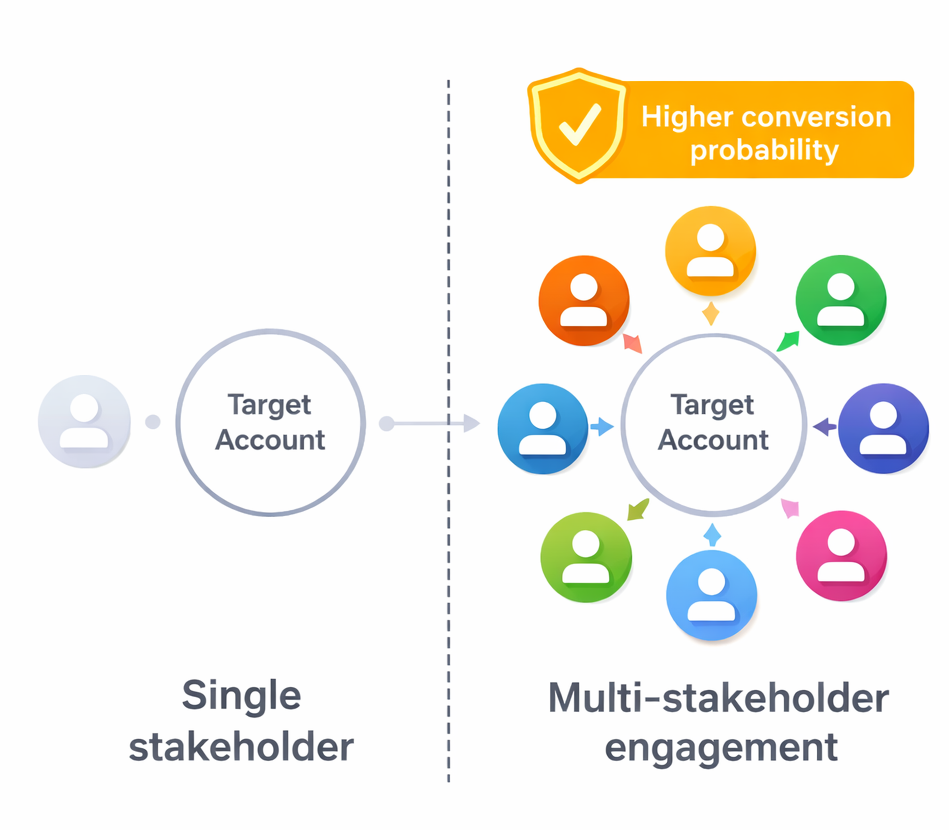
Engagement across multiple stakeholders within an account is a strong indicator of buying readiness and higher conversion potential
Focus on account-level activity rather than individual leads to avoid missing critical opportunities.
Prioritize Accounts Based on Intent Intensity
Not all intent signals are equal. Develop a scoring system that ranks accounts based on:
-
Frequency of engagement
-
Recency of activity
-
Depth of interaction
This allows sales teams to focus on the accounts most likely to convert in the near term.
Act Quickly on High-Intent Signals
Speed is a competitive advantage. Studies show that responding to high-intent signals within the first 24–48 hours significantly increases the likelihood of engagement.
Delayed outreach often results in missed opportunities, as competitors may engage first.
Best Practices for Engaging In-Market Accounts
Personalize Outreach Based on Behavior
Use the specific signals an account has demonstrated to tailor messaging. For example, reference the topics they have researched or the challenges implied by their behavior.
Personalized outreach can increase response rates by up to 2–3x compared to generic messaging.
Align Marketing and Sales Teams
Ensure both teams are working from the same data and prioritization framework. Shared visibility into intent signals helps coordinate outreach and avoid duplicated efforts.
Organizations with strong sales and marketing alignment achieve 36% higher customer retention and 38% higher sales win rates.
Leverage Multi-Channel Engagement
Engage accounts across multiple touchpoints, including email, advertising, and social channels. Consistent messaging across channels reinforces brand presence and accelerates decision-making.
Measuring Success
To evaluate the effectiveness of your in-market account strategy, track the following metrics:
-
Conversion rate from targeted accounts
-
Pipeline velocity
-
Average deal size
-
Sales cycle length
Companies that prioritize in-market accounts often see a 20–40% increase in pipeline efficiency and higher overall ROI from their marketing efforts.
Common Mistakes to Avoid
-
Relying solely on demographic data without behavioral signals
-
Ignoring early-stage intent signals
-
Delayed response to high-intent activity
-
Focusing on individuals instead of account-level engagement
Avoiding these pitfalls ensures that your strategy remains proactive rather than reactive.
Conclusion
Identifying in-market accounts before competitors is no longer optional—it is a necessity for modern B2B growth. By leveraging intent data, predictive analytics, and timely engagement, organizations can reach buyers earlier in their journey, build stronger relationships, and win more deals.
The companies that master this approach gain a decisive edge, turning data into actionable insights and opportunities into revenue.