In modern B2B marketing, not all leads are created equal. While increasing lead volume is often a priority, poor lead quality can significantly reduce sales productivity and inflate customer acquisition costs. According to industry research, up to 67% of lost sales are attributed to poor lead qualification, and sales teams spend nearly 50% of their time on unproductive prospects.
Identifying low-quality leads early in the funnel is essential to maintaining alignment between marketing and sales, improving close rates, and optimizing revenue generation.
What Defines a Low-Quality Lead?
A low-quality lead is a contact that is unlikely to convert into a paying customer. These leads typically lack intent, authority, budget, or relevance to your offering.
Common indicators include:
-
Mismatched company size, industry, or geography
-
Generic or fake contact information
-
Lack of engagement with key content or campaigns
-
Repeated interactions with low-intent assets only
-
No clear buying signals or urgency
The Cost of Poor Lead Quality
Allowing low-quality leads to reach sales teams creates multiple inefficiencies:
-
Wasted sales time and reduced productivity
-
Lower conversion rates and longer sales cycles
-
Increased frustration and misalignment between teams
-
Higher cost per acquisition (CPA)
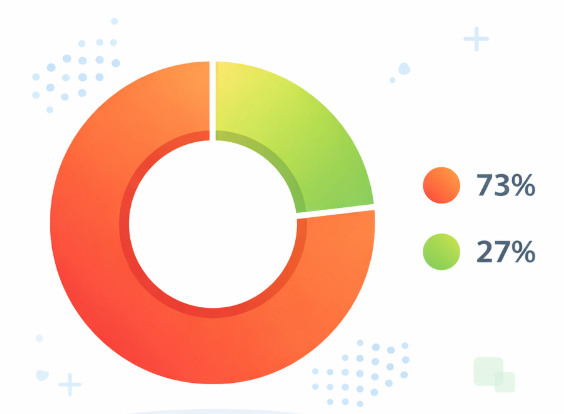
Most leads never become revenue: only a fraction reach sales readiness or convert
Research shows that companies with strong lead qualification processes achieve up to 20% higher sales productivity and 15% lower acquisition costs.
Key Strategies to Identify Low-Quality Leads Early
1. Implement Strict Ideal Customer Profile (ICP) Filters
Start by defining a clear Ideal Customer Profile based on firmographic and demographic data such as:
-
Industry
-
Company size
-
Revenue range
-
Geographic location
Leads that fall outside these parameters should be deprioritized or filtered out automatically.
2. Use Behavioral Scoring Models
Lead scoring should go beyond basic demographic data. Incorporate behavioral signals such as:
-
Website visit frequency
-
Time spent on high-intent pages
-
Engagement with pricing or product-related content
Low-quality leads often show shallow or inconsistent engagement patterns. Assign negative scores to actions that indicate low intent, such as brief visits or repeated access to top-of-funnel content only.
3. Validate Contact and Company Data
Data accuracy plays a critical role in lead quality. Implement validation processes to detect:
-
Invalid email domains
-
Duplicate records
-
Incomplete company information
Studies indicate that poor data quality costs organizations an average of 12% of their revenue annually.
4. Identify Fake or Misleading Inputs
Low-quality leads often submit inaccurate information in forms. Red flags include:
-
Disposable email addresses
-
Unrealistic job titles
-
Suspicious naming patterns
Using automated enrichment and verification tools can help flag these leads before they enter the CRM.
5. Analyze Engagement Depth, Not Just Volume
A high number of interactions does not always indicate quality. Focus on depth and relevance:
-
Are leads engaging with bottom-of-funnel content?
-
Do they revisit key pages over time?
-
Are they interacting across multiple channels?
Leads with superficial engagement are less likely to convert and should be filtered accordingly.
6. Incorporate Negative Scoring Criteria
Not all scoring models account for disqualifying behavior. Introduce negative scoring for:
-
Long periods of inactivity
-
Engagement limited to irrelevant content
-
Repeated form submissions without progression
This helps ensure that low-quality leads are automatically deprioritized.
7. Align Marketing and Sales Feedback Loops
Sales teams provide valuable insights into lead quality. Establish regular feedback loops to:
-
Identify patterns in disqualified leads
-
Refine scoring and filtering criteria
-
Continuously improve lead qualification accuracy
Organizations with strong alignment between marketing and sales see up to 36% higher customer retention rates.
Automating Low-Quality Lead Detection
Manual lead qualification is no longer scalable. Automation plays a key role in early detection by:
-
Enriching lead data in real time
-
Applying scoring rules dynamically
-
Filtering out unqualified leads before CRM entry
Advanced systems can analyze hundreds of data points instantly, ensuring only high-potential leads reach the sales team.
Final Thoughts
Filtering out low-quality leads before they reach sales is critical for maximizing efficiency and revenue growth. By combining data validation, behavioral analysis, and automated scoring, organizations can significantly improve lead quality and sales performance.
Focusing on quality over quantity ensures that sales teams spend their time where it matters most—engaging with prospects who are ready and able to convert.
Recommended Reading