Many advertisers assume that better results always require reaching more people. In reality, some of the most meaningful performance gains come from working smarter with existing audiences. By improving relevance, efficiency, and conversion mechanics, it’s possible to increase leads, sales, and ROI without expanding reach or increasing spend.
Below are proven strategies that help unlock growth from the same traffic you already have.
1. Optimize for Conversion Efficiency, Not Volume
When reach is capped, every impression matters. Improving conversion efficiency means getting more value from the same number of users.
Key actions:
-
Simplify landing pages to reduce friction
-
Improve page load speed
-
Clarify value propositions above the fold
-
Remove unnecessary form fields
Useful statistic:
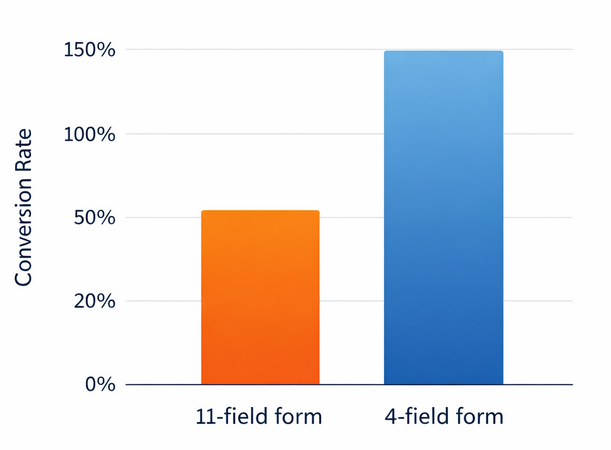
Reducing the number of form fields can boost conversion rates significantly
Research shows that reducing form fields from 10 to 4 can increase conversions by up to 120%, demonstrating how small UX changes can dramatically improve results without adding traffic.
2. Refresh Creatives Before Fatigue Sets In
Creative fatigue often reduces performance long before audience saturation occurs. When users repeatedly see similar messages, engagement drops—even if reach stays the same.
What works:
-
Introduce new visuals while keeping the same offer
-
Test alternative hooks, headlines, and angles
-
Rotate creatives every 2–4 weeks for high-frequency campaigns
Useful statistic:
Industry benchmarks indicate that ad creatives with refreshed visuals can restore click-through rates by 20–40% compared to fatigued ads shown to the same audience.
3. Segment Existing Audiences More Precisely
Instead of expanding reach, break existing audiences into more meaningful segments. Smaller, better-defined segments often outperform broad ones because messaging feels more relevant.
Segmentation ideas:
-
Time-based segments (recent vs. older visitors)
-
Engagement depth (high-intent vs. casual visitors)
-
Funnel stage (viewed product vs. abandoned checkout)
Useful statistic:

Segmented campaigns outperform generic campaigns with significantly higher conversion rates
Campaigns using segmented audiences see conversion rates increase by an average of 14–25% compared to non-segmented campaigns targeting the same total reach.
4. Improve Retargeting Windows and Logic
Retargeting is one of the most effective ways to improve results without expanding reach, but timing and logic matter.
Best practices:
-
Shorten retargeting windows for high-intent actions
-
Use different messaging for first-time and repeat visitors
-
Exclude recent converters to avoid wasted impressions
Useful statistic:
High-intent retargeting audiences typically convert 2–3 times better than cold traffic, even when overall reach remains unchanged.
5. Test Incremental Changes, Not Radical Shifts
When reach is fixed, incremental testing is safer and more effective than dramatic overhauls. Small improvements compound over time.
Focus testing on:
-
Headlines and primary messages
-
Call-to-action wording
-
Visual hierarchy on landing pages
-
Offer framing
Useful statistic:
Only 10–30% of A/B tests reach statistical significance, but winning tests often deliver conversion lifts of 10–40%, making systematic testing one of the highest-ROI optimization activities.
6. Prioritize High-Intent Traffic Sources
Not all impressions are equal. By prioritizing users with higher intent signals, performance improves even if reach stays the same.
Examples:
-
Visitors who viewed pricing pages
-
Users who engaged with videos or long-form content
-
Repeat site visitors
Focusing budget and messaging on these segments increases efficiency without expanding audience size.
Final Thoughts
Improving results doesn’t always require bigger audiences or higher budgets. By refining conversion paths, refreshing creatives, segmenting audiences, and testing systematically, advertisers can unlock meaningful growth from existing reach.
The most sustainable gains often come from optimization—not expansion.
Recommended Reading
If you found this article useful, you may also find value in these related topics: