
Over the past few years, marketing teams have faced a fundamental shift in how performance data is collected. Browser restrictions, mobile operating system changes, and stricter data protection laws have reduced the availability of user-level signals. As a result, marketers are working with delayed reporting, modeled conversions, and partial attribution while still being expected to hit aggressive performance targets.
This environment requires a mindset shift—from relying on granular tracking to focusing on aggregated signals, statistical confidence, and strategic testing frameworks.
How Privacy Constraints Impact Performance Metrics
Privacy limitations affect nearly every stage of campaign measurement:
-
Attribution gaps: A growing share of conversions cannot be attributed to a specific ad or touchpoint.
-
Delayed reporting: Conversion data may appear hours or days later, complicating optimization decisions.
-
Modeled results: Platforms increasingly rely on statistical models rather than observed events.
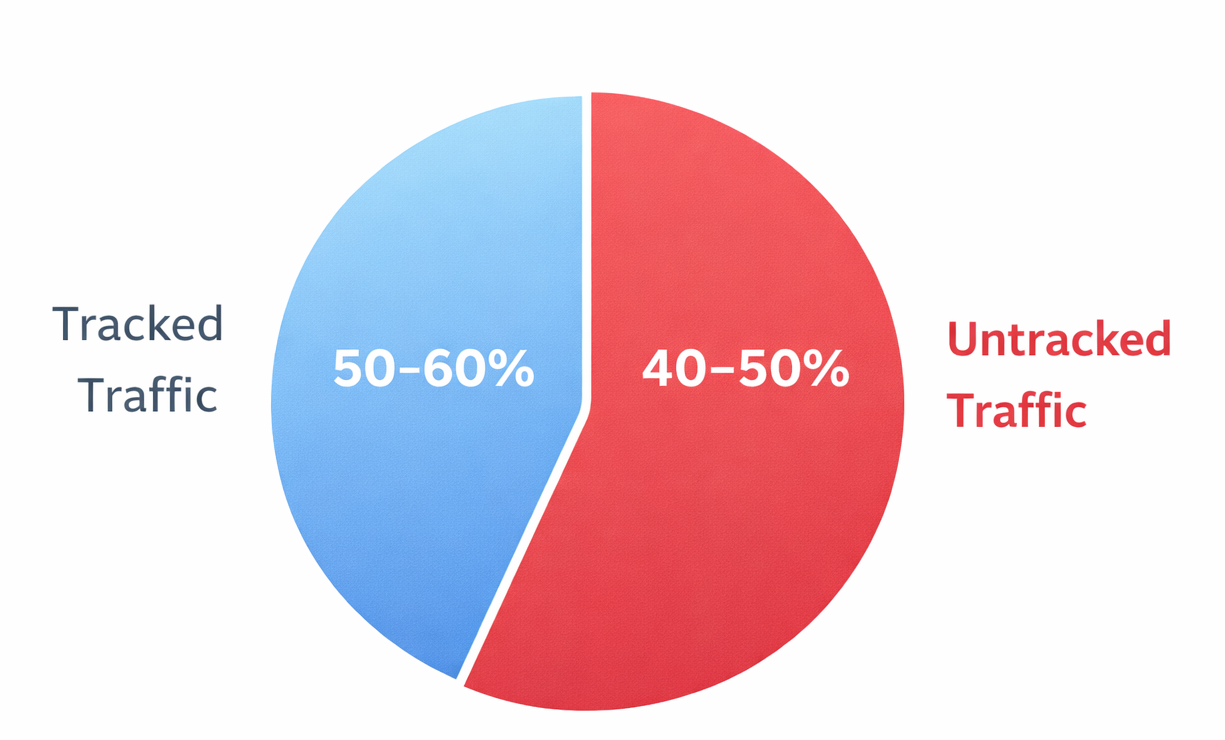
Estimated share of web traffic that goes untracked due to privacy constraints and user consent refusals
Industry data highlights the scale of this shift. Studies show that in privacy-restricted environments, up to 30–40% of conversions may be unobservable at the user level, depending on device mix and geography. Additionally, advertisers often see conversion reporting delays of 24–72 hours, making real-time optimization less reliable.
Aggregated Signals Are Replacing Granular Data
As individual tracking becomes less dependable, platforms and advertisers are leaning into aggregated data models. These models evaluate performance across larger audiences instead of individual users.
Key implications include:
-
Optimization works best with higher conversion volumes, allowing algorithms to learn from patterns rather than individual actions.
-
Narrow segmentation can reduce performance, as smaller data sets produce weaker statistical signals.
-
Stable campaign structures outperform frequent structural changes under limited data conditions.
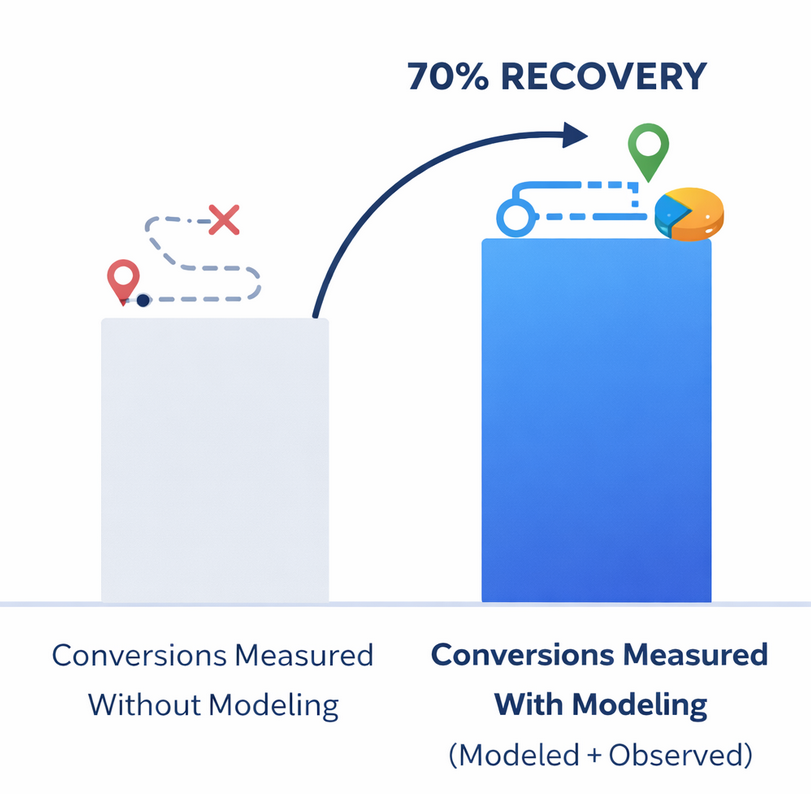
Conversion modeling can recover up to 70% of conversion journeys that are missed due to privacy-related signal loss
Research from large-scale advertisers indicates that campaigns generating 50 or more conversions per week are significantly more likely to exit learning phases and maintain consistent delivery, even when attribution data is incomplete.
Testing and Experimentation Under Data Limitations
Testing remains essential, but privacy constraints require adjustments to traditional experimentation methods.
-
Longer test durations: Reduced signal density means tests need more time to reach confidence.
-
Fewer variables: Isolating one change at a time improves interpretability.
-
Directional decision-making: Marketers increasingly accept statistically directional results rather than absolute certainty.
According to industry benchmarks, only 20–30% of A/B tests reach full statistical significance under privacy-restricted conditions. However, tests that do succeed often deliver conversion rate lifts of 20–40%, making disciplined experimentation highly valuable.
Shifting Focus to Business-Level KPIs
With less reliable event-level data, performance evaluation is moving up the funnel toward business outcomes:
-
Revenue per campaign
-
Cost per qualified lead
-
Incremental lift versus holdout groups
Advertisers that prioritize business-level KPIs report 15–25% better budget efficiency, as spend decisions are aligned with outcomes that matter rather than volatile platform metrics.
Practical Strategies for Maintaining Performance
To perform well under privacy constraints, marketing teams should:
-
Consolidate campaigns and audiences to increase signal density.
-
Invest in creative testing, as creative quality remains a strong performance lever even when targeting data is limited.
-
Use blended reporting models, combining platform data with internal analytics and CRM insights.
Brands that adopt these approaches often see 10–20% improvements in return on ad spend within three to six months, despite reduced visibility at the user level.
Conclusion
Privacy constraints are not a temporary disruption but a permanent shift in digital marketing. Success now depends less on perfect attribution and more on structured experimentation, aggregated data, and clear business objectives. Marketers who adapt their measurement and optimization strategies can continue to drive strong performance—even with less granular data.