For years, digital marketing success has been measured by scale: more impressions, more clicks, more leads. While volume can feel productive, it often masks a deeper problem—most of that activity does not translate into revenue.
According to industry benchmarks, only 20–30% of generated leads are sales‑ready, while the rest require heavy nurturing or never convert at all. High volumes inflate dashboards, but they also inflate costs, overwhelm sales teams, and dilute performance insights.
When marketers optimize solely for volume, they risk paying for attention instead of intent.
Why Quality Outperforms Quantity
High‑quality leads share three defining traits:
-
Strong intent – They resemble existing customers in behavior and interests.
-
Timing – They enter the funnel when they are ready to evaluate or buy.
-
Relevance – Messaging matches their needs, not just their demographics.
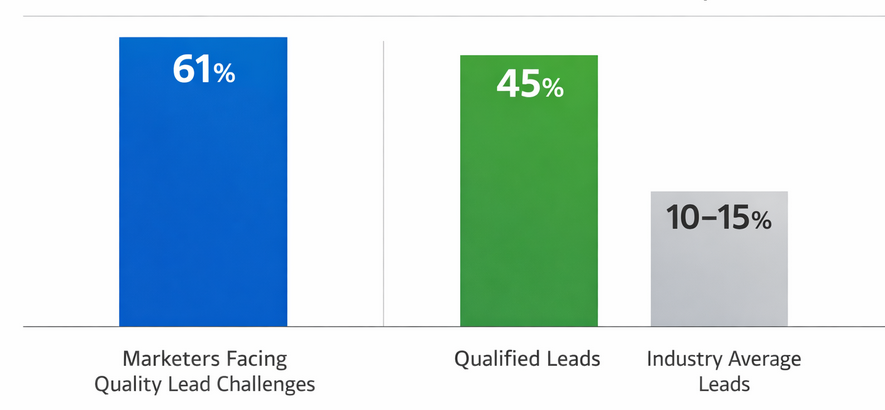
Percentage of marketers challenged by lead quality vs. conversion rates for quality and average leads
Campaigns that prioritize these signals consistently outperform high‑volume strategies. In paid social benchmarks, audiences optimized for conversion quality deliver up to 40% higher close rates, even when total lead volume decreases.
In practical terms, fewer leads can generate more revenue—if they are the right leads.
Key Metrics That Actually Measure Quality
If volume metrics are misleading, what should marketers track instead?
-
Cost per qualified lead (CPQL): Measures spend against leads that meet sales criteria.
-
Lead‑to‑customer conversion rate: Reveals true funnel efficiency.
-
Time‑to‑conversion: Shorter cycles often indicate higher intent.
-
Lifetime value (LTV) by acquisition source: Identifies audiences that stay and spend.
Companies that align campaigns around CPQL instead of CPL report 15–25% improvements in marketing ROI within the first optimization cycle.
Audience Precision Is the Quality Multiplier
Broad targeting strategies prioritize reach, but precision targeting prioritizes relevance. The difference is substantial.
In controlled campaign tests:
-
Highly refined audiences convert 2–3× better than broad interest targeting.
-
Precision segments reduce wasted spend by up to 35%, even with smaller reach.
-
Ads shown to behaviorally similar users generate higher engagement without increasing frequency fatigue.
The takeaway is simple: relevance scales better than reach.
How to Transition from Volume to Quality
Shifting your optimization mindset requires structural changes, not just bid adjustments.
1. Start With Your Best Customers
Reverse‑engineer campaigns from users who already convert, retain, or upgrade. Use their behaviors as the foundation for audience building.
2. Narrow Before You Scale
Test smaller, high‑confidence segments first. Once quality is proven, scale gradually instead of opening targeting too early.
3. Align Marketing and Sales Definitions
Ensure both teams agree on what a “qualified” lead actually means. Misalignment here is one of the biggest causes of wasted volume.
4. Optimize for Post‑Click Signals
Track what happens after the click—form completion quality, follow‑up engagement, and deal velocity—not just acquisition cost.
Common Mistakes to Avoid
-
Optimizing toward cheap leads without validating intent
-
Expanding targeting before conversion quality is stable
-
Measuring success in isolation from sales outcomes
-
Treating all leads as equal in reporting
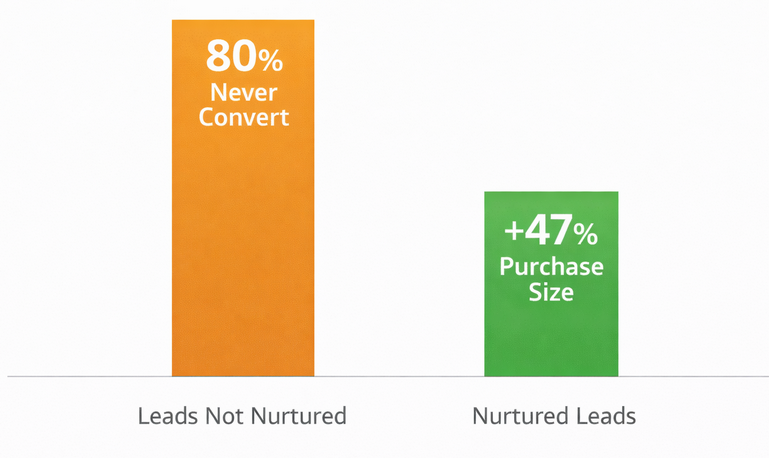
Comparison of unconverted leads (80%) vs the increased value of nurtured leads (+47% purchase size)
Avoiding these mistakes can immediately improve performance without increasing budget.
Final Thoughts
Volume is easy to scale. Quality requires discipline, data, and patience—but it pays compounding returns.
By focusing on intent, relevance, and post‑conversion value, marketers can build systems that generate fewer leads on paper, yet far more growth in reality.
Recommended Reading
To go deeper into audience precision and performance optimization, explore these related articles: