A strong creative concept does not automatically guarantee strong marketing performance. Even high‑quality ads can underperform when they are delivered to an audience that does not resonate with the message, tone, or value proposition. This problem is commonly referred to as a creative‑audience mismatch.
Research from Nielsen suggests that creative quality accounts for nearly 47% of sales lift in advertising, making it the single largest contributor to campaign effectiveness. However, creative effectiveness depends heavily on whether the right audience sees the message.
Spotting a mismatch early allows marketers to adjust targeting, messaging, or creative elements before significant advertising spend is lost.
What Is a Creative‑Audience Mismatch?
A creative‑audience mismatch occurs when the messaging, visuals, tone, or offer in an advertisement fails to resonate with the audience segment receiving it.
Examples include:
-
Highly technical messaging delivered to non‑technical audiences
-
Lifestyle‑focused creatives shown to decision‑makers seeking ROI data
-
Informal tone used for enterprise buyers expecting professional messaging
According to a study by HubSpot, 42% of marketers report that poor audience targeting is one of the main reasons campaigns fail to generate expected results.
Early Warning Signs of a Mismatch
1. High Impressions but Low Engagement
If ads generate strong reach but minimal engagement, the message may not resonate with the audience.
Typical indicators include:
-
Low click‑through rates
-
Minimal reactions or comments
-
Short content view duration
Industry benchmarks suggest that digital ads often achieve average click‑through rates between 0.9% and 1.5%. When campaigns perform significantly below these benchmarks, the audience‑creative alignment should be reviewed.
2. Strong Engagement but Poor Conversion
Sometimes audiences interact with creative assets but do not take the next step.
This may indicate:
-
The offer does not match the audience's needs
-
The messaging attracts curiosity but not intent
-
The campaign targets people outside the buying stage
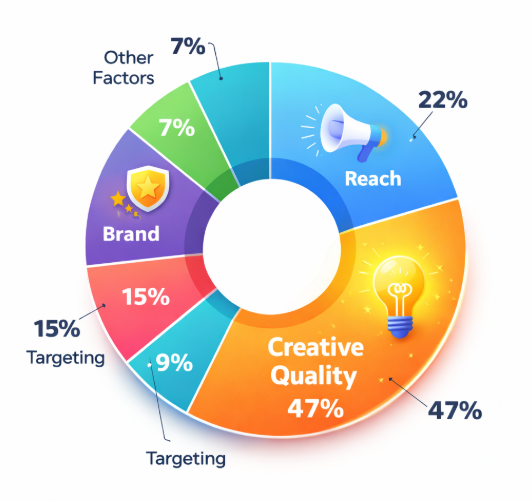
Creative quality is the single largest driver of advertising effectiveness, responsible for nearly half of total sales lift in campaigns
MarketingSherpa research shows that nearly 79% of marketing leads never convert into sales, often due to poor alignment between messaging and audience intent.
3. Inconsistent Performance Across Segments
When the same creative performs dramatically differently across audience segments, it often reveals a mismatch.
For example:
-
One segment delivers strong engagement and conversions
-
Another segment generates impressions but almost no interaction
Analyzing performance by industry, job role, company size, or region often reveals these patterns quickly.
4. Negative or Confused Feedback
Audience reactions can reveal misalignment early.
Warning signals include:
-
Comments asking basic questions already addressed in the creative
-
Feedback indicating misunderstanding of the offer
-
Criticism about tone or messaging
Such feedback often indicates the message is reaching people outside the intended audience.
How to Detect the Problem Faster
Analyze Campaign Data Early
Do not wait until the campaign ends. The first 48–72 hours of performance data often reveal early indicators.
Key metrics to monitor include:
-
Click‑through rate
-
Cost per click
-
Conversion rate
-
Engagement rate
Early monitoring enables quick adjustments before significant budget is spent.
Test Multiple Creative Variations
Running several creative variations simultaneously helps identify which messages resonate with specific audiences.
A/B testing can reveal whether the issue lies in:
-
The creative itself
-
The audience targeting
-
The value proposition
Companies that consistently run A/B tests report up to 37% higher marketing ROI, according to Invesp conversion research.
Break Down Results by Audience Attributes
Segment campaign analytics by factors such as:
-
Industry
-
Job title
-
Seniority level
-
Company size
-
Geographic region
Granular analysis helps identify which audiences respond best to each creative variation.
How to Prevent Creative‑Audience Mismatch
Define Audience Segments Precisely
The more precisely audiences are defined, the easier it becomes to tailor creative messages to them.
Clear audience definitions should include:
-
Professional role
-
Business challenges
-
Decision‑making authority
-
Industry context
Align Messaging with Buyer Intent
Different audiences respond to different types of messaging.
Examples:
-
Decision‑makers prefer ROI‑focused messaging
-
Technical specialists value product details
-
Executives respond to strategic outcomes
Matching the creative message to the audience's priorities significantly improves campaign performance.
Build Creative Based on Audience Insights
Successful campaigns are built on audience research rather than assumptions.
Sources of insight include:
-
Previous campaign data
-
Customer interviews
-
CRM analytics
-
Website behavior
Data‑driven creative development increases the probability that campaigns resonate with the intended audience.
Conclusion
Creative‑audience mismatch is one of the most common reasons marketing campaigns underperform. Even well‑designed creatives fail when they reach the wrong people.
By monitoring early performance signals, analyzing audience segments carefully, and testing multiple creative approaches, marketing teams can identify mismatches quickly and correct them before significant resources are wasted.
Early detection not only protects campaign budgets but also improves the long‑term effectiveness of marketing strategies.
Suggested Articles for Further Reading