
Winning ads follow a predictable lifecycle: testing, acceleration, saturation, and decline. Advertisers who wait for clear ROAS or CPA results often enter during the acceleration phase—right before saturation begins.
According to industry benchmarks, ad costs typically increase 20–40% once an audience becomes saturated, while conversion rates can drop by 30% or more during the same period. Spotting winners earlier allows you to scale while CPMs are lower and engagement is still fresh.
Early detection isn’t about guessing—it’s about reading leading indicators instead of lagging metrics.
Focus on Leading Indicators, Not Final Metrics
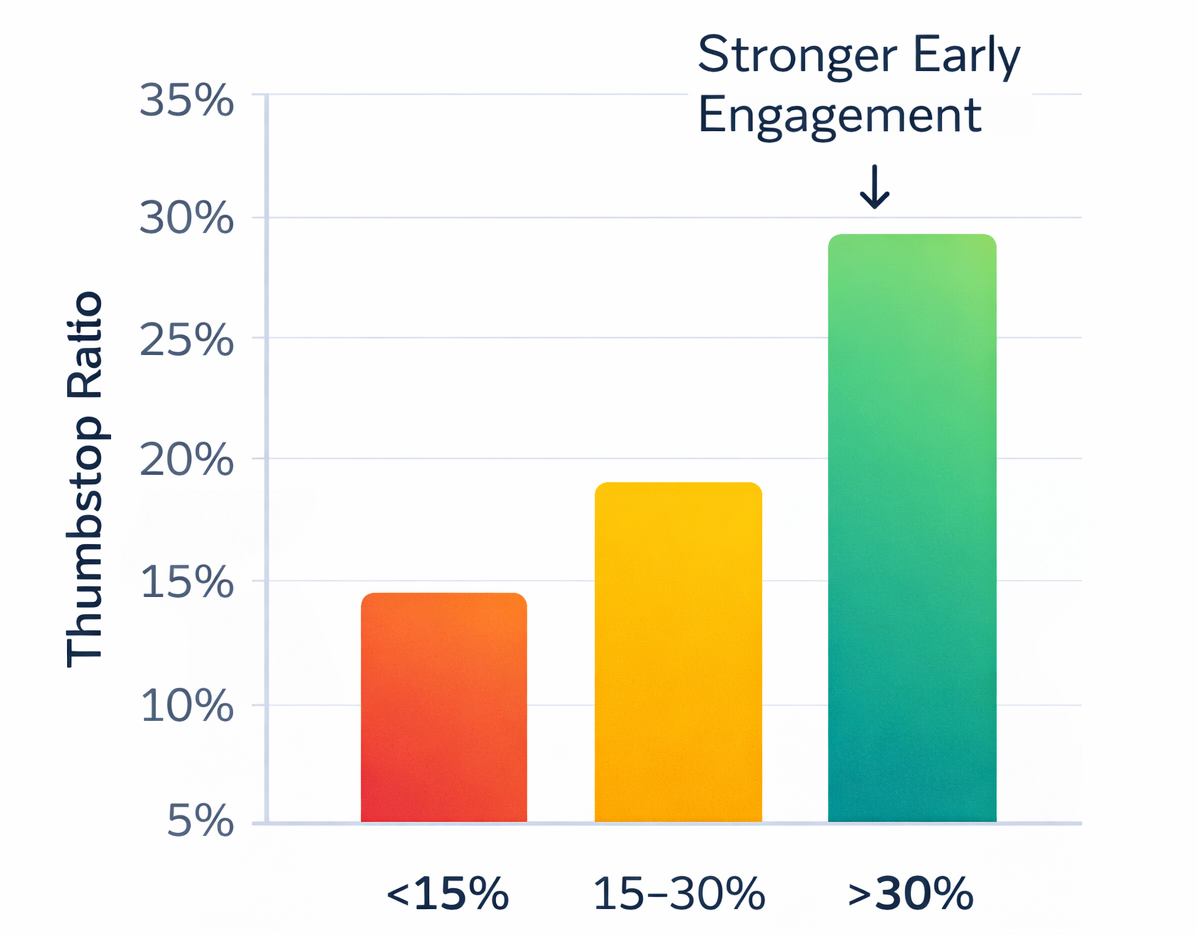
Early Engagement Benchmark: Ads with thumbstop ratios above 30% tend to indicate stronger creative hooks during the first seconds of exposure
ROAS, CPA, and total conversions are important—but they appear late. To spot winners early, analyze signals that predict future performance.
Key Early Signals to Watch
1. Thumb‑Stop Ratio (First 3 Seconds)
Ads that capture attention quickly tend to scale better.
-
Strong ads often achieve 25–35% higher 3‑second view rates within the first 24–48 hours.
-
A weak thumb‑stop usually indicates creative fatigue before scale even begins.
2. Engagement Quality Over Volume
High‑intent reactions matter more than raw engagement.
-
Comments with questions, tagging, or objections signal buying intent.
-
Ads with meaningful comments convert up to 2× better than ads with passive reactions alone.
3. Click Distribution Patterns
Look beyond CTR averages.
-
Winning ads generate clicks across multiple placements and demographics early.
-
Over‑concentration in one segment often signals short‑term performance that fades quickly.
Measure Velocity, Not Just Performance
Velocity reveals momentum before results stabilize.
What to Measure
-
Speed to first conversion: Ads converting within the first 20–30% of expected learning budget are more likely to scale.
-
Daily improvement trend: Winning ads often show steady efficiency gains over the first 3 days.
Internal ad account analyses show that ads with improving day‑over‑day CPA during the first 72 hours outperform flat or volatile ads by 40–60% at scale.
Watch Creative Patterns That Signal Longevity
Certain creative traits consistently appear in ads that peak later—and last longer.
Proven Patterns
-
Clear problem framing in the first 2 seconds
-
Native‑looking formats that resemble organic content
-
Single, focused message rather than feature stacking
Ads with one dominant message convert 23% higher on average than ads attempting to communicate multiple value propositions at once.
Identify Audience Expansion Readiness
A strong early ad doesn’t just convert—it adapts.
Signs an ad is ready for expansion:
-
Stable CTR as reach increases
-
Consistent conversion rate across audience segments
-
No sharp CPM spikes during budget increases
When these conditions are met, advertisers typically maintain performance within 10–15% efficiency loss while scaling—compared to 30%+ losses when scaling reactive or late‑stage ads.
Know When an Ad Is About to Peak
Just as important as spotting winners early is recognizing when they’re nearing saturation.
Warning Signs
-
Rising CPM with flat engagement
-
Increasing frequency paired with declining CTR
-
Comments shifting from curiosity to repetition or complaints
Ads showing these signals usually peak within 7–14 days, making early replacement critical.
Build a Repeatable Early‑Detection System
Winning advertisers don’t rely on intuition alone. They systematize early signals.
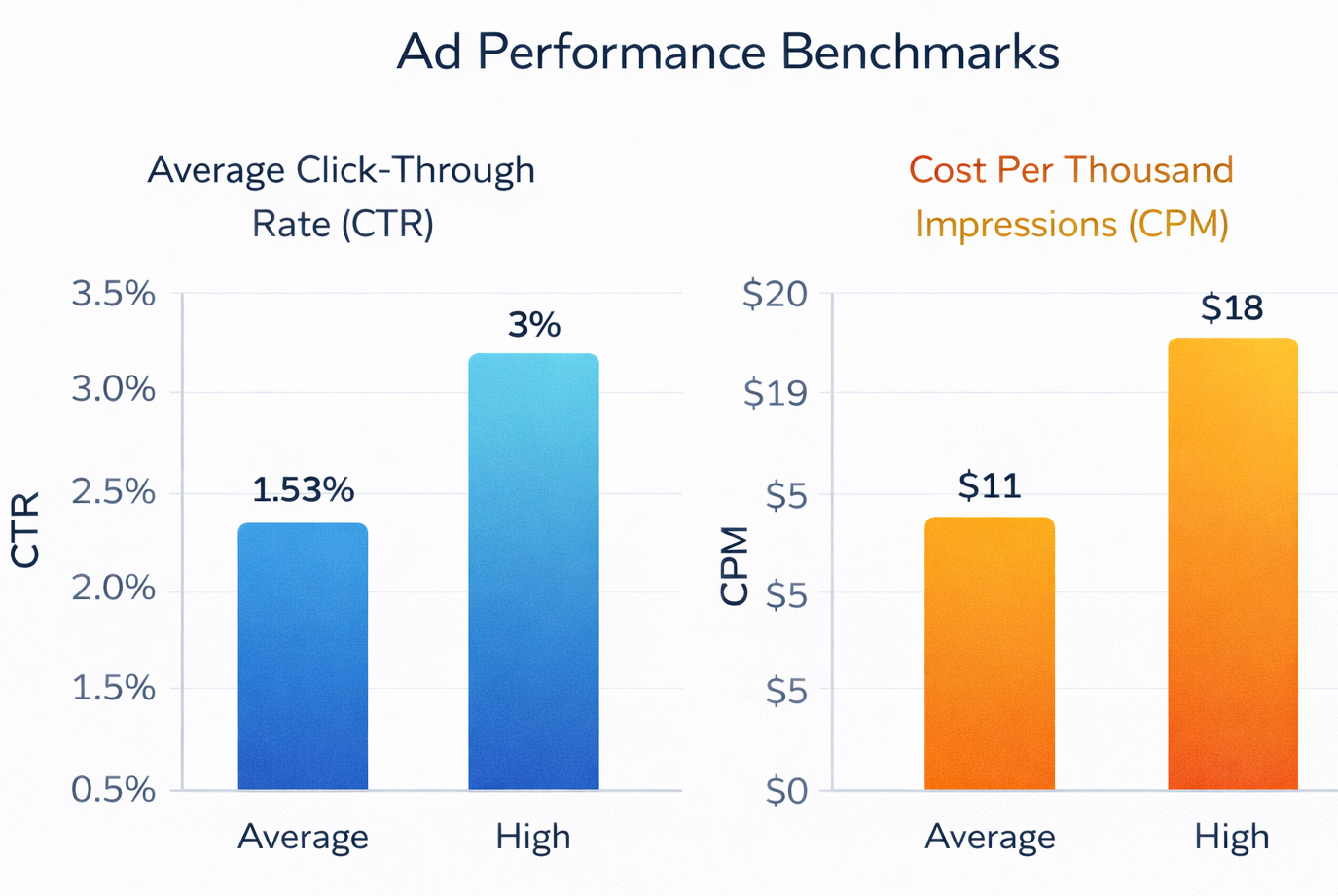
Benchmark Comparison: Average CTR versus CPM across common ad platforms — useful for spotting early performance signals relative to industry norms
A simple framework:
-
Test multiple creatives quickly
-
Pause based on early engagement and velocity—not ROAS
-
Scale ads that show consistent improvement across audiences
-
Rotate creatives before frequency spikes
This approach consistently outperforms late‑stage optimization by preserving efficiency and extending ad lifespan.
Related Articles You May Find Useful
Final Thoughts
Winning ads don’t announce themselves with perfect metrics on day one. They reveal their potential through early behavioral signals, creative resonance, and momentum.
Advertisers who learn to read these signals gain a critical advantage: they scale while others are still waiting for proof—and avoid paying peak prices for yesterday’s winners.