If you’re running an e-commerce business and spending money on Instagram ads, one thing matters more than almost anything else: who sees your ads.
Many brands waste budget by showing great ads to the wrong people. Even strong creative won’t save a campaign if the targeting is off.
This guide shows you how to reach the right people with Instagram ads using smarter targeting. Whether you're running retargeting, cold prospecting, or testing new creative angles, these strategies will help you get more from every dollar spent.
Why Instagram targeting matters in 2026
Instagram isn’t just a visual platform. It’s a behavioral platform. What people watch, like, follow, or save tells you a lot about what they might buy.
But Meta’s ad system doesn’t always get it right. Interest-based targeting has become broader and noisier, especially after recent platform changes. If you want deeper context, see why interest targeting wastes ad budgets.
For e-commerce brands, targeting is how you control efficiency:
-
It keeps CPMs reasonable by narrowing waste.
-
It improves add-to-cart and checkout rates by showing products to likely buyers.
-
It helps avoid showing the same ad to people who don’t care.
That’s where advanced Instagram audience strategies come in.
Use your own Instagram engagement to build warm audiences
Your best audience might already know who you are. They just haven’t bought yet. Instagram lets you build custom audiences based on user interactions with your profile.
These warm audiences often convert 2–5x better than cold traffic. This approach aligns closely with why custom audiences should be the core of your ad strategy.
Here are four smart ways to use this:
-
Profile visitors: People who viewed your profile in the last 30 days. They’re curious but need more context.
-
Reel watchers: Viewers who watched your Reels at least 3 seconds. These are high-engagement users.
-
Story link clickers: Users who tapped your links in Stories. Great for retargeting with offers.
-
Instagram message starters: People who DMed you. Often high-intent and overlooked.
These audiences are ideal for:
-
Retargeting with UGC or social proof;
-
Launching mid-funnel ads;
-
Creating high-quality lookalikes.
If you want to go deeper on this topic, see how to build engagement-based audiences from Reels and Stories.
Target followers of other Instagram accounts
One powerful tactic many advertisers ignore is targeting followers of public Instagram accounts in your niche.
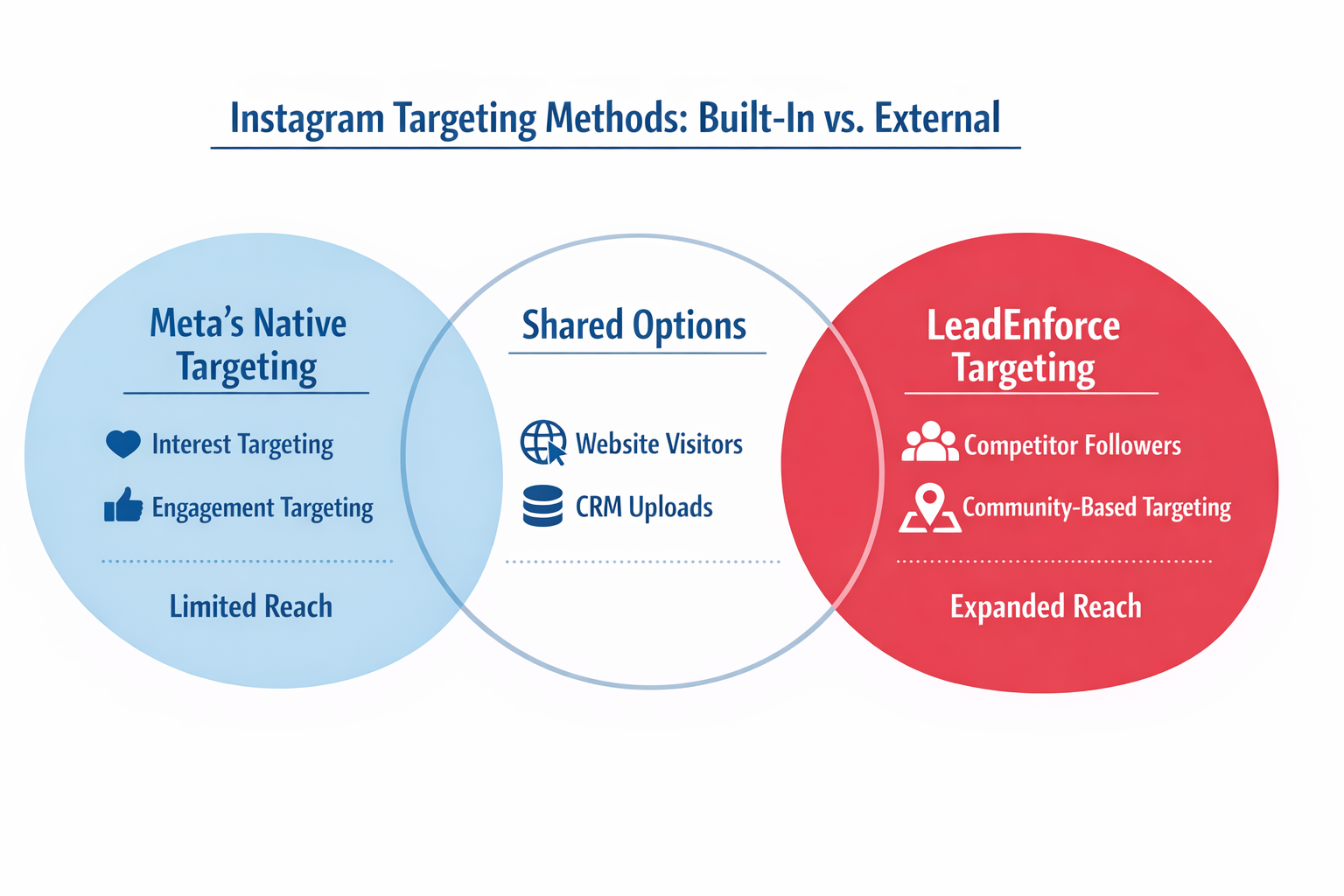
This is possible with tools like LeadEnforce, which let you create custom audiences based on real followers, not inferred interests. A practical breakdown is covered in how to build Instagram ad audiences from account followers.
Why it works
Meta interest targeting relies on inferred signals. But followers of niche accounts have made an active choice. That makes this a stronger indicator of intent.
Examples
-
Sell hiking gear? Target followers of @rei, @alltrails, or outdoor influencers.
-
Sell meal prep services? Target followers of fitness coaches or nutrition brands.
-
Sell productivity tools? Target fans of creators like @marieforleo or @aliabdaal.
This method is especially useful if you want to reach competitor audiences safely, as explained in how to reach competitor audiences without violating Meta policies.
Segment your Instagram audiences by behavior type
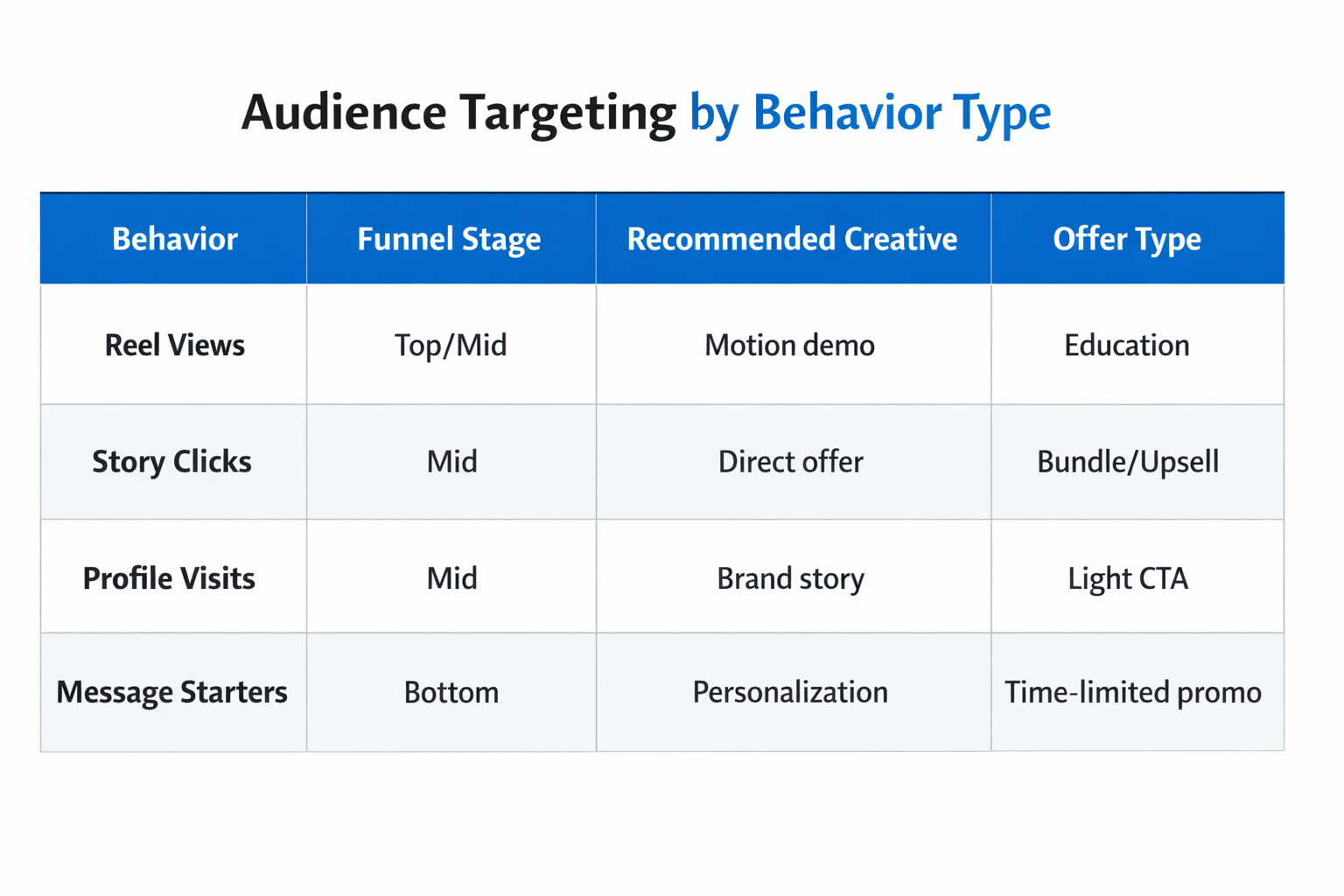
Not all Instagram interactions mean the same thing. Someone who watches a Reel behaves differently from someone who clicks a Story link.
Breaking audiences down by behavior improves relevance and efficiency. This approach mirrors behavior-based Facebook targeting strategies.
Try these segments:
-
Reel viewers: Short-form video with fast hooks and motion-first benefits.
-
Story clickers: Product-focused creative, direct offers, and urgency.
-
Profile engagers: Educational content, customer stories, and brand context.
-
Message starters: Conversational or UGC-style ads with personalized angles.
When creative matches intent, CTR improves and cost per conversion drops.
Use smarter lookalike audiences
Lookalikes still work, but only when the seed audience is strong. Many advertisers weaken performance by using low-intent sources.
To avoid that, follow the framework outlined in how to build lookalike audiences that actually convert.
Use lookalike sources that show buying signals, such as:
-
Add-to-cart but no purchase in the last 14 days;
-
Repeated Reel viewers who clicked a profile link;
-
Users who saved a product Story;
-
High-LTV customers from your CRM.
Build 1–3% lookalikes first. Expand only when performance is stable.
Match creative to funnel stage using audience temperature
Different Instagram audiences sit at different stages of the funnel. Treating them the same leads to wasted spend.
This logic closely follows how to map audiences to funnel stages.
Audience → funnel match chart
| Audience type | Funnel stage | Creative approach |
|---|---|---|
| Competitor account followers | Cold | Bold hook, fast problem framing, scroll-stopping visuals |
| Reel re-watchers | Warm | Product demos, before/after, “how it works” |
| Story clickers | Warm+ | Offer intro, bundles, limited-time discounts |
| Cart abandoners | Hot | Reviews, urgency, frictionless checkout |
This structure reduces wasted impressions and improves conversion flow.
Don’t forget exclusions
Who you exclude matters as much as who you target. Ignoring exclusions leads to wasted spend and overlapping campaigns.
For a deeper breakdown, see audience exclusions: stop paying twice.
Smart exclusions to use:
-
Past purchasers from top-of-funnel campaigns;
-
Bounced users who showed no engagement;
-
Engaged users when testing new cold creatives.
This keeps testing clean and performance data reliable.
Localize your targeting by market and language
Instagram buying behavior varies widely by region. Localization improves relevance and reduces waste.
This is especially important when running multi-country campaigns, as explained in how to run multi-country Facebook ad campaigns without wasting budget.
Examples:
-
A skincare brand shipping in Germany should target German creators and use German copy.
-
A pet food brand selling only in Canada should exclude U.S. traffic entirely.
Localization improves engagement and ROAS at the same time.
Go deeper with engagement-based signals
Likes and comments are surface-level signals. Saves and shares indicate future intent.
This aligns with using engagement signals to refine targeting.
How to use this:
-
Build audiences from saved Reels or Stories;
-
Retarget them with reviews, education, or offers;
-
Create lookalikes from these high-intent groups.
These audiences often outperform generic engagement pools.
Final takeaway: targeting is leverage
You can’t control the algorithm. But you can control who sees your ads and how campaigns are structured.
Instagram targeting isn’t about demographics alone. It’s about behavior, intent, and timing.
Using tools like LeadEnforce to go beyond Meta’s native options gives you an edge, especially for competitor targeting, warm audiences, and advanced segmentation. If you rely only on Advantage+, you’re leaving control on the table.