Raw data is one of the most underused growth assets in digital marketing. When structured and activated correctly, it becomes the foundation for precise, scalable audience targeting across paid media platforms.
Why Raw Data Matters More Than Ever
Every interaction—website visits, form fills, app events, CRM updates—creates data. On its own, this information is noisy and fragmented. But when unified and segmented, it allows marketers to reach people based on real behavior rather than assumptions.
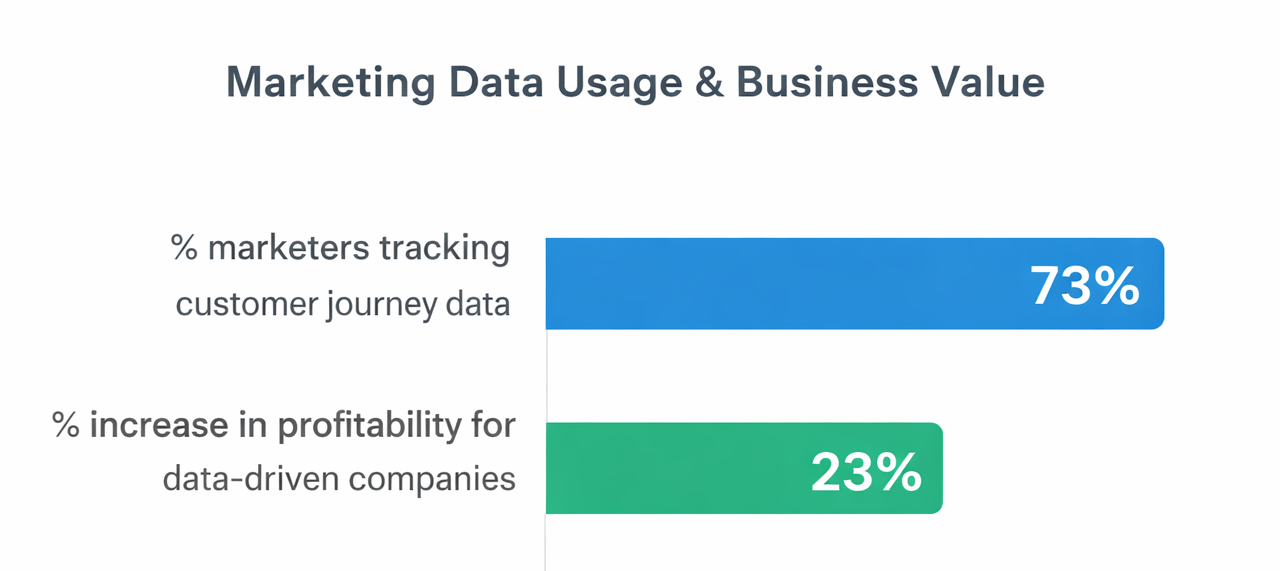
Most marketers use customer journey data — and companies that do are more profitable
Recent industry research highlights the impact of data-driven targeting:
-
Data-driven organizations are 23 times more likely to acquire customers than those relying on intuition alone.
-
Campaigns using first-party data outperform third-party data campaigns by up to 2.9× in conversion rate.
-
Marketers who activate behavioral data report 15–20% lower cost per acquisition on average.
These results come not from collecting more data, but from structuring and activating the right data.
Step 1: Identify High-Value Data Sources
Not all data is equally useful for audience creation. Focus on sources that reflect clear intent or engagement.
High-value data sources typically include:
-
Website behavior (page views, time on site, key events)
-
Lead forms and registrations
-
Purchase and subscription events
-
CRM records and lifecycle stages
-
Email engagement and campaign interactions
The goal is to prioritize signals that indicate interest, readiness, or relevance—rather than surface-level demographics.
Step 2: Clean and Normalize the Data
Raw data often contains duplicates, outdated records, and inconsistent formats. Before it can be used for targeting, it must be prepared.
Key normalization steps:
-
Remove duplicates and incomplete records
-
Standardize identifiers such as emails or phone numbers
-
Align event naming and timestamps
-
Exclude low-intent or accidental interactions
Clean data improves match rates on advertising platforms and ensures that audiences represent real, actionable users.
Step 3: Segment Based on Intent, Not Volume
Large audiences are not always better. Precision consistently outperforms scale when it comes to performance marketing.
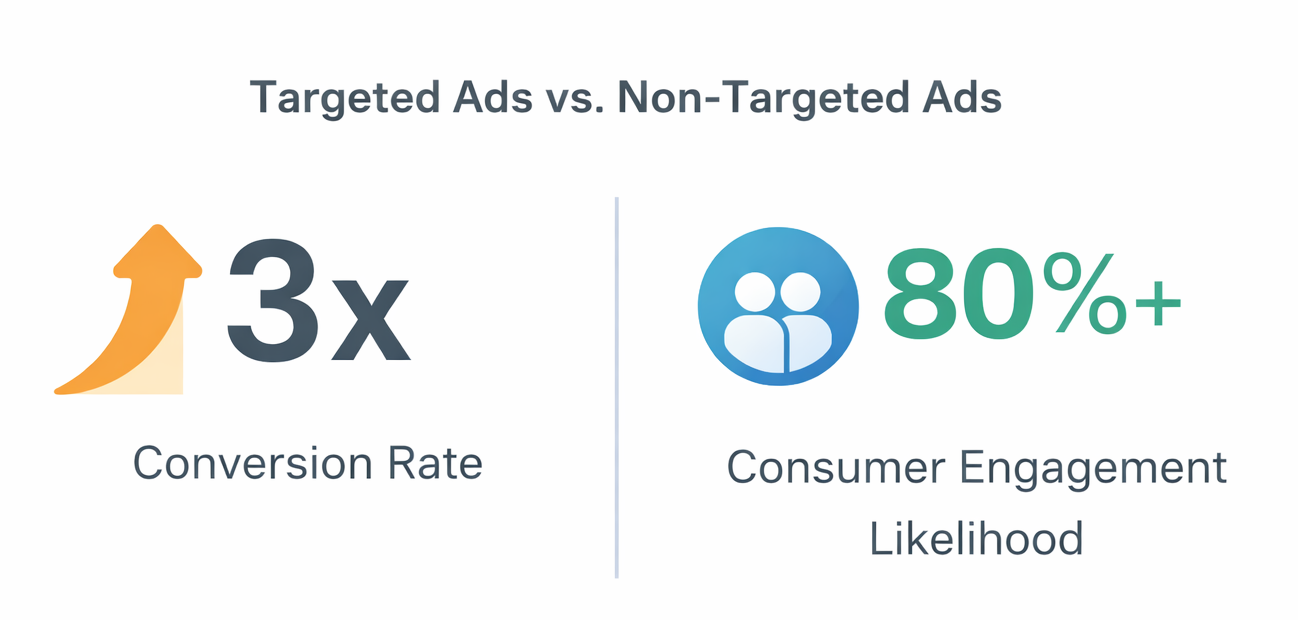
Targeted campaigns drive 3× higher conversion rates and most consumers engage with personalized ads
Effective segmentation approaches include:
-
High-intent visitors (pricing pages, demos, product usage)
-
Engaged leads who did not convert
-
Recent purchasers vs. repeat users
-
Inactive users with prior engagement
According to performance benchmarks, narrowly defined audiences can deliver up to 70% higher conversion rates compared to broad targeting, while reducing wasted ad spend.
Step 4: Transform Segments into Targetable Audiences
Once segments are defined, they must be translated into formats advertising platforms can use. This usually involves mapping identifiers such as emails, device IDs, or platform-specific signals.
At this stage, accuracy is more important than size. A smaller, highly relevant audience often delivers stronger results than a large but unfocused one.
Marketers who regularly refresh and sync audience data see:
-
30–40% improvement in audience match quality
-
Faster learning phases in ad platforms
-
More stable performance during budget scaling
Step 5: Continuously Refine with Feedback Loops
Audience building is not a one-time task. Performance data should flow back into the segmentation process.
Best practices include:
-
Removing converted users from prospecting audiences
-
Creating new segments based on top-performing cohorts
-
Adjusting definitions as user behavior changes
-
Testing multiple audience variations in parallel
This feedback loop turns raw data into a living system that improves over time.
Common Mistakes to Avoid
Even experienced teams struggle with audience activation. The most common pitfalls include:
-
Relying on outdated or static data
-
Overloading audiences with low-intent users
-
Ignoring lifecycle stages
-
Focusing on audience size instead of relevance
Avoiding these mistakes can significantly improve both efficiency and scale.
Suggested Reading
To explore related strategies and practical examples, consider these articles from the blog:
Final Thoughts
Turning raw data into targetable audiences is less about technology and more about structure, discipline, and iteration. By focusing on high-intent signals, cleaning and segmenting data correctly, and continuously refining audiences, marketers can unlock consistent performance gains without increasing budgets or expanding reach unnecessarily.