Paid advertising can generate a significant volume of traffic, but many organizations struggle to convert that traffic into booked demos. High cost-per-click combined with low booking rates results in inefficient acquisition and missed revenue opportunities.
Improving demo booking rates is not about a single tactic. It requires a coordinated approach across audience targeting, ad messaging, landing page optimization, and follow-up processes. When executed correctly, even small improvements in conversion rates can lead to substantial gains in pipeline and revenue.
Understanding the Conversion Gap
Before optimizing, it is essential to identify where potential customers drop off. Typical friction points include:
-
Mismatch between ad promise and landing page content
-
Overly complex forms or booking flows
-
Lack of trust signals or social proof
-
Poor audience targeting leading to low-intent traffic
According to industry benchmarks, the average landing page conversion rate across industries is around 2.35%, while top-performing campaigns achieve 5–10% or higher. This gap highlights the potential upside of systematic optimization.
Aligning Targeting with Intent
One of the most common causes of low demo bookings is targeting audiences that are not ready to engage.
Key Strategies
-
Focus on high-intent keywords and audiences
-
Use firmographic and behavioral filters where available
-
Exclude low-quality segments that historically underperform
Studies show that campaigns optimized for high-intent audiences can improve conversion rates by up to 2–3x compared to broad targeting approaches.
Crafting High-Intent Ad Messaging
Your ad sets expectations. If the message attracts the wrong audience or creates ambiguity, conversion rates will suffer.
Best Practices
-
Clearly communicate the value of the demo
-
Highlight specific outcomes (e.g., time savings, revenue growth)
-
Use urgency and relevance without being misleading
Ads that include clear value propositions and specific benefits can increase click-through rates by up to 20–30%, while also improving downstream conversion quality.
Optimizing Landing Pages for Conversion
The landing page is where interest becomes action. Small design and content changes can significantly impact booking rates.
Critical Elements
-
A single, focused call-to-action
-
Clear headline aligned with the ad
-
Minimal distractions and navigation options
-
Strong social proof (case studies, testimonials, metrics)
Research indicates that reducing form fields from 11 to 4 can increase conversions by up to 120%. Additionally, pages that load within 2 seconds have significantly higher engagement and conversion rates.
Streamlining the Booking Process
Even highly interested prospects can abandon if the booking process is cumbersome.
Recommendations
-
Use calendar integrations for instant scheduling
-
Minimize required fields
n- Offer flexible time slots and time zone detection
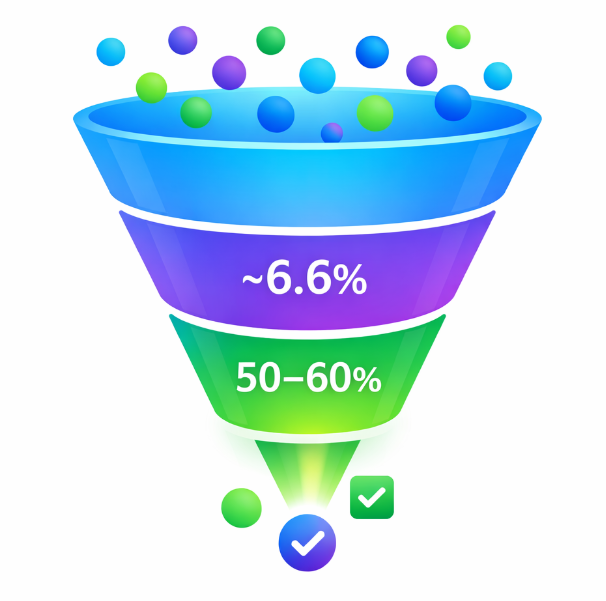
Only a fraction of paid traffic converts into demo bookings, making each stage of the funnel critical to optimize
Companies that implement instant booking options often see conversion improvements of 30–50% compared to delayed follow-up models.
Leveraging Retargeting and Follow-Up
Most users will not convert on their first visit. Retargeting helps recover lost opportunities.
Effective Tactics
-
Retarget visitors with tailored messaging
-
Use sequential ads that address objections
-
Implement email follow-ups for partially completed bookings
Retargeting campaigns can increase conversion rates by up to 70% compared to first-touch campaigns alone.
Measuring and Iterating
Continuous improvement depends on accurate measurement and disciplined experimentation.
Metrics to Track
-
Cost per demo booked
-
Conversion rate by campaign and audience
-
Drop-off rates in the booking funnel
A/B testing headlines, CTAs, and page layouts can yield incremental gains that compound over time. Organizations that run structured testing programs often achieve 20–40% higher conversion efficiency.
Conclusion
Improving demo booking rates from paid ads is a multifaceted process. By aligning targeting, messaging, landing pages, and booking flows, organizations can significantly increase the return on their advertising investments.
The most successful teams treat conversion optimization as an ongoing discipline rather than a one-time project. With consistent testing and data-driven decisions, even modest improvements can translate into substantial growth in pipeline and revenue.
Further Reading