Instagram remains one of the most visual-first platforms in the world, making it especially powerful for artists and designers. With over 2 billion monthly active users, it offers access to a global audience that already expects high-quality visuals and creative storytelling.
Key platform statistics highlight its relevance:
-
More than 90% of Instagram users follow at least one business account, showing strong openness to branded and professional content.
-
Ads on Instagram reach over 1.6 billion users worldwide.
-
Visual ads generate significantly higher engagement rates than text-based formats on most social platforms.
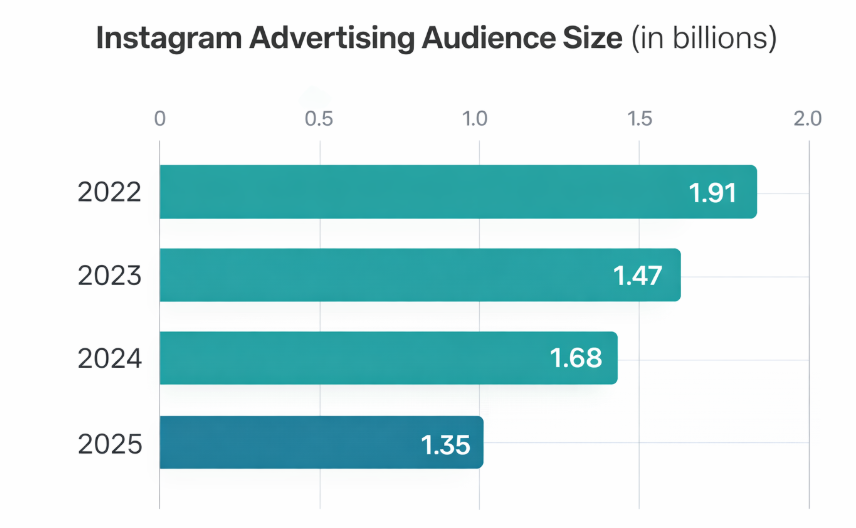
Instagram’s global advertising reach has grown steadily, illustrating why paid campaigns reach large potential audiences
For creatives, this means paid promotion does not feel intrusive when executed well—it blends naturally into the feed.
What Makes Instagram Ads Effective for Artists and Designers
Instagram Ads work best when they amplify what creators already do well: visual storytelling and emotional connection.
Highly Visual Ad Formats
Formats such as single-image ads, carousels, Stories, and Reels allow artists to showcase process, detail, and final results. Carousel ads, for example, often outperform single-image ads by allowing viewers to swipe through sketches, variations, or transformations.
Advanced Audience Targeting
Instagram’s targeting capabilities allow ads to be shown based on:
-
Interests such as illustration, graphic design, typography, or digital art
-
Behaviors, including online purchasing habits
-
Lookalike audiences built from existing followers or customers
This level of precision ensures that creative work reaches people most likely to appreciate and purchase it.
Measurable Performance
Unlike organic posts, ads provide clear performance metrics. Creators can track impressions, engagement, website visits, and conversions, allowing campaigns to be refined continuously. On average, businesses using Instagram Ads report higher return on ad spend compared to many other social platforms, particularly for visually driven products and services.
Best Practices for High-Performing Creative Ads
Lead With the Visual, Not the Product
Successful ads focus on the artwork itself rather than aggressive selling. Close-ups, motion, and behind-the-scenes content consistently outperform static promotional messages.
Use Short, Clear Messaging
While visuals carry the message, concise captions improve clarity. Ads with clear value propositions tend to generate higher click-through rates than those relying on abstract descriptions.
Optimize for Mobile Viewing
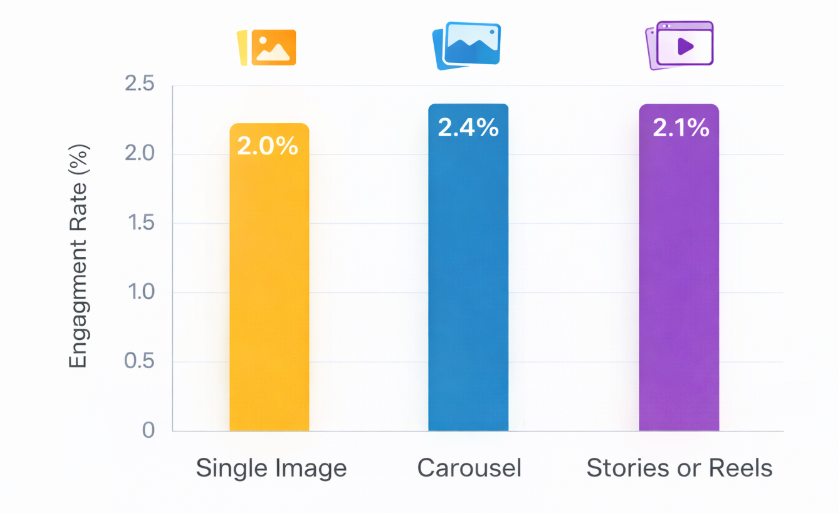
Different ad formats perform with varying engagement, with carousel ads typically driving higher interaction
Over 95% of Instagram users access the platform via mobile devices. Vertical formats and minimal on-screen text improve readability and engagement.
Test and Iterate
Data shows that A/B testing ad creatives can improve performance by more than 20%. Testing different visuals, formats, and audiences helps identify what resonates most with potential buyers or collaborators.
Budgeting and Expectations
Instagram advertising does not require large budgets to be effective. Many creators see meaningful results with daily budgets between $5 and $20. Average cost-per-click on Instagram Ads typically ranges from $0.40 to $0.70, depending on niche and targeting precision.
For artists and designers, the goal is often not immediate sales but visibility, portfolio traffic, and audience growth—metrics that compound over time.
Common Mistakes to Avoid
-
Overloading ads with text or multiple calls to action
-
Targeting overly broad audiences without creative relevance
-
Running ads without clear objectives or performance tracking
Avoiding these pitfalls helps ensure that ad spend contributes to long-term creative growth rather than short-term vanity metrics.
Final Thoughts
Instagram Ads provide artists and designers with a scalable way to grow beyond organic reach while maintaining creative integrity. When visuals, targeting, and data-driven refinement work together, advertising becomes an extension of the creative process rather than a disruption.