Despite the dominance of digital channels, offline events remain one of the most effective B2B growth drivers. According to industry research:
-
74% of event attendees say they are more likely to purchase after engaging with a brand at a live event.
-
95% of marketers believe in-person events help build long-term business relationships.
-
Companies that use event marketing as a core strategy generate 20–30% more pipeline on average compared to those that rely solely on digital channels.
However, the real competitive advantage no longer lies in hosting or attending events—it lies in how effectively event-generated data is captured, enriched, segmented, and activated within digital campaigns.
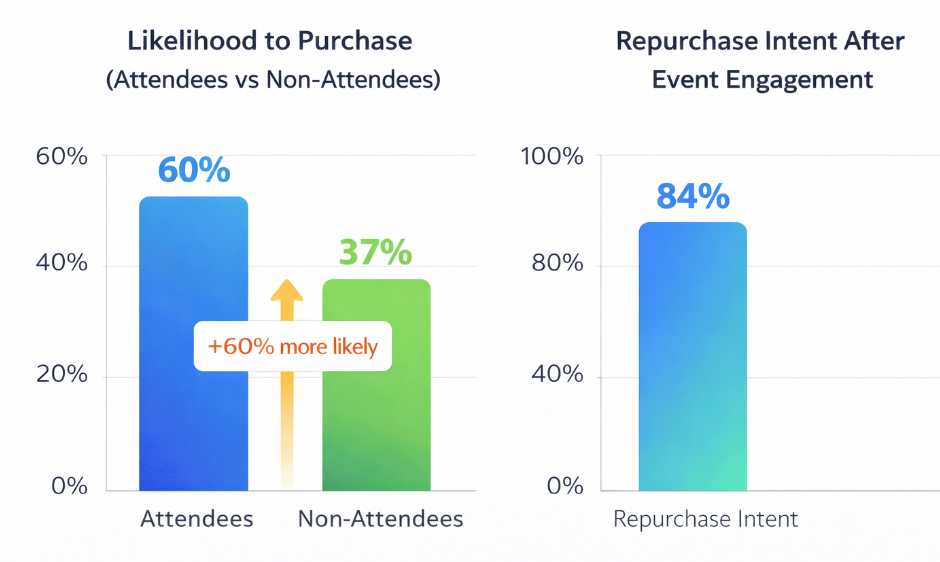
Event engagement significantly increases both immediate buying likelihood and long-term repurchase intent among attendees
Organizations that fail to operationalize event data often experience:
-
Manual lead processing delays
-
Incomplete or inaccurate contact records
-
Poor follow-up timing
-
Low post-event conversion rates
Integrating offline events into digital campaigns eliminates these inefficiencies and converts short-term interactions into measurable long-term revenue impact.
The Strategic Framework: From Booth to Funnel
To successfully integrate offline events into digital marketing workflows, companies must treat events as structured data acquisition channels.
1. Structured Data Capture at the Source
Badge scans and business cards are insufficient on their own. High-performing teams collect:
-
Verified business email addresses
-
Company name and domain
-
Job title and seniority level
-
Industry and company size
-
Interaction type (demo, meeting, casual conversation)
-
Stated intent or interest level
Standardizing this data at the point of capture ensures seamless integration into CRM and marketing automation systems.
2. Data Enrichment and Validation
Raw event data typically lacks completeness. Enrichment enables:
-
Firmographic expansion
-
Contact verification
-
Role-based segmentation
-
Decision-maker identification
Accurate enrichment reduces bounce rates, improves targeting precision, and enables personalized follow-up sequences.
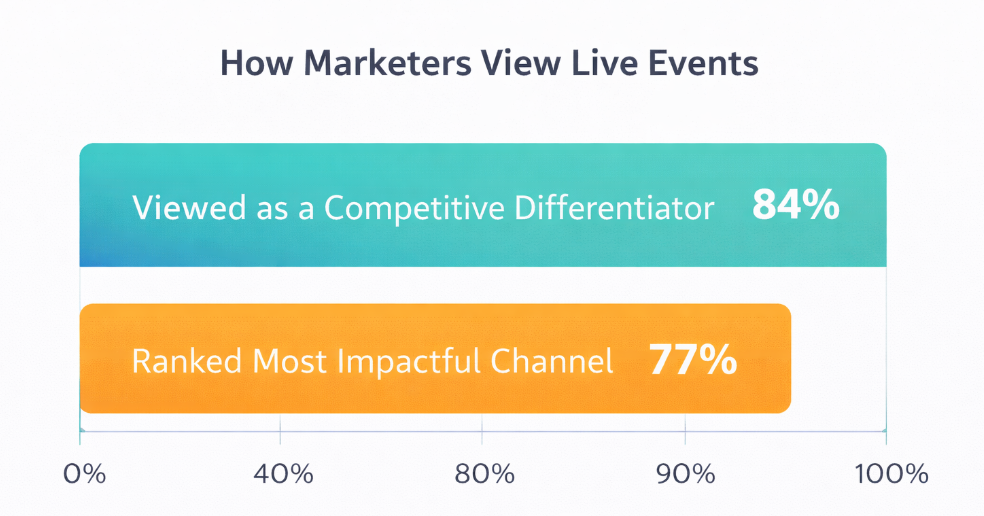
Majority of marketers view live events as both a competitive advantage and a key growth channel in B2B marketing
Studies show that enriched and segmented leads convert up to 2x higher than non-segmented lists.
3. Audience Segmentation Based on Intent
Not all event leads are equal. Segment them into categories such as:
-
High-intent prospects (requested demo or pricing)
-
Mid-funnel evaluators
-
Early-stage researchers
-
Strategic partnership opportunities
This segmentation allows tailored post-event campaigns instead of generic follow-up emails.
Activating Event Data Across Digital Channels
Once structured and enriched, event data should immediately feed into coordinated digital campaigns.
Email Sequences
Send personalized follow-up sequences within 24–48 hours. Campaigns that launch within 48 hours of event interaction see engagement rates up to 40% higher compared to delayed outreach.
Include:
-
Contextual reminder of conversation
-
Relevant case study
-
Clear next step (meeting, demo, call)
Account-Based Marketing (ABM)
For high-value accounts identified at events:
-
Launch targeted LinkedIn campaigns
-
Serve display retargeting ads
-
Align sales outreach with marketing messaging
Event-driven ABM campaigns frequently generate 30% higher meeting booking rates.
CRM-Based Workflow Automation
Trigger workflows automatically:
-
Assign leads to correct sales reps
-
Score leads based on intent signals
-
Route strategic accounts to enterprise teams
Automation reduces response time, which is critical. Research consistently shows that contacting leads within one hour significantly increases qualification probability.
Measuring the True ROI of Offline Events
One of the main reasons organizations struggle to justify event budgets is poor attribution.
To measure ROI effectively:
-
Tag all event contacts with a campaign identifier.
-
Track engagement across email, ads, and sales touchpoints.
-
Measure:
-
Pipeline generated
-
Opportunity creation rate
-
Revenue influenced
-
Customer acquisition cost
-
Companies that integrate offline event data into digital attribution models report up to 25% better marketing spend optimization.
Advanced Strategies for Competitive Advantage
1. Pre-Event Digital Warm-Up
Identify target attendees before the event:
-
Build segmented contact lists
-
Run awareness ads
-
Book meetings in advance
Pre-scheduled meetings increase booth efficiency and shorten sales cycles.
2. Real-Time Activation During Events
Instead of waiting until the event ends:
-
Launch same-day LinkedIn connections
-
Send personalized follow-up emails nightly
-
Trigger retargeting campaigns immediately
This maintains engagement momentum while brand recall is strongest.
3. Post-Event Data Expansion
Extend beyond collected contacts:
-
Identify additional decision-makers within the same accounts
-
Expand outreach to buying committees
-
Build account-level campaigns rather than contact-only campaigns
In B2B environments, 6–10 stakeholders typically influence purchasing decisions. Expanding beyond a single contact significantly improves win rates.
Common Mistakes to Avoid
-
Treating event leads as generic newsletter subscribers
-
Delaying follow-up by more than a week
-
Failing to segment by intent or role
-
Ignoring account-level expansion
-
Not aligning marketing and sales on event objectives
Offline events should not be isolated marketing initiatives—they should serve as high-intent demand generation accelerators within a broader digital ecosystem.
Recommended Reading
To further strengthen your data-driven campaign strategy, consider exploring:
Final Thoughts
Offline events remain one of the most powerful relationship-building channels in B2B marketing. Yet their full potential is realized only when event data is systematically integrated into digital campaigns.
By structuring data capture, enriching contact information, segmenting by intent, and activating across email, advertising, and ABM workflows, organizations transform short-term conversations into scalable, measurable growth.
The companies that master this integration do not just attend events—they convert them into predictable pipeline engines.