B2B buyers are more independent than ever. Research consistently shows that buyers complete a significant portion of their decision-making process before speaking with a sales representative. Multiple industry studies estimate that B2B buyers are 60–70% through their research journey before engaging with vendors directly. In this environment, identifying active demand early is no longer optional — it is essential.
Intent monitoring tools help marketing and sales teams detect signals that indicate a company is actively researching a product, solution, or problem area. By tracking behavioral patterns across digital touchpoints, these tools enable teams to prioritize accounts that are most likely to convert.
What Are Intent Monitoring Tools?
Intent monitoring tools are platforms that collect and analyze behavioral data to determine whether a company or individual is demonstrating buying intent.
These signals typically fall into three categories:
1. First-Party Intent Data
Data collected from your own digital assets, including:
-
Website visits
-
Content downloads
-
Webinar registrations
-
Product page engagement
-
Repeat visits from the same company
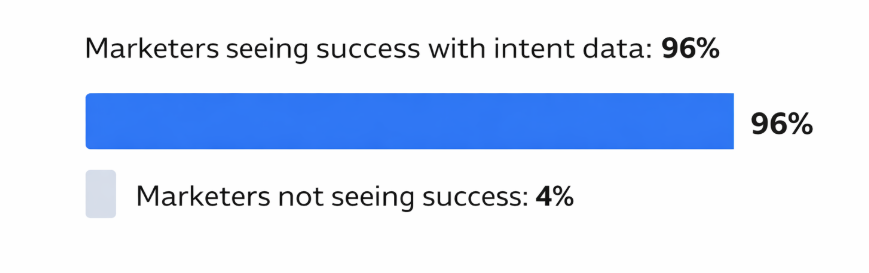
Nearly all B2B marketers (96%) report achieving success with intent monitoring tools
First-party data is highly reliable because it reflects direct interaction with your brand.
2. Second-Party Intent Data
Data shared between trusted partners. This often includes co-marketing initiatives, content syndication networks, or event partnerships.
3. Third-Party Intent Data
Aggregated behavioral data collected across multiple external websites and publisher networks. This type of data identifies companies researching specific topics across the web.
Why Intent Monitoring Matters in B2B
B2B buying cycles are complex and often involve 6–10 decision-makers per purchase. According to Gartner, buying groups spend only a fraction of their time engaging directly with vendors. The rest is spent researching independently.
Intent monitoring tools provide three major advantages:
1. Improved Lead Prioritization
Instead of relying solely on demographic or firmographic data, teams can focus on accounts actively researching relevant topics.
Organizations using intent-based targeting have reported higher engagement rates and improved sales efficiency. Some studies show intent-driven campaigns can increase conversion rates by up to 2–3x compared to traditional outbound approaches.
2. Shorter Sales Cycles
When outreach aligns with active research behavior, conversations are more relevant. Sales teams enter discussions when buyers are already problem-aware or solution-aware, reducing education time.
3. Better Marketing ROI
Marketing budgets are finite. Targeting high-intent accounts reduces wasted impressions and improves cost per opportunity.
Key Features of Effective Intent Monitoring Tools
When evaluating intent monitoring solutions, B2B marketers should consider the following capabilities:
Account-Level Identification
The ability to identify companies visiting your website or researching relevant topics is foundational. Anonymous traffic becomes actionable when tied to firmographic profiles.
Topic Surge Detection
Look for platforms that detect spikes in research activity around specific keywords or topics. Surge data often signals that a buying project is beginning.
CRM and Marketing Automation Integration
Intent signals should feed directly into CRM and automation platforms to trigger workflows, lead scoring adjustments, and sales alerts.
Real-Time Alerts
Timing matters. Real-time notifications allow sales teams to engage accounts during peak interest.
Data Transparency
Understanding where intent data originates increases trust and usability. Clear methodology and filtering options improve targeting precision.
Common Use Cases for Intent Monitoring
Account-Based Marketing (ABM)
Intent data enhances ABM strategies by identifying which target accounts are actively in-market. Campaign personalization becomes more relevant when messaging aligns with current research interests.
Outbound Prospecting
Sales development teams can prioritize outreach lists based on demonstrated topic engagement, increasing response rates.
Content Strategy Optimization
Monitoring trending topics among target accounts informs blog, webinar, and whitepaper development.
Pipeline Acceleration
Intent insights can help marketing re-engage dormant opportunities showing renewed interest.
Challenges and Considerations
While powerful, intent monitoring tools require thoughtful implementation:
-
Data overload can overwhelm teams without clear prioritization rules.
-
Misaligned sales and marketing processes reduce effectiveness.
-
Over-reliance on third-party signals without validation may decrease precision.
Successful organizations combine intent data with firmographics, technographics, and engagement scoring to create a multi-layered qualification model.
Best Practices for Implementing Intent Monitoring
-
Define high-value intent topics aligned with your solution categories.
-
Segment accounts by buying stage.
-
Create tailored messaging based on research intensity.
-
Establish clear SLAs between marketing and sales for intent-qualified accounts.
-
Continuously measure conversion impact and refine topic models.
The Future of Intent Monitoring
As privacy regulations evolve and third-party cookies decline, first-party and contextual intent signals will become increasingly important. Artificial intelligence is also enhancing predictive modeling by correlating behavioral patterns with historical win data.
B2B organizations that operationalize intent monitoring today will build a structural advantage in pipeline generation tomorrow.
Recommended Reading
Conclusion
Intent monitoring tools are transforming how B2B marketers identify, prioritize, and engage potential buyers. By detecting research behavior early, aligning outreach with real-time interest, and integrating intent insights into existing workflows, organizations can improve conversion rates, shorten sales cycles, and maximize marketing efficiency.
In a market where timing and relevance determine success, intent visibility is no longer optional — it is strategic infrastructure.