Paid social campaigns have evolved significantly over the past decade. While demographic and behavioral targeting remain essential, they often fall short in B2B environments where decision-making is closely tied to existing technology stacks. Technographic data—information about the tools, platforms, and software a company uses—fills this gap by offering deeper insight into operational realities.
By leveraging technographic data, advertisers can craft highly relevant messaging, identify qualified prospects faster, and optimize campaigns based on real-world usage patterns rather than assumptions.
What Is Technographic Data?
Technographic data refers to insights about the technologies organizations use, such as CRM systems, marketing automation tools, analytics platforms, and cloud infrastructure.
Examples include:
-
CRM platforms (e.g., Salesforce, HubSpot)
-
Marketing tools (e.g., email automation, ad platforms)
-
E-commerce systems
-
Cloud services and hosting providers
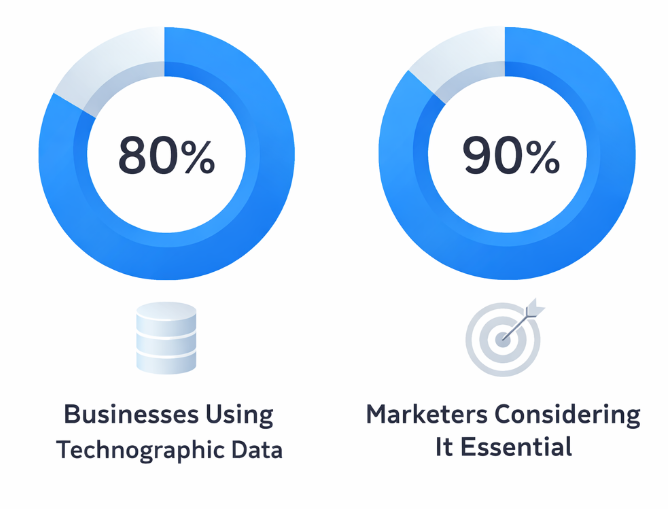
Technographic data has become a mainstream component of modern marketing strategies, with widespread adoption and strategic importance
According to industry research, companies using advanced targeting data—including technographics—can improve campaign efficiency by up to 30%, while reducing wasted ad spend by nearly 25%.
Why Technographic Data Matters in Paid Social
1. Increased Targeting Precision
Technographic data enables advertisers to segment audiences based on actual technology usage. Instead of targeting broad industries, campaigns can focus on businesses that already use complementary or competing tools.
For example, targeting companies using a specific CRM allows advertisers to tailor messaging around integrations or migration benefits.
2. Higher Conversion Rates
Relevance drives conversions. Ads aligned with a company’s existing tech stack resonate more strongly because they address immediate needs.
Studies show that highly personalized campaigns can increase conversion rates by up to 202% compared to generic messaging.
3. Reduced Customer Acquisition Costs
By narrowing the audience to high-fit prospects, advertisers minimize wasted impressions and clicks. This leads to more efficient budget allocation and lower cost per acquisition.
4. Better Account-Based Marketing (ABM)
Technographic data is particularly powerful in ABM strategies. It allows marketers to identify key accounts based on their technology maturity and readiness to adopt new solutions.
How to Use Technographic Data in Paid Social Campaigns
1. Build Segmented Audiences
Create audience segments based on specific technologies or combinations of tools. For instance:
-
Companies using outdated software
-
Businesses using competitor platforms
-
Organizations with incomplete tech stacks
This segmentation enables highly targeted ad sets with tailored messaging.
2. Align Messaging with Tech Stack
Customize ad creatives to reflect the audience’s existing tools. Messaging can focus on:
-
Integrations
-
Efficiency improvements
-
Cost savings
-
Migration simplicity
This alignment increases relevance and engagement.
3. Use Lookalike Audiences Based on Technographics
Once high-performing segments are identified, lookalike audiences can be created to scale campaigns while maintaining relevance.
Platforms like Facebook and LinkedIn allow advertisers to expand reach based on similar characteristics, including inferred technology usage.
4. Optimize Campaigns with Continuous Data Feedback
Technographic data should not be static. Regularly update audience segments and refine targeting based on campaign performance.
A/B testing different technographic segments can reveal which combinations yield the highest ROI.
Practical Use Cases
Targeting Competitor Users
Advertisers can identify companies using competing products and position their offering as a superior alternative.
Upselling Complementary Solutions
Campaigns can target businesses using related tools, highlighting how an additional solution enhances their existing ecosystem.
Identifying Growth-Stage Companies
Technographic signals often indicate company maturity. For example, adoption of advanced analytics tools may suggest readiness for more sophisticated solutions.
Challenges and Considerations
Data Accuracy
Technographic data must be regularly updated to remain reliable. Outdated information can lead to ineffective targeting.
Privacy and Compliance
Ensure all data usage complies with applicable regulations such as GDPR. Transparency and ethical data handling are critical.
Platform Limitations
Not all social platforms provide direct technographic targeting. In such cases, custom audiences and integrations are required.
Measuring Success
Key performance indicators include:
-
Conversion rate
-
Cost per acquisition (CPA)
-
Return on ad spend (ROAS)
-
Engagement metrics (CTR, time on site)
Campaigns leveraging technographic data often outperform traditional targeting methods due to higher relevance and intent alignment.
Conclusion
Technographic data represents a significant advancement in paid social targeting. By focusing on the technologies companies use, marketers can deliver more relevant messaging, improve campaign efficiency, and drive better results.
As competition in digital advertising intensifies, leveraging deeper data insights is no longer optional—it is essential for maintaining a competitive edge.
Suggested Articles for Further Reading