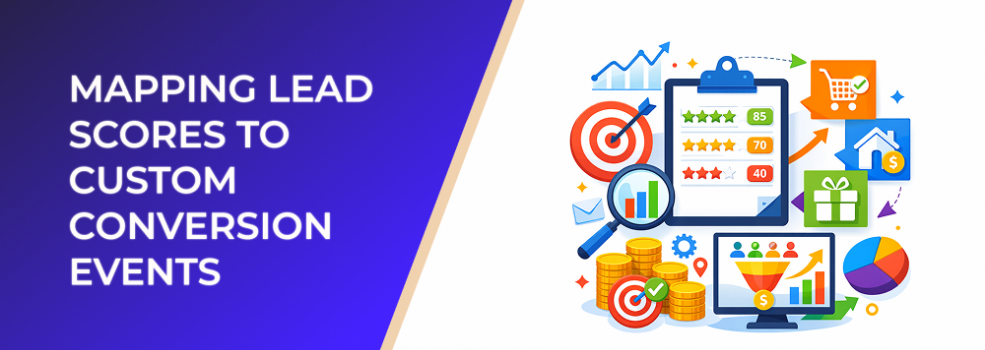
Lead scoring allows companies to prioritize prospects based on their likelihood to convert. However, scoring by itself does not automatically connect marketing activity with business outcomes. To make lead scoring actionable, organizations increasingly map lead score thresholds to custom conversion events. This approach enables teams to measure meaningful progress in the funnel and optimize their strategies based on data-driven insights.
According to a 2024 report by Demand Gen, companies that implement structured lead scoring frameworks experience up to a 77% increase in lead generation ROI. Yet many organizations still struggle to translate those scores into clear conversion metrics.
What Are Custom Conversion Events?
Custom conversion events represent predefined actions that signal meaningful engagement or progression through the buyer journey. Unlike standard conversions such as purchases or form submissions, custom events can represent milestones such as:
-
A lead reaching a defined score threshold
-
Engagement with multiple high-intent assets
-
Qualification by a sales representative
-
Movement into a new lifecycle stage
These events provide granular insight into how prospects move through the funnel.
Research from HubSpot indicates that organizations tracking custom behavioral events improve campaign optimization speed by up to 30% compared with teams relying solely on basic conversion tracking.
Why Map Lead Scores to Conversion Events?
Lead scores often exist in marketing automation systems, while conversion tracking is handled elsewhere. Mapping the two together bridges the gap between marketing engagement and measurable business outcomes.
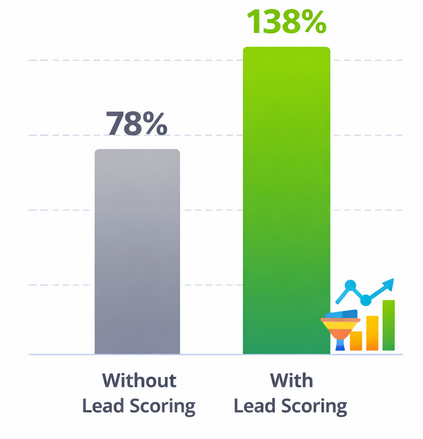
Lead scoring significantly improves marketing performance, delivering substantially higher ROI compared to campaigns that do not prioritize leads
Key benefits include:
1. Improved Funnel Visibility
By assigning events to score thresholds, teams can see how prospects progress from initial interest to high-intent engagement.
2. More Accurate Campaign Attribution
When score milestones trigger conversion events, marketers can attribute pipeline impact to specific campaigns or content assets.
3. Better Sales Alignment
Sales teams can prioritize leads that trigger high-value score events, ensuring resources are focused on the most promising opportunities.
According to Forrester, companies that align marketing and sales metrics using shared lead scoring models achieve 19% faster revenue growth.
Designing an Effective Score-to-Event Framework
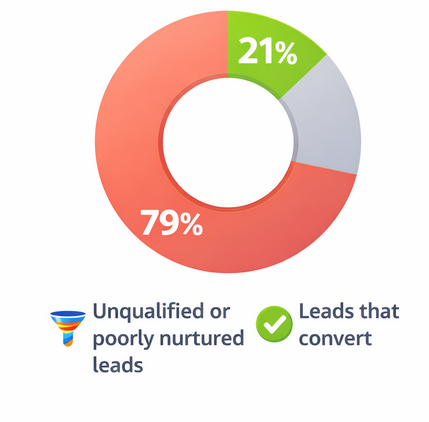
Most leads fail to convert due to inadequate qualification and nurturing, highlighting the importance of structured lead scoring and funnel tracking
Mapping lead scores to conversion events requires a structured framework. The goal is to ensure each event corresponds to a meaningful stage in the buyer journey.
Define Score Thresholds
Start by identifying the score ranges that represent different levels of engagement. For example:
-
0–30: Early engagement
-
31–60: Active interest
-
61–80: High intent
-
81+: Sales-ready
Each threshold can correspond to a distinct conversion event.
Assign Meaningful Event Names
Event names should reflect clear funnel progression. Examples include:
-
"Engaged Lead"
-
"Marketing Qualified Lead"
-
"High-Intent Prospect"
-
"Sales Qualified Lead"
Consistent naming ensures data can be analyzed across campaigns and reporting systems.
Connect Events to Behavioral Signals
Lead scores typically increase based on behaviors such as page visits, downloads, or webinar attendance. Custom events should trigger when cumulative behavior indicates a new engagement stage.
A study by MarketingSherpa found that behavioral-based lead scoring models outperform demographic-only scoring by 24% in predicting conversion likelihood.
Implementation Workflow
A typical implementation involves several steps:
-
Define scoring rules based on behavioral and demographic signals.
-
Establish score thresholds that represent meaningful engagement levels.
-
Configure custom events tied to these thresholds.
-
Ensure events are tracked consistently across marketing platforms.
-
Monitor performance and refine scoring logic over time.
Organizations that revisit scoring models quarterly see up to 25% higher predictive accuracy in their lead qualification systems.
Common Pitfalls to Avoid
Even well-designed lead scoring systems can fail if they are not properly connected to conversion tracking.
Overly Complex Scoring Models
If scoring rules are too complicated, teams struggle to interpret what scores actually represent.
Inconsistent Event Definitions
Different teams may define funnel stages differently, creating reporting inconsistencies.
Lack of Continuous Optimization
Lead behavior evolves over time, meaning scoring models must be reviewed regularly.
Measuring Success
Once lead scores are mapped to conversion events, performance can be evaluated using several metrics:
-
Conversion rate between score thresholds
-
Campaign contribution to high-value score events
-
Time required for leads to progress between stages
-
Revenue generated by leads reaching specific score milestones
According to Gartner, companies using advanced funnel analytics improve marketing efficiency by as much as 30%.
Conclusion
Mapping lead scores to custom conversion events transforms lead scoring from a static prioritization tool into a measurable performance framework. By aligning engagement signals with defined conversion milestones, organizations gain clearer visibility into funnel progression, campaign effectiveness, and sales readiness.
As marketing and sales systems continue to evolve, integrating lead scoring with conversion tracking will remain a key strategy for organizations seeking to optimize their revenue operations.