
Many marketing experiments fail for one simple reason: they are launched too broadly, too fast. Teams often test new targeting, creatives, or channels across their entire budget, turning what should be a learning exercise into a revenue gamble.
According to industry benchmarks, up to 70% of marketing experiments fail to produce statistically meaningful improvements, often because they lack proper controls or sufficient data volume. Failed tests are not inherently bad—but uncontrolled failures can quickly erode profit margins.
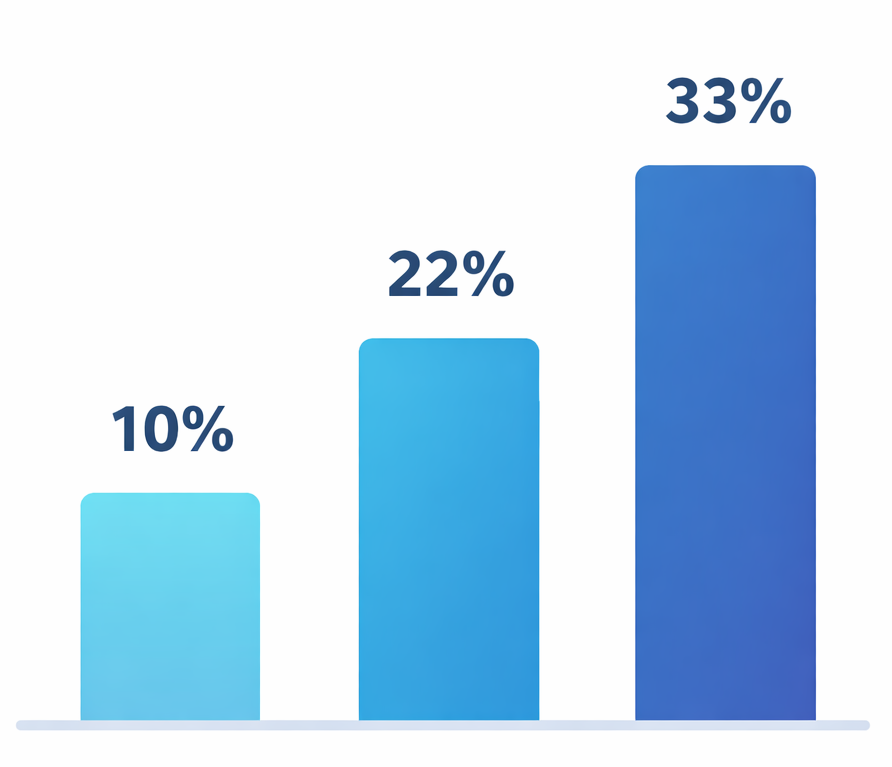
Percentage of marketing experiments that produce statistically meaningful improvements, based on industry insights
The goal of experimentation is not to “win big” on every test. It is to learn quickly while keeping baseline performance stable.
The Revenue‑Safe Experimentation Framework
To experiment without breaking revenue, every test should follow three core principles:
1. Isolate a Small, Predictable Budget
Limit experiments to 5–10% of total ad spend. At this level, even underperforming tests rarely create material damage to overall results. High‑performing campaigns continue to fund growth while tests run quietly in the background.
Marketers who cap experimental spend at 10% report up to 35% lower volatility in monthly revenue compared to teams that test aggressively without spend limits.
2. Test One Variable at a Time
Testing multiple variables simultaneously makes results difficult—or impossible—to interpret. Whether you’re experimenting with targeting, creatives, or messaging, isolate a single change per test.
For example:
-
New audience type vs. existing audience
-
New creative format vs. existing format
-
New offer vs. current offer
Single‑variable tests reach statistical confidence up to 40% faster than multi‑variable experiments with the same budget.
3. Anchor Every Test to a Proven Control
A control group is your insurance policy. Every experiment should be measured against a stable, proven campaign that continues running unchanged.
Without a control, it’s impossible to know whether performance changes are caused by the experiment or by external factors such as seasonality, competition, or platform algorithm shifts.
Experiments That Minimize Downside Risk
Not all experiments carry the same level of financial risk. Some deliver insights with minimal exposure.
Audience Expansion Tests
Instead of replacing existing audiences, run new audience experiments in parallel. Audience tests that mirror high‑performing customer profiles tend to show up to 25–40% better conversion rates than interest‑only targeting, while maintaining predictable costs.
Creative Rotation Experiments
Creative fatigue is responsible for an estimated 30–40% performance decline in long‑running campaigns. Testing new creatives against existing winners helps maintain efficiency without touching targeting or budgets.
Short creative tests (7–14 days) often surface early signals before performance drops affect revenue.
Funnel Stage Experiments
Lower‑funnel campaigns typically convert two to three times higher than cold traffic. Testing experiments at warmer stages first reduces risk and delivers faster feedback loops.
By validating ideas closer to conversion, marketers can scale successful experiments upward with confidence.
Measuring Success Without False Positives
A revenue‑safe experiment isn’t about short‑term spikes—it’s about reliable signals.
Key metrics to monitor include:
-
Cost per conversion (not clicks)
-
Conversion rate stability
-
Volume consistency over time
Tests that show a 10–15% improvement over control with consistent volume are far more valuable than short‑lived spikes that disappear once scaled.
Turning Experiments Into Scalable Growth
Successful experiments should graduate gradually. Increase spend in controlled increments—20–30% at a time—while monitoring efficiency. This approach reduces the risk of performance collapse during scale.
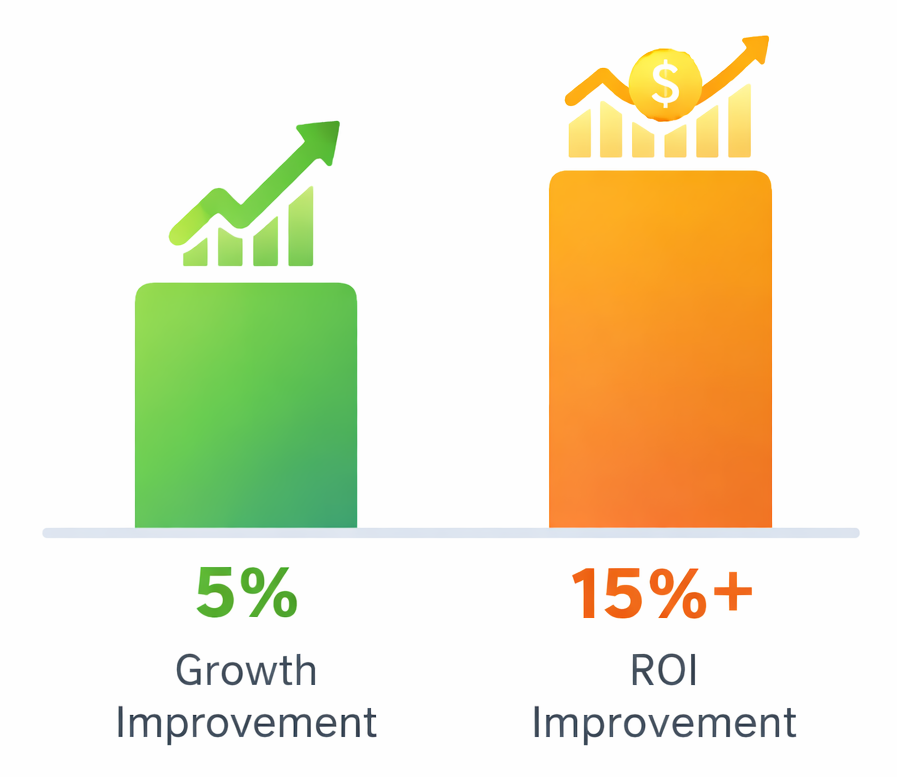
Impact of controlled marketing experimentation on growth and ROI in real business scenarios
Teams that scale experiments incrementally are up to 50% more likely to maintain profitability compared to teams that scale aggressively after early wins.
Final Thoughts
Marketing experiments don’t need to be reckless to be effective. With controlled budgets, clear variables, and strong measurement, experimentation becomes a predictable growth engine rather than a revenue risk.
The most profitable teams aren’t the ones that experiment the most—they’re the ones that experiment with discipline.