

Modern marketers have access to more data than ever, yet many decisions are still driven by intuition rather than evidence. The problem isn’t a lack of metrics—it’s an excess of the wrong ones. Metrics like impressions, raw traffic, or follower counts often look impressive but rarely explain why performance changed or what to do next.
According to industry research, over 70% of marketers admit they regularly track metrics that do not directly inform strategic decisions. The result is reporting without clarity and optimization without direction.
To drive real outcomes, metrics must answer three questions:
-
Is this helping us acquire the right audience?
-
Does it improve efficiency or profitability?
-
Can we act on it immediately?
1. Cost per Qualified Lead (CQL)
Cost per Lead alone is misleading. A low-cost lead that never engages wastes more budget than a higher-cost lead that converts consistently.
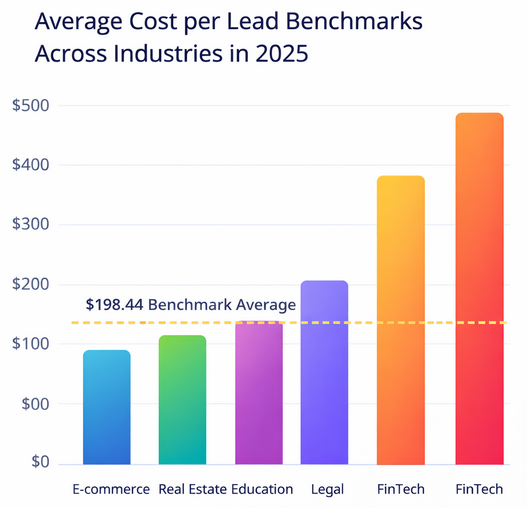
Average Cost per Lead Benchmarks Across Industries in 2025
Cost per Qualified Lead measures how much you spend to acquire leads that meet predefined engagement or intent criteria. This could include time on site, form completion quality, or follow-up response.
Why it matters:
-
Businesses that optimize for qualified leads instead of raw leads see conversion rates improve by 30–50%.
-
Sales teams report higher close rates when marketing is optimized around lead quality, not volume.
CQL forces alignment between marketing and sales, turning acquisition into a revenue-focused process.
2. Lead-to-Customer Conversion Rate
This metric reveals whether your targeting and messaging attract buyers—or just browsers.
A strong lead-to-customer conversion rate indicates that traffic sources and audiences are well matched to the offer. Conversely, a declining rate often signals mismatched targeting, weak qualification, or poor follow-up.
Key insight:
Across digital campaigns, average lead-to-customer conversion rates range between 2% and 6%. High-performing campaigns often exceed 10% due to better audience relevance and segmentation.
Instead of asking, “How many leads did we get?”, this metric reframes the question to, “How many leads were worth getting?”
3. Revenue per Lead
Revenue per Lead connects marketing performance directly to business outcomes. It shows how much revenue, on average, each acquired lead generates over a defined period.
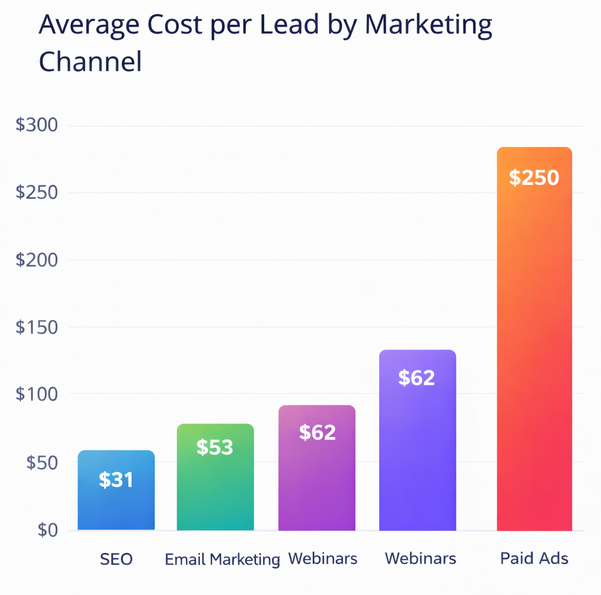
Average Cost per Lead by Marketing Channel
Why it’s powerful:
-
It highlights which campaigns attract high-value prospects.
-
It exposes channels that generate volume but little revenue.
Studies show that campaigns optimized around revenue per lead—not cost per lead—can increase overall marketing ROI by more than 40%.
When revenue per lead is rising, scaling decisions become clearer and less risky.
4. Audience Saturation and Overlap
Audience performance often declines not because creatives fail, but because the same users see the same ads too often.
Audience saturation metrics track frequency, overlap, and engagement decay. When frequency rises above sustainable levels, costs increase while conversions drop.
Industry benchmark:
Campaigns with ad frequency above 3.5 typically experience a 20–30% increase in cost per conversion with no improvement in volume.
Monitoring saturation helps marketers decide when to refresh creatives, expand audiences, or pause spending before efficiency erodes.
5. Time to Conversion
Time to Conversion measures how long it takes for a lead to become a customer after the first interaction.
This metric is especially valuable for:
-
Identifying friction in the funnel
-
Improving follow-up timing
-
Aligning sales expectations
Data shows that leads contacted within the first 24 hours are up to 7 times more likely to convert than those contacted later. Shorter conversion windows often correlate with higher intent and better targeting.
Turning Metrics into Decisions
Metrics only matter when they drive action. The most effective teams review a small set of decision-focused metrics weekly and tie each one to a clear optimization lever—targeting, budget allocation, messaging, or audience expansion.
Instead of building reports that describe the past, build dashboards that shape the future.
Recommended Reading
If you found this article useful, you may also want to explore:
Final Thought
Marketing success isn’t about tracking more data—it’s about tracking the right data. When metrics reflect real business outcomes, decisions become faster, clearer, and far more profitable.
