Modern marketing no longer wins on reach alone. Conversion is driven by signals—small, measurable indicators of intent that reveal who is ready to act and when.
Why Marketing Signals Matter More Than Demographics
Traditional targeting relied heavily on demographics: age, gender, job title, location. While still useful, these attributes rarely explain intent. Two people with identical demographic profiles can behave very differently when exposed to the same offer.
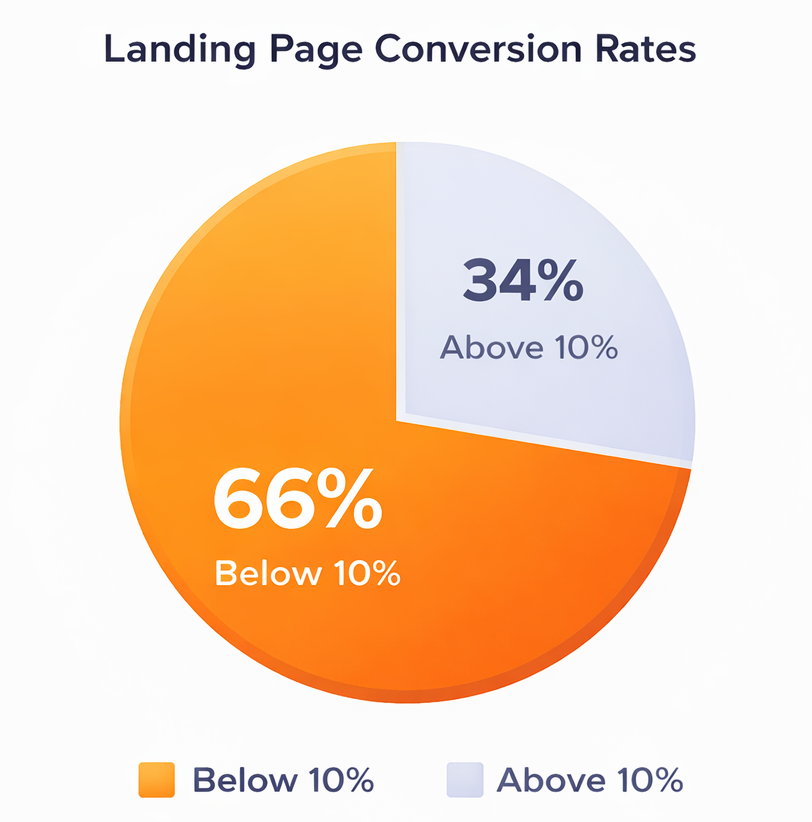
A majority of marketers see conversion rates under 10%, underscoring the importance of tracking meaningful engagement signals
Behavioral and contextual signals solve this problem. They capture actions, not assumptions—what users read, click, save, revisit, or engage with over time. Multiple studies show that behavior‑based targeting can outperform demographic targeting by 2–3× in conversion rate, especially in mid‑ and lower‑funnel campaigns.
Signal #1: Repeated Engagement With the Same Topic
Single interactions are weak indicators. Repeated engagement, however, is one of the strongest predictors of conversion.
Examples include:
-
Viewing similar content multiple times
-
Engaging with several posts around the same pain point
-
Interacting with comparable ads across different sessions
Useful statistic:
Users who interact with related content 3 or more times within 7 days are 65–80% more likely to convert than users with only one interaction.
Why it works: repetition signals problem awareness and active evaluation rather than casual interest.
Signal #2: Recency of Interaction
Timing matters as much as intent. A strong signal from last week is often more valuable than a stronger signal from last month.
Recent actions—such as content views, form interactions, or ad clicks—indicate that the problem is top of mind.
Useful statistic:
Audiences built from actions taken in the last 7 days convert at nearly 2× the rate of audiences built from 30‑day activity windows.
Recency helps marketers avoid spending budget on users whose intent has already cooled.
Signal #3: Depth of Content Consumption
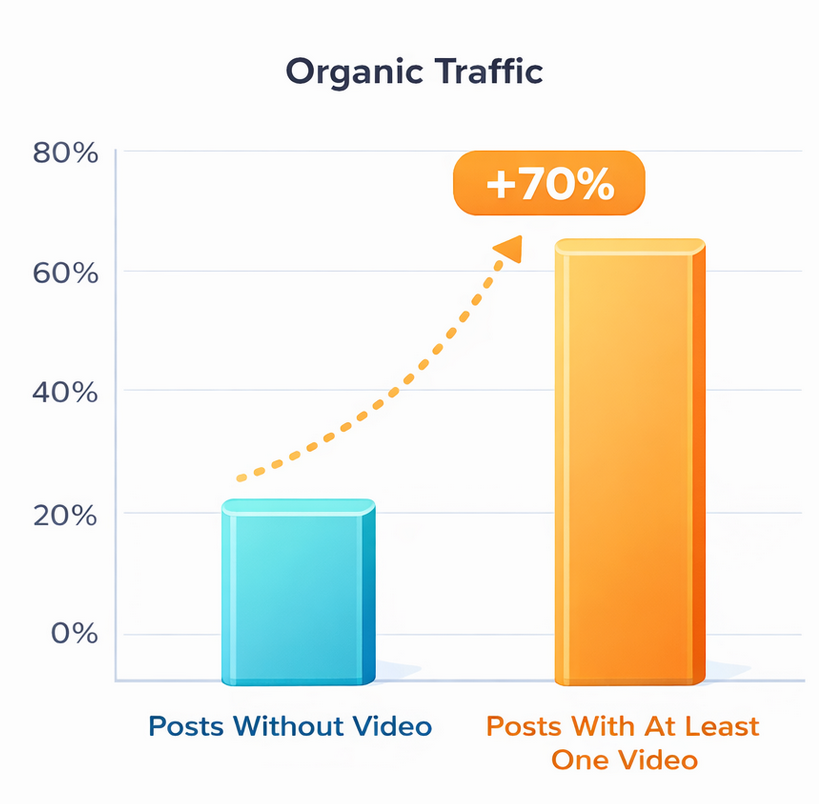
Content with video generates significantly higher engagement — and by extension, greater conversion opportunity — than content without video
Not all engagement is equal. Time spent, scroll depth, and content complexity reveal intent far better than surface‑level clicks.
High‑intent behaviors include:
-
Reading long‑form articles to completion
-
Watching more than 50–75% of a video
-
Saving, bookmarking, or returning to the same content
Useful statistic:
Visitors who consume 75%+ of long‑form content convert at rates 3.4× higher than bounce‑level visitors.
Depth indicates evaluation mode—users are actively assessing whether a solution fits their needs.
Signal #4: Cross‑Channel Consistency
When users express interest across multiple touchpoints, conversion probability increases sharply.
Examples:
-
Engaging with ads and later searching related terms
-
Viewing educational content and later responding to a retargeting message
-
Interacting on social platforms and returning via direct or branded traffic
Useful statistic:
Users who engage across two or more channels convert 90% more often than single‑channel users.
Cross‑channel consistency confirms that interest is deliberate, not accidental.
Signal #5: Problem‑Specific Interaction (Not Brand Interaction)
Early‑stage converters rarely interact with brands first—they interact with problems.
Signals tied to pain points are often stronger than signals tied to brand awareness, especially for new audiences.
Examples:
-
Engaging with content framed around challenges or mistakes
-
Clicking ads that highlight risks or inefficiencies
-
Responding to comparison or evaluation‑focused messaging
Useful statistic:
Problem‑focused messaging generates 40–60% higher conversion rates than feature‑focused messaging in cold and mid‑funnel campaigns.
How to Combine Signals for Predictive Accuracy
Single signals can be misleading. Predictive power comes from stacking signals:
High‑conversion profiles often show:
-
Repeated engagement
-
Recent activity
-
Deep content consumption
-
Cross‑channel exposure
When three or more of these signals occur together, conversion likelihood can increase by 200%+ compared to baseline traffic.
The goal is not more data—but better signal prioritization.
Common Mistakes When Using Marketing Signals
-
Treating all engagement as equal
-
Using long activity windows that dilute intent
-
Optimizing for clicks instead of downstream actions
-
Ignoring signal decay over time
Effective marketers continuously refresh signal sources and narrow timeframes to stay aligned with real intent.
Suggested Reading
For deeper insights into audience behavior and performance optimization, explore these related articles:
Final Thoughts
Conversion rarely happens by chance. It follows patterns—signals left behind by users who are actively evaluating, comparing, and deciding.
Marketers who learn to recognize and prioritize these signals move beyond guesswork and into predictable, scalable growth.