Retargeting has evolved far beyond simple display ads that follow users around the web. Today’s buyers interact with brands across multiple devices, platforms, and sessions before making a decision. As a result, single-touch retargeting strategies are no longer sufficient.
Multi-touch retargeting acknowledges this complexity. Instead of relying on one interaction, it strategically sequences multiple touchpoints to guide prospects from awareness to conversion.
According to industry research, it takes an average of 6–8 touchpoints to generate a viable sales lead. Additionally, businesses that implement coordinated multi-channel retargeting campaigns see up to 30% higher conversion rates compared to single-channel approaches.
This article outlines practical, high-performing multi-touch retargeting strategies that align with how modern buyers actually behave.
Why Single-Touch Retargeting Fails
Single-touch retargeting assumes that one reminder is enough to convert a prospect. In reality, buyers need repeated, context-aware interactions.
Key limitations include:
-
Message fatigue from repetitive ads
-
Lack of personalization based on user behavior
-
Poor timing that ignores buyer readiness
-
Channel limitations that miss users outside one platform
Studies show that 96% of website visitors are not ready to buy on their first visit. Without a structured follow-up sequence, most potential revenue is lost.
What Is Multi-Touch Retargeting?
Multi-touch retargeting is a coordinated approach that delivers a sequence of personalized interactions across multiple channels and stages of the buyer journey.
Instead of repeating the same ad, it adapts messaging based on:
-
User behavior (pages visited, actions taken)
-
Funnel stage
-
Time since last interaction
-
Channel preference
This creates a cohesive experience rather than fragmented impressions.
Core Principles of Effective Multi-Touch Retargeting
1. Behavior-Based Segmentation
Not all visitors are equal. Segment audiences based on intent signals such as:
-
Product page views
-
Cart abandonment
-
Content engagement depth
-
Pricing page visits
Highly segmented campaigns can increase conversion rates by up to 50% compared to generic retargeting.
2. Sequential Messaging
Each touchpoint should move the user forward rather than repeat the same message.
Example sequence:
-
Awareness reminder (brand value)
-
Problem-solution framing
-
Social proof (case studies, testimonials)
-
Offer or incentive
Sequential messaging improves engagement rates by aligning content with user intent.
3. Cross-Channel Coordination
Effective campaigns do not rely on a single platform.
High-performing channel mix:
-
Display advertising
-
Social media retargeting
-
Email follow-ups
-
Search retargeting (RLSA)
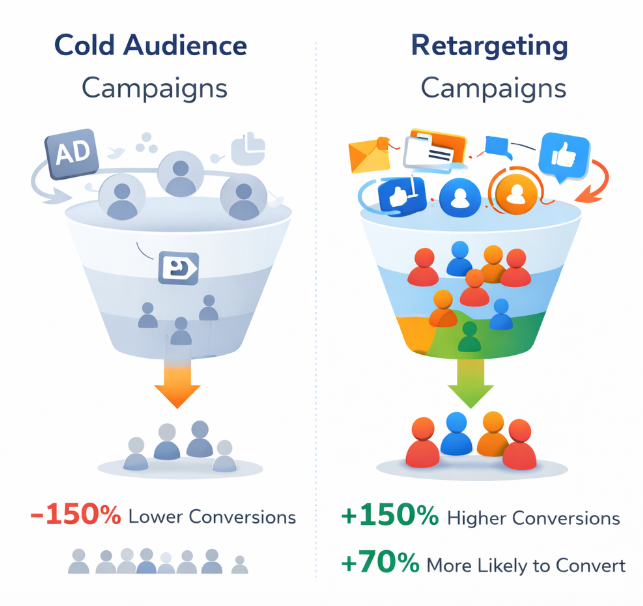
Multi-channel retargeting dramatically outperforms single-channel strategies in conversion efficiency
Marketers using 3+ channels report 287% higher purchase rates compared to single-channel campaigns.
4. Frequency and Timing Control
Overexposure leads to ad fatigue, while underexposure reduces recall.
Best practices:
-
Limit impressions per user per day
-
Adjust frequency based on funnel stage
-
Increase urgency closer to conversion windows
5. Dynamic Personalization
Dynamic creatives adapt in real time based on user behavior.
Examples include:
-
Showing previously viewed products
-
Highlighting relevant features
-
Adjusting messaging based on industry or role
Personalized retargeting ads can deliver up to 2x higher click-through rates.
Proven Multi-Touch Retargeting Strategies
Strategy 1: Funnel-Based Retargeting Sequences
Structure campaigns according to funnel stages:
-
Top of funnel: Educational content and brand positioning
-
Middle of funnel: Case studies and comparisons
-
Bottom of funnel: Offers, demos, and urgency-driven messaging
This ensures users receive relevant content at each stage.
Strategy 2: Time-Delayed Retargeting
Instead of immediate repetition, introduce delays between touchpoints.
Example timing:
-
Day 1–2: Reminder ads
-
Day 3–5: Value-focused messaging
-
Day 6–10: Social proof
-
Day 10+: Conversion incentives
This pacing aligns with natural decision-making processes.
Strategy 3: Intent-Based Retargeting
Use high-intent signals to trigger more aggressive campaigns.
High-intent actions include:
-
Visiting pricing pages
-
Starting checkout processes
-
Requesting demos
These users should receive stronger CTAs and shorter retargeting windows.
Strategy 4: Multi-Device Retargeting
Users switch between devices frequently.
Ensure continuity across:
-
Desktop
-
Mobile
-
Tablet
Cross-device tracking improves conversion accuracy and reduces drop-offs.
Strategy 5: Content-Led Retargeting
Not every touchpoint should be sales-focused.
Use content to build trust:
-
Guides
-
Case studies
-
Industry insights
Content-driven retargeting nurtures leads and shortens sales cycles.
Common Mistakes to Avoid
Even well-funded campaigns fail due to execution issues.
Avoid:
-
Repeating identical creatives
-
Ignoring funnel stages
-
Overloading users with ads
-
Failing to align messaging across channels
-
Neglecting data analysis and optimization
Regular performance reviews are essential for sustained success.
Measuring Success
Key metrics for multi-touch retargeting include:
-
Conversion rate by segment
-
Cost per acquisition (CPA)
-
Return on ad spend (ROAS)
-
Engagement rate across touchpoints
-
Assisted conversions
Multi-touch attribution models provide a more accurate picture of performance compared to last-click attribution.
Further Reading
To deepen your understanding of advanced targeting and campaign optimization, explore these articles:
Conclusion
Multi-touch retargeting is no longer optional—it is essential for aligning with modern buyer behavior. By combining segmentation, sequential messaging, cross-channel coordination, and personalization, marketers can significantly improve both engagement and conversion outcomes.
The most effective strategies focus on delivering the right message at the right time through the right channel. When executed correctly, multi-touch retargeting transforms scattered interactions into a structured path to conversion.