
Many marketing teams optimize campaigns based only on online metrics such as clicks, form submissions, and downloads. However, these signals rarely reflect actual revenue outcomes. Offline conversion feedback loops allow organizations to connect marketing activities with real-world results such as qualified sales calls, deals closed, and revenue generated.
Understanding Offline Conversion Feedback
Offline conversions refer to business outcomes that occur outside the initial digital interaction. Examples include signed contracts, scheduled sales consultations, in-store purchases, or phone deals finalized after a lead form submission. While digital platforms track on-site activity effectively, they often lack visibility into these downstream events.
Offline conversion feedback loops solve this problem by transferring CRM or sales data back into marketing and advertising platforms. This enables marketers to identify which campaigns, keywords, audiences, and channels produce leads that actually convert into revenue.
Research from several industry studies shows that companies that integrate sales data into marketing optimization improve lead-to-customer conversion rates by up to 30%.
Why Lead Quality Suffers Without Feedback Loops
When campaigns are optimized purely for low-funnel digital signals such as form fills, marketing algorithms prioritize volume rather than quality. This often leads to a surge of unqualified leads that overwhelm sales teams.
According to HubSpot research, around 61% of marketers report generating high volumes of leads, yet only 27% of those leads are actually sales-qualified.
Without feedback from sales outcomes, marketing teams cannot distinguish between leads that convert and those that never progress beyond initial contact.
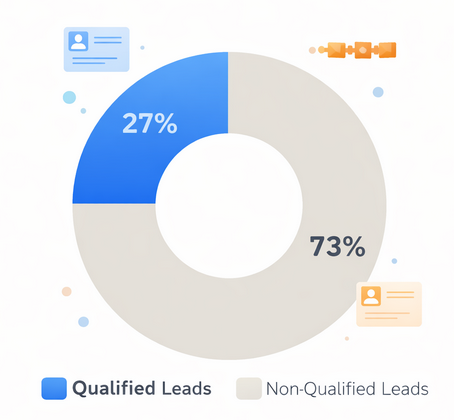
Only a small portion of marketing-generated leads reach the sales-qualified stage
Offline conversion feedback loops address this gap by allowing marketing platforms to learn from actual deal outcomes rather than surface-level engagement metrics.
Key Components of an Effective Offline Feedback System
CRM Integration
The foundation of any feedback loop is accurate CRM data. Sales teams must consistently track lead status changes such as "qualified," "proposal sent," "closed won," or "closed lost." These updates become the signals used to evaluate campaign performance.
Lead Attribution Matching
Each lead must carry a reliable identifier that connects the CRM record with its original marketing source. Common matching methods include:
-
Email address
-
Phone number
-
Click IDs from advertising platforms
-
Unique lead IDs
Accurate attribution ensures that offline outcomes are correctly linked to the campaigns that generated them.
Data Synchronization
Feedback loops require a regular process that sends CRM outcomes back into advertising or marketing systems. This may happen daily or weekly depending on sales cycle length.
Continuous synchronization allows optimization algorithms to adapt to real business outcomes over time.
How Feedback Loops Improve Campaign Performance
Smarter Audience Targeting
When platforms learn which leads become customers, algorithms begin prioritizing audiences with similar characteristics. This significantly improves the probability of attracting qualified prospects.
Better Budget Allocation
Marketing budgets can be shifted toward campaigns that generate actual revenue rather than superficial engagement.
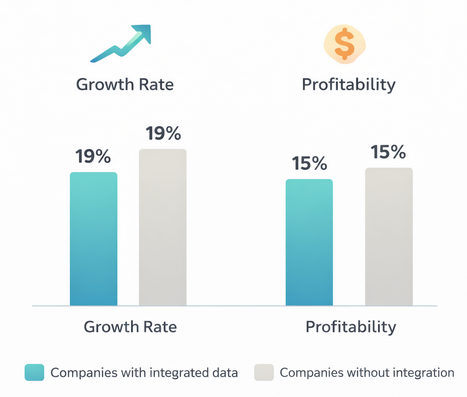
Organizations that connect marketing and sales data outperform those that operate with disconnected systems
According to Forrester research, companies that integrate sales outcomes into marketing measurement achieve up to 20% more efficient media spending.
Reduced Sales Team Friction
Sales teams frequently struggle with lead lists that contain low-intent prospects. Feedback loops help reduce this problem by allowing marketing campaigns to filter out sources that repeatedly generate poor-quality leads.
Over time, this alignment improves trust between marketing and sales departments.
Best Practices for Implementing Offline Conversion Feedback
Standardize Lead Status Definitions
Sales teams must use consistent definitions for stages such as marketing-qualified lead (MQL), sales-qualified lead (SQL), and closed deal. Inconsistent status updates reduce the reliability of feedback signals.
Track Revenue-Based Conversions
Whenever possible, send high-value signals such as revenue amount or deal stage rather than simply "lead converted." More detailed signals allow optimization algorithms to prioritize the most profitable leads.
Maintain Clean Data Hygiene
Duplicate records, incomplete contact details, and inconsistent formatting can break attribution matching. Regular CRM audits are necessary to maintain data integrity.
Monitor Feedback Accuracy
Feedback loops should be audited periodically to ensure that conversions are correctly attributed. Even small attribution errors can significantly distort optimization models.
Measuring the Impact of Feedback Loops
Once implemented, organizations typically observe improvements in several key metrics:
-
Higher lead-to-opportunity conversion rates
-
Reduced cost per qualified lead
-
Improved campaign ROI
-
Shorter sales cycles
Studies indicate that organizations using closed-loop marketing and sales data alignment experience revenue growth rates up to 15% higher than companies that rely solely on marketing-side metrics.
Recommended Articles
Conclusion
Offline conversion feedback loops bridge the gap between marketing activity and real business outcomes. By feeding CRM and sales data back into marketing systems, organizations enable smarter optimization based on revenue-generating behavior rather than surface-level engagement metrics.
Companies that implement structured feedback processes consistently see improvements in lead quality, marketing efficiency, and sales productivity. As marketing ecosystems grow increasingly automated, integrating offline conversion data is becoming an essential component of performance-driven growth strategies.