Prospecting and retargeting are often treated as separate disciplines, but the strongest performance comes when they are intentionally connected. Prospecting campaigns are not just about immediate conversions; their primary strategic value is creating a qualified pool of users who can later be retargeted with stronger intent signals.
When prospecting is optimized to generate engagement, site visits, and micro-conversions, retargeting becomes more efficient and scalable. Instead of chasing cold audiences repeatedly, advertisers build momentum by recycling qualified traffic back into conversion-focused campaigns.
The Role of Prospecting in Building Retargeting Assets
Every prospecting campaign should be evaluated by the quality of audiences it creates, not just by first-touch results. High-performing prospecting campaigns reliably produce:
-
Website visitors with meaningful session depth
-
Engaged users who interact with key pages or content
-
Video viewers and social engagers who demonstrate early intent
-
First-party data signals that strengthen downstream targeting
According to industry benchmarks, retargeted users convert two to three times more frequently than cold audiences, making the quality of the prospecting input a decisive factor in overall return on ad spend.
Designing Prospecting Campaigns for Retargeting Success
Optimize for Engagement, Not Just Clicks
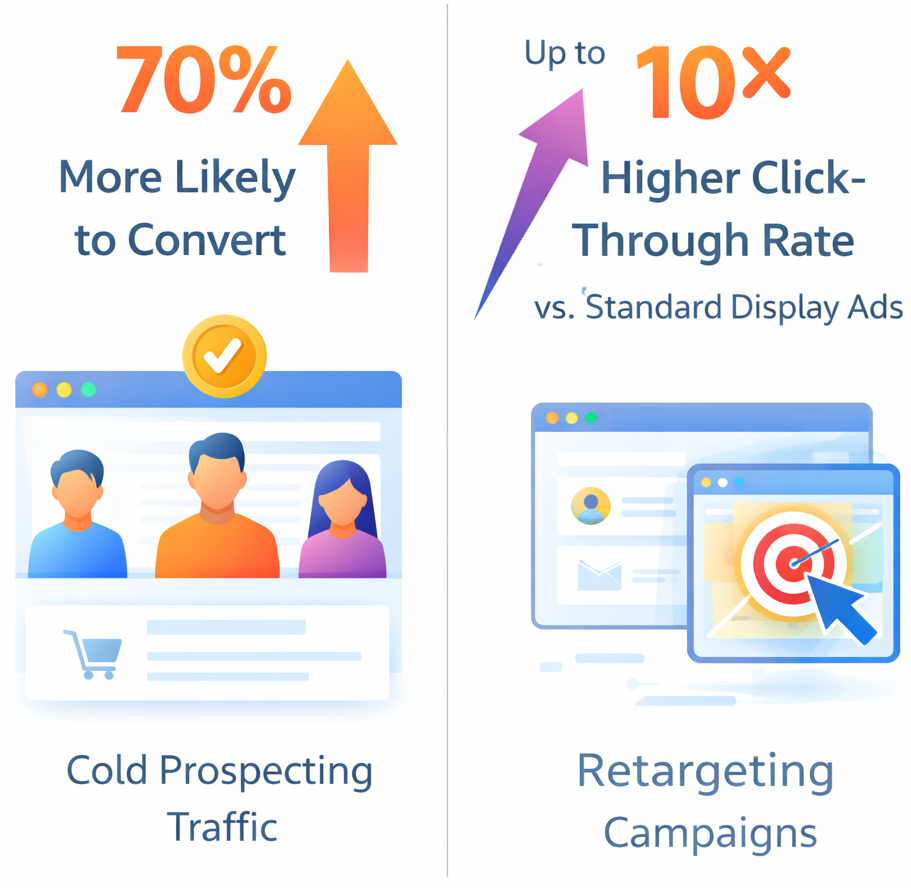
Retargeted users are about 70% more likely to convert, with retargeting ads achieving up to 10× higher click-through rates compared to standard display advertising
Click volume alone does not guarantee valuable retargeting pools. Prospecting campaigns should be optimized for behaviors that correlate with conversion, such as time on site, multiple page views, or content consumption. Studies show that users who spend more than 60 seconds on a site are up to 70% more likely to convert when retargeted compared to bounce traffic.
Segment Prospecting Audiences by Intent Level
Not all prospecting traffic should feed the same retargeting campaigns. Segmenting audiences based on interaction depth allows for more precise follow-up messaging. For example:
-
High-intent visitors can be retargeted with direct offers
-
Medium-intent users respond better to social proof and education
-
Low-intent engagers require softer reintroduction before conversion-focused messaging
This layered approach improves relevance and reduces wasted impressions in retargeting.
Use Prospecting Creatives to Pre-Qualify Users
Creatives play a filtering role. Clear messaging about pricing, use cases, or target personas helps discourage unqualified clicks while attracting users who are more likely to convert later. Advertisers who pre-qualify traffic through creative messaging often see retargeting cost-per-acquisition drop by 20–30%.
Key Metrics That Signal Retargeting Readiness
To understand whether prospecting campaigns are feeding retargeting effectively, monitor these indicators:
-
Percentage of prospecting traffic added to retargeting pools
-
Conversion rate of retargeted users versus cold traffic
-
Cost per retargeting conversion over time
-
Frequency and saturation levels within retargeting campaigns
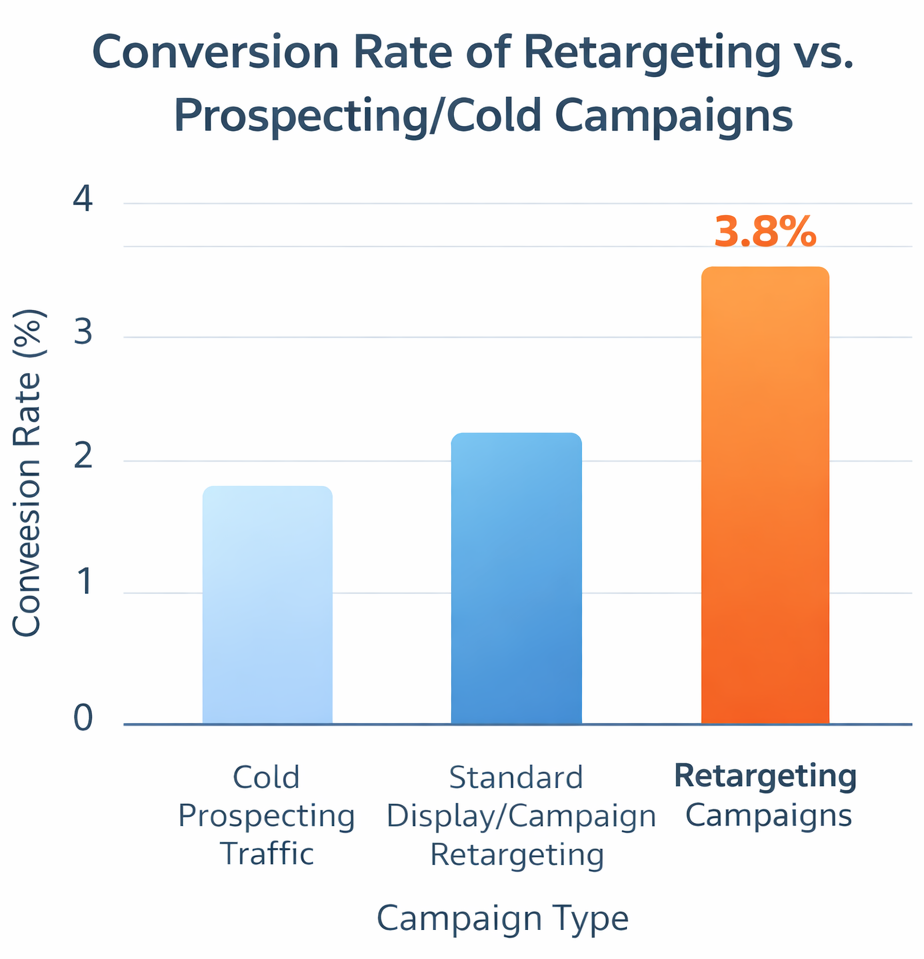
Conversion rates for retargeted audiences are significantly higher than those from broad prospecting or display campaigns
On average, retargeting audiences built from high-intent prospecting traffic deliver conversion rates 2.5x higher than audiences built from broad, untargeted visits.
Scaling Retargeting Through Smarter Prospecting
As prospecting volume increases, quality control becomes critical. Scaling should focus on expanding reach without diluting intent signals. This often involves testing new audience sources, creatives, and engagement objectives while maintaining strict qualification criteria.
When prospecting campaigns are designed with retargeting in mind, scaling becomes a compounding process. Each new wave of qualified traffic strengthens the performance of existing retargeting campaigns instead of forcing constant resets.
Common Mistakes That Break the Funnel
Many funnels fail because prospecting and retargeting are disconnected. Common issues include:
-
Sending low-quality traffic directly into retargeting
-
Using identical messaging for all retargeted users
-
Ignoring frequency and audience fatigue
-
Measuring prospecting success only by immediate conversions
Avoiding these mistakes ensures that retargeting remains a performance multiplier rather than a cost center.
Suggested Articles for Further Reading
Final Thoughts
Prospecting campaigns set the foundation for retargeting success. When they are built to attract, qualify, and segment users effectively, retargeting becomes more profitable, predictable, and scalable. Treat prospecting as the engine that fuels the entire funnel, not just the first step in the journey.