Modern marketing relies on data-driven decision-making, but traditional data storage systems often struggle to keep up with the volume, velocity, and variety of information generated across channels. Data lakes have emerged as a powerful solution, allowing marketers to centralize structured and unstructured data for advanced analysis and intelligence.
By leveraging data lakes effectively, marketing teams can gain deeper insights into customer behavior, optimize campaigns in real time, and unlock new growth opportunities.
What Is a Data Lake?
A data lake is a centralized repository that stores vast amounts of raw data in its native format. Unlike traditional data warehouses, which require predefined schemas, data lakes allow organizations to ingest data from multiple sources without immediate transformation.
This flexibility makes data lakes particularly valuable for marketing intelligence, where data sources may include:
-
CRM systems
-
Website analytics
-
Social media interactions
-
Ad platform performance data
-
Third-party enrichment datasets
Why Data Lakes Matter for Marketing Intelligence
1. Unified Customer View
One of the biggest challenges in marketing is data fragmentation. Data lakes consolidate information from multiple touchpoints, enabling a comprehensive view of each customer.
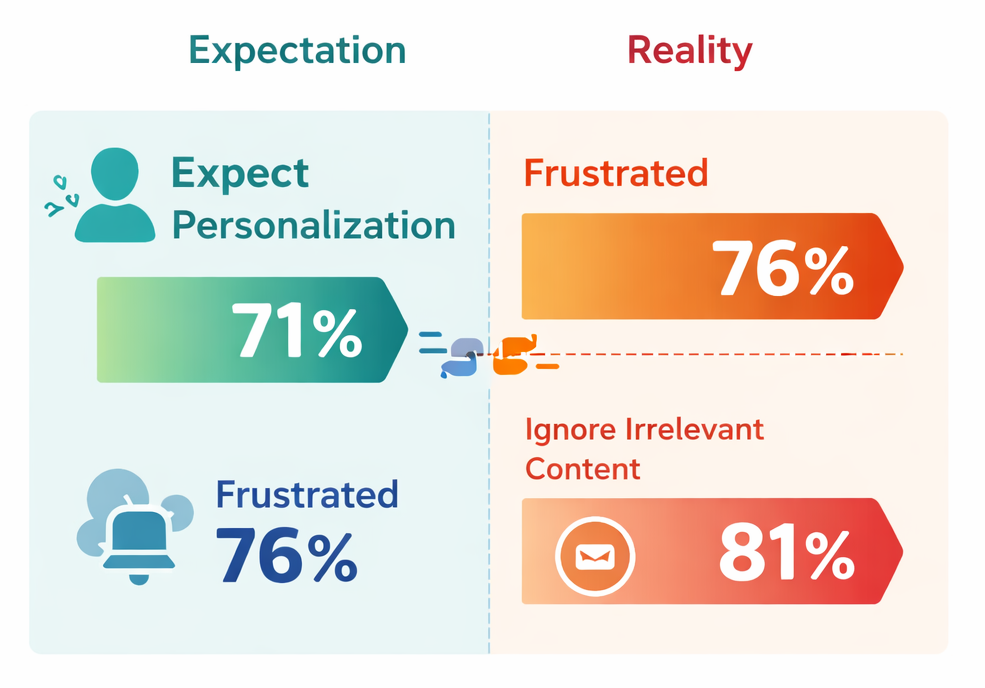
A significant gap exists between customer expectations for personalization and the relevance of marketing messages delivered
According to industry research, organizations that implement unified customer data strategies can increase marketing ROI by up to 20%.
2. Scalability for Growing Data Volumes
Global data creation is projected to exceed 180 zettabytes by 2025. Data lakes are designed to scale horizontally, allowing marketing teams to store and process massive datasets without performance bottlenecks.
3. Advanced Analytics and Machine Learning
Data lakes support advanced analytics, including predictive modeling and segmentation. Marketers can identify high-intent prospects, forecast customer behavior, and automate personalization strategies.
Companies using AI-driven marketing analytics report up to 30% higher conversion rates compared to those relying on traditional methods.
4. Real-Time Decision Making
With streaming data capabilities, data lakes enable near real-time insights. This allows marketers to adjust campaigns dynamically based on performance signals.
Real-time personalization can increase customer engagement by up to 40%, according to recent studies.
Key Use Cases for Data Lakes in Marketing
Customer Segmentation
By aggregating behavioral, demographic, and transactional data, data lakes enable highly granular segmentation. Marketers can create dynamic audience groups based on real-time behavior rather than static criteria.
Campaign Optimization
Data lakes allow teams to analyze campaign performance across multiple channels simultaneously. This holistic view helps identify which strategies drive the best results.
Organizations that use integrated data analytics for campaign optimization see up to 25% improvement in marketing efficiency.
Predictive Lead Scoring
Using historical and behavioral data, marketers can build predictive models to score leads based on their likelihood to convert.
Predictive lead scoring can increase sales productivity by up to 15% and reduce customer acquisition costs.
Attribution Modeling
Understanding which touchpoints contribute to conversions is critical. Data lakes enable multi-touch attribution models that provide a more accurate picture of customer journeys.
Best Practices for Implementing Data Lakes
1. Define Clear Objectives
Before building a data lake, organizations should identify specific marketing goals, such as improving segmentation, increasing conversion rates, or enhancing attribution accuracy.
2. Ensure Data Quality and Governance
Without proper governance, data lakes can quickly become “data swamps.” Implementing data validation, metadata management, and access controls is essential.
3. Integrate with Marketing Tools
To maximize value, data lakes should connect seamlessly with analytics platforms, CRM systems, and campaign management tools.
4. Enable Self-Service Analytics
Empowering marketing teams with user-friendly tools ensures that insights can be accessed without heavy reliance on data engineering teams.
5. Prioritize Security and Compliance
With increasing data privacy regulations, organizations must implement robust security measures, including encryption and role-based access controls.
Common Challenges
Data Complexity
Managing large volumes of diverse data can be challenging without proper infrastructure and expertise.
Skill Gaps
Marketing teams may lack the technical skills required to fully leverage data lakes, necessitating training or cross-functional collaboration.
Cost Management
While data lakes are scalable, costs can grow quickly if storage and processing are not optimized.
Future Trends
The role of data lakes in marketing intelligence is expected to expand significantly. Emerging trends include:
-
Increased adoption of real-time data processing
-
Greater integration with AI and automation tools
-
Enhanced focus on privacy-first data strategies
By 2026, over 80% of enterprise marketing teams are expected to rely on centralized data platforms for decision-making.
Conclusion
Data lakes are transforming how organizations approach marketing intelligence. By centralizing diverse data sources and enabling advanced analytics, they provide the foundation for more informed, agile, and effective marketing strategies.
As competition intensifies and data volumes continue to grow, leveraging data lakes will become essential for organizations seeking to maintain a competitive edge.