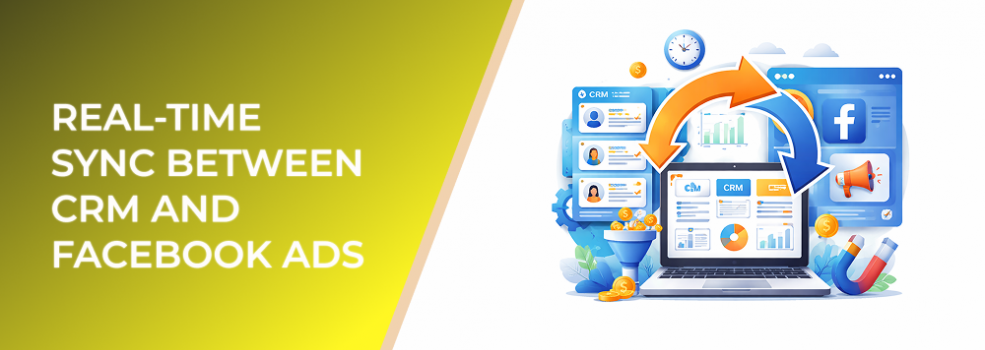
Modern marketing depends on accurate, timely data. However, many organizations still rely on manual uploads or delayed integrations between their CRM and Facebook Ads. This lag creates inefficiencies, outdated targeting, and missed opportunities.
Real-time sync eliminates these gaps by continuously updating audiences based on CRM activity. As customer data evolves, advertising campaigns automatically adapt, ensuring that messaging stays relevant and effective.
Why Real-Time Sync Matters
1. Improved Targeting Accuracy
Customer data changes rapidly—new leads are added, deals close, and statuses evolve. Without real-time updates, advertisers risk targeting users who are no longer relevant.
According to industry research, up to 30% of CRM data becomes outdated each year. Real-time synchronization ensures that audiences reflect the latest customer status, improving campaign precision.
2. Reduced Wasted Ad Spend
When audiences are not updated in real time, businesses often continue to spend budget on users who have already converted or are no longer qualified.
Studies show that advertisers can waste between 15–25% of their budget due to poor audience management. Real-time syncing minimizes this waste by automatically excluding converted users and prioritizing high-value prospects.
3. Faster Campaign Optimization
Real-time data allows marketers to react instantly to changes in customer behavior. For example:
-
When a lead becomes a customer, they can be removed from acquisition campaigns
-
When a deal reaches a specific stage, the user can be added to upsell campaigns
-
When engagement drops, reactivation campaigns can be triggered immediately
This level of responsiveness significantly shortens optimization cycles.
Key Use Cases
Lead Qualification and Segmentation
Automatically segment leads based on CRM fields such as lifecycle stage, deal size, or engagement score. This enables more precise messaging tailored to each segment.
Customer Exclusion
Prevent existing customers from seeing acquisition ads. This not only improves user experience but also reallocates budget to new prospects.
Upsell and Cross-Sell Campaigns
As soon as a deal is closed, customers can be added to new audiences for upsell or cross-sell campaigns, increasing lifetime value.
Re-Engagement Campaigns
Identify inactive leads or customers in the CRM and automatically target them with re-engagement ads.
Technical Considerations
Data Mapping
Accurate field mapping between CRM and Facebook is essential. Key identifiers such as email, phone number, and customer ID must be consistently formatted.
Match Rate Optimization
Higher match rates lead to better audience performance. Best practices include:
-
Using multiple identifiers (email, phone, name)
-
Normalizing data formats
-
Ensuring data completeness
Sync Frequency
While batch updates may occur daily or hourly, real-time systems push updates instantly. This ensures that audience changes reflect immediately in campaigns.
Privacy and Compliance
All data synchronization must comply with regulations such as GDPR and CCPA. Proper consent management and secure data handling are critical.
Performance Impact

Discrepancies between ad platforms and CRM systems create misleading performance insights
Companies implementing real-time CRM-to-Facebook synchronization report measurable improvements:
-
Up to 40% increase in conversion rates due to better targeting
-
20–30% reduction in cost per acquisition
-
25% improvement in return on ad spend (ROAS)
These gains stem from more accurate audiences and faster optimization.
Common Challenges
Data Silos
Disconnected systems prevent seamless data flow. Integration solutions must bridge these gaps without manual intervention.
Latency Issues
Even small delays can impact campaign performance. True real-time systems eliminate latency by triggering updates instantly.
Scalability
As data volume grows, synchronization processes must handle large datasets without performance degradation.
Best Practices
-
Keep CRM data clean and regularly updated
-
Use automated workflows to define audience rules
-
Monitor match rates and continuously optimize data quality
-
Align marketing and sales teams around shared data definitions
Suggested Articles for Further Reading
Conclusion
Real-time synchronization between CRM systems and Facebook Ads is no longer optional for data-driven marketing teams. It enables precise targeting, reduces inefficiencies, and unlocks new growth opportunities.
By ensuring that audience data is always current, businesses can deliver more relevant ads, improve performance metrics, and maximize the value of their customer data.