Creative fatigue is one of the most common reasons paid media performance stalls during scale. As budgets rise, ads are shown more frequently to the same users, engagement drops, costs increase, and teams scramble to produce more creatives—often faster than quality allows.
Scaling without creative burnout requires a shift in mindset. Instead of constantly producing brand-new ads, high-performing advertisers focus on systems that extend creative lifespan, increase learning efficiency, and multiply results from existing assets.
Why Creative Burnout Happens During Scale
Creative burnout is not caused by scaling itself, but by inefficient scaling methods. Common triggers include:
-
Excessive ad frequency on narrow audiences
-
Fragmented campaign structures that slow learning
-
Over-reliance on fully new creatives instead of iterations
-
Manual testing processes that consume time and resources
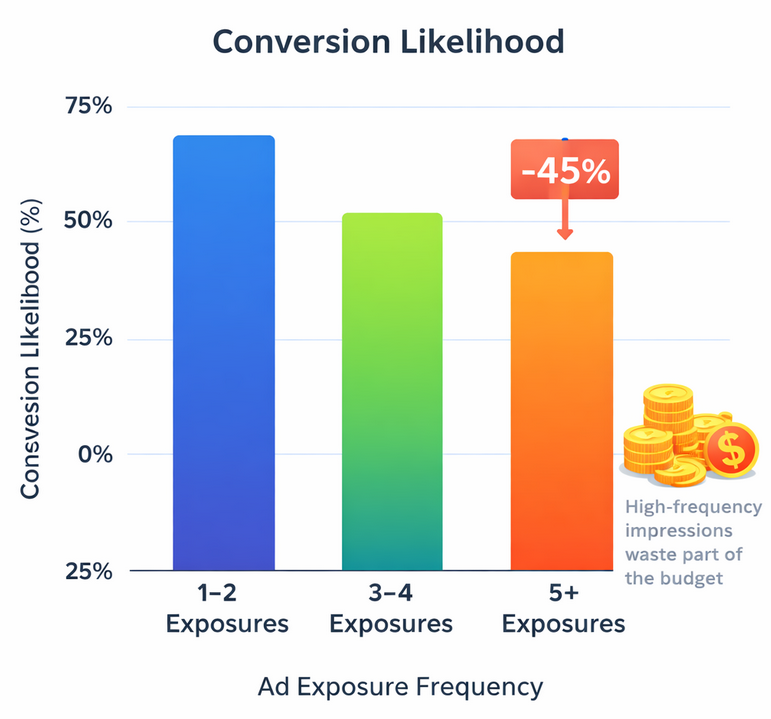
Conversion likelihood decreases sharply as audiences see the same creative more often
Industry data shows that ad performance often begins to decline once frequency exceeds 2.5–3.0 within a short time frame, leading to higher CPMs and lower click-through rates. Without structural changes, scaling simply accelerates this decline.
Shift From Creative Volume to Creative Leverage
Instead of producing more ads, focus on getting more value from each creative.
Break Creatives Into Modular Components
High-performing ads usually win because of specific elements—not the entire ad. Headlines, hooks, visuals, offers, and CTAs can be mixed and matched to create multiple variations from a single core concept.
Advertisers who reuse core visual assets while testing multiple headlines and primary texts report up to 30–40% faster learning cycles compared to testing fully unique creatives each time.
Iterate Winners, Don’t Replace Them
Scaling teams often pause winning ads too early in favor of “fresh” ideas. A better approach is controlled iteration:
-
Keep the core concept
-
Change one element at a time
-
Launch iterations in parallel with the original
This approach preserves performance signals while reducing creative production pressure.
Use Structure to Reduce Creative Pressure
Campaign structure plays a critical role in creative longevity.
Consolidate to Extend Creative Lifespan
When the same creative is split across multiple ad sets or campaigns, delivery becomes fragmented and learning slows. Consolidated structures allow platforms to allocate spend more efficiently, helping strong creatives stabilize and scale.
Data from large-scale ad accounts shows that consolidated campaigns can improve conversion efficiency by over 20% compared to heavily segmented setups, while requiring fewer active creatives to maintain performance.
Let Algorithms Find New Demand
Broad targeting paired with strong creative allows platforms to discover new pockets of demand without constantly refreshing ads. This reduces frequency pressure on small audiences and extends creative viability.
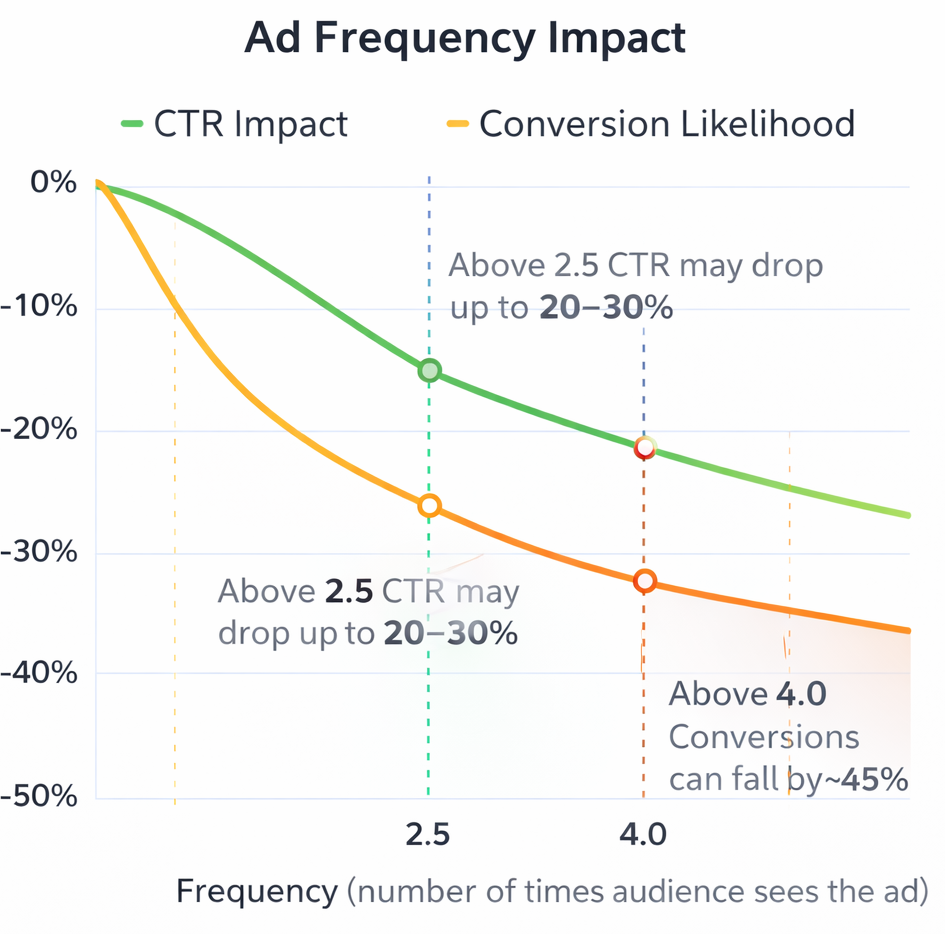
Optimal ad frequency thresholds show where engagement and conversion performance begin to drop
Accounts using broader audience strategies often see 15–25% lower CPM volatility during scale compared to tightly filtered targeting.
Separate Creative Testing From Scaling
One of the biggest causes of burnout is testing and scaling in the same environment.
A more sustainable approach:
-
Use a dedicated testing setup with controlled budgets
-
Promote only proven creatives into scaling campaigns
-
Refresh scale campaigns with iterations, not experiments
This separation protects performance while giving creative teams predictable testing cycles instead of constant emergency requests.
Measure Fatigue Correctly
Creative burnout is often misdiagnosed. Instead of reacting to short-term dips, monitor:
-
Frequency trends over time
-
CTR decay by creative concept
-
CPA stability at increasing spend levels
In many cases, a 5–10% performance fluctuation is normal during scale and does not require immediate creative replacement. Overreacting leads to unnecessary workload and faster burnout.
Build a Repeatable Scaling System
Sustainable scaling is the result of process, not constant ideation.
High-performing teams typically:
-
Maintain a creative backlog based on proven concepts
-
Schedule iteration releases instead of ad hoc launches
-
Review creative performance weekly, not daily
-
Align media buyers and creatives around data, not opinions
Teams that operate with structured creative roadmaps report up to 35% lower creative turnover while maintaining consistent growth.
Conclusion
Scaling paid traffic without creative burnout is not about slowing growth—it’s about scaling smarter. By leveraging creative components, consolidating delivery, separating testing from scaling, and trusting data-driven iteration, advertisers can increase spend without exhausting ideas or people.
Sustainable growth comes from systems that make creativity last longer, work harder, and scale further.
Further Reading
To continue exploring sustainable growth and performance optimization, consider these related articles: