B2B buyers rarely convert after a single interaction. According to industry research, it typically takes between 6 and 8 touchpoints to generate a qualified lead. In more complex sales cycles, that number can exceed 10 interactions across multiple channels.
Sequential messaging addresses this reality by delivering a structured series of communications tailored to the buyer’s stage in the funnel. Instead of sending disconnected messages, companies can build logical progressions that nurture leads and accelerate decision-making.
What Is Sequential Messaging?
Sequential messaging is the practice of delivering a predefined series of messages to prospects over time, based on their behavior, profile, or stage in the funnel. Each message builds on the previous one, creating continuity and relevance.
Unlike one-off campaigns, sequential messaging relies on:
-
Behavioral triggers
-
Timing optimization
-
Personalization at scale
-
Multi-channel coordination
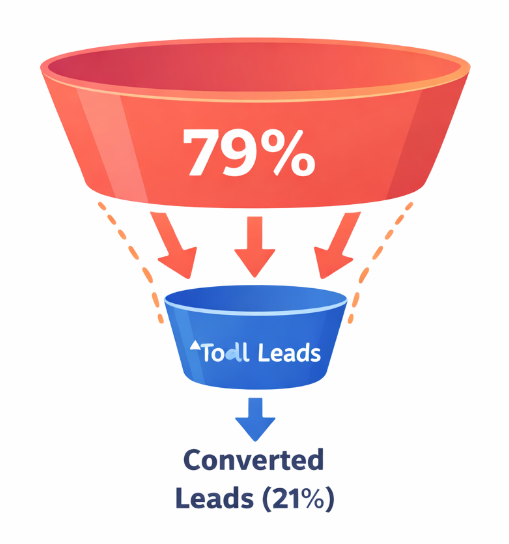
The majority of B2B leads fail to convert without structured, sequential engagement
The goal is to move prospects from awareness to consideration and ultimately to conversion through a guided communication flow.
Why Sequential Messaging Matters in B2B
1. Longer Sales Cycles Require Consistency
B2B sales cycles often span weeks or months. Consistent messaging ensures your brand remains top of mind throughout the decision-making process.
2. Buyers Expect Personalization
Studies show that 71% of B2B buyers expect personalized interactions, while 76% become frustrated when this expectation is not met. Sequential messaging enables personalization by adapting each step based on prior engagement.
3. Higher Conversion Rates
Companies that implement structured lead nurturing generate 50% more sales-ready leads at 33% lower cost. Sequential messaging is a core component of effective nurturing strategies.
Key Components of an Effective Sequence
Audience Segmentation
Start by dividing your audience into meaningful segments based on:
-
Industry
-
Company size
-
Job role
-
Funnel stage
Segmentation ensures that each sequence is relevant to the recipient.
Message Progression
Each step in the sequence should serve a specific purpose:
-
Awareness: Introduce the problem or opportunity
-
Education: Provide insights or data
-
Validation: Share proof points or case studies
-
Conversion: Present a clear call to action
This progression mirrors the natural buying journey.
Timing and Cadence
Timing can significantly impact performance. Research suggests that spacing messages 2–5 days apart often yields optimal engagement in B2B contexts. However, cadence should be adjusted based on audience behavior and channel.
Multi-Channel Integration
Effective sequences combine multiple channels, such as:
-
Email
-
LinkedIn outreach
-
Retargeting ads
Omnichannel strategies can increase engagement rates by up to 287% compared to single-channel approaches.
Designing a High-Performing Sequence
Step 1: Define the Objective
Determine what you want to achieve with the sequence—lead qualification, demo booking, or content engagement.
Step 2: Map the Buyer Journey
Identify key decision points and information needs at each stage.
Step 3: Create Message Variations
Develop multiple versions of each message to test different angles, such as:
-
Value-driven messaging
-
Problem-focused messaging
-
Social proof-based messaging
Step 4: Implement Trigger-Based Automation
Use behavioral signals (opens, clicks, replies) to adjust the sequence dynamically.
Step 5: Measure and Optimize
Track key metrics, including:
-
Open rates
-
Response rates
-
Conversion rates
Continuous optimization is essential for maintaining performance.
Common Mistakes to Avoid
Overloading Prospects
Sending too many messages in a short period can lead to fatigue and unsubscribes.
Lack of Personalization
Generic messaging reduces engagement and undermines trust.
Ignoring Data Signals
Failing to adapt sequences based on user behavior limits effectiveness.
Single-Channel Focus
Relying on one channel restricts reach and reduces overall impact.
Practical Example of a Sequence
A typical B2B outbound sequence might look like this:
-
Day 1: Introductory email highlighting a key pain point
-
Day 3: Follow-up email with relevant data or insight
-
Day 6: LinkedIn connection request with a brief note
-
Day 9: Case study demonstrating results
-
Day 12: Direct call-to-action for a meeting or demo
Each step builds on the previous interaction, increasing familiarity and trust.
Future Trends in Sequential Messaging
AI-Driven Personalization
Artificial intelligence is enabling real-time customization of messaging based on user behavior and intent signals.
Predictive Timing
Advanced analytics can determine the optimal moment to send each message, improving engagement rates.
Deeper Integration Across Platforms
As tools become more interconnected, sequences will span more channels with greater precision and consistency.
Conclusion
Sequential messaging transforms B2B funnels from fragmented interactions into cohesive journeys. By structuring communication into logical, data-driven sequences, businesses can improve engagement, build stronger relationships, and drive higher conversion rates.
Organizations that invest in well-designed messaging sequences will be better positioned to navigate complex sales cycles and meet the evolving expectations of modern B2B buyers.
Recommended Articles