Advertising has always evolved alongside technology, but the rise of artificial intelligence is accelerating that transformation dramatically. Autonomous advertising campaigns—systems that can plan, execute, optimize, and scale with little to no human input—are becoming increasingly viable.
According to recent industry research, over 80% of marketers are already using some form of AI in their campaigns, and companies leveraging advanced automation report up to 30% improvements in campaign efficiency. As these technologies mature, autonomy in advertising is expected to move from a competitive advantage to a baseline expectation.
What Are Autonomous Advertising Campaigns?
Autonomous advertising campaigns use AI-driven systems to manage the full lifecycle of marketing efforts. This includes:
-
Audience identification and segmentation
-
Creative generation and testing
-
Budget allocation and bidding strategies
-
Real-time optimization based on performance data
Unlike traditional automation, which relies on predefined rules, autonomous systems continuously learn and adapt using machine learning models and large-scale data inputs.
Key Technologies Driving Autonomy
Machine Learning and Predictive Analytics
Machine learning models analyze historical and real-time data to predict which strategies will deliver the best outcomes. Predictive analytics enables systems to anticipate user behavior and adjust campaigns proactively.
Generative AI for Creative Production
Generative AI tools can produce ad copy, visuals, and variations at scale. This dramatically reduces production time while increasing the volume of testable creative assets.
Real-Time Data Processing
Modern platforms process vast amounts of data instantly, allowing campaigns to respond to user interactions, market changes, and competitor activity in real time.
Reinforcement Learning
Reinforcement learning allows systems to optimize through continuous experimentation, automatically prioritizing strategies that yield the highest returns.
Benefits of Autonomous Campaigns
Increased Efficiency
Autonomous systems reduce the need for manual intervention, freeing up teams to focus on strategy rather than execution. Organizations report up to 25–35% time savings in campaign management.
Improved Performance
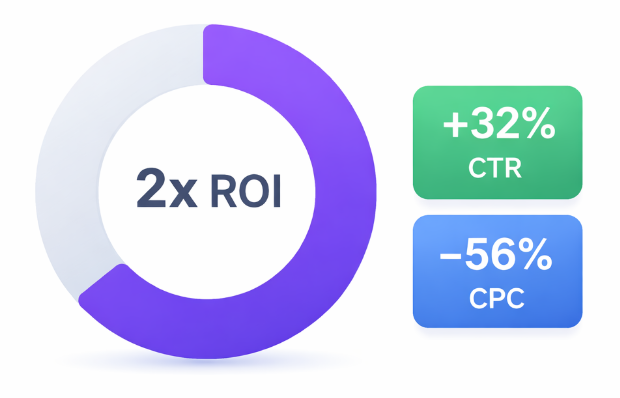
AI-powered advertising significantly improves performance metrics, including return on ad spend, engagement rates, and cost efficiency
By continuously optimizing variables such as targeting, creatives, and bids, autonomous campaigns can significantly improve key metrics. Studies indicate that AI-driven optimization can increase conversion rates by up to 20%.
Scalability
Autonomous systems can manage thousands of campaign variations simultaneously, enabling businesses to scale efforts without proportional increases in resources.
Faster Decision-Making
With real-time insights and automated responses, campaigns can adapt instantly rather than waiting for manual analysis.
Challenges and Considerations
Data Quality and Availability
Autonomous systems depend heavily on high-quality data. Inaccurate or incomplete data can lead to poor decision-making and suboptimal results.
Transparency and Control
As systems become more autonomous, marketers may have less visibility into decision-making processes. Ensuring transparency and maintaining control mechanisms is critical.
Ethical and Privacy Concerns
The use of AI in advertising raises questions about data privacy, bias, and responsible targeting. Compliance with regulations remains essential.
Integration with Existing Systems
Implementing autonomous campaigns often requires integration with multiple platforms, which can be technically complex.
The Role of Human Marketers
Despite increasing autonomy, human expertise remains essential. Marketers will shift from executing campaigns to:
-
Defining strategic objectives
-
Setting constraints and guidelines for AI systems
-
Interpreting insights and making high-level decisions
-
Ensuring ethical and brand-aligned outcomes
This collaboration between humans and AI will define the future of advertising.
What to Expect in the Next Five Years
Fully Self-Optimizing Campaigns
Campaigns will increasingly operate with minimal human input, automatically adjusting all variables to maximize performance.
Hyper-Personalization at Scale
AI will enable highly personalized messaging for individual users, driven by behavioral and contextual data.
Cross-Channel Autonomy
Autonomous systems will manage campaigns across multiple platforms simultaneously, optimizing budget allocation and messaging holistically.
Predictive Campaign Planning
Instead of reacting to performance, systems will predict outcomes and recommend strategies before campaigns even launch.
How to Prepare for Autonomous Advertising
-
Invest in high-quality data infrastructure
-
Adopt AI-powered tools gradually
-
Train teams to work alongside intelligent systems
-
Establish governance frameworks for AI usage
Organizations that begin this transition early will be better positioned to capitalize on the efficiencies and performance gains of autonomous campaigns.
Conclusion
Autonomous advertising campaigns represent a significant shift in how marketing is executed. By combining advanced AI technologies with strategic human oversight, businesses can achieve greater efficiency, scalability, and performance.
As adoption accelerates, the focus will shift from whether to use autonomous systems to how effectively they are implemented. Those who embrace this change will gain a meaningful advantage in an increasingly competitive digital landscape.
Suggested Articles to Read Next