
Digital advertising performance is typically analyzed through metrics such as impressions, click-through rates (CTR), and conversion rates. However, one overlooked behavioral factor plays a critical role in determining whether ads are actually noticed: scroll speed. The rate at which users move through a webpage can drastically affect ad viewability, engagement, and overall campaign effectiveness.
What Is Scroll Speed?
Scroll speed refers to the velocity at which users move through a webpage’s content. It is usually measured in pixels per second or by time spent within a specific viewport area.
Research shows that most users spend only a few seconds scanning each section of a webpage before moving on. According to UX studies, users typically read only about 20–28% of the text on an average web page.
Why Scroll Speed Matters for Ad Visibility
Ad viewability depends heavily on how long an advertisement remains within a user's visible screen area. If users scroll quickly, ads may technically load but remain unseen.
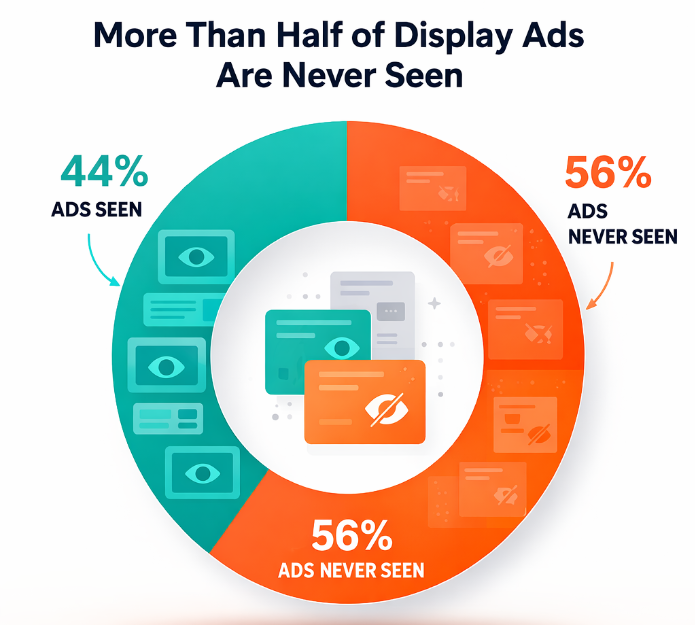
More than half of display ads are never actually seen by users, despite being loaded on the page
Industry research indicates that around 30–40% of display ads are never actually viewed by users because they pass through the viewport too quickly. Faster scrolling directly reduces the time available for visual processing.
The Psychology Behind Fast Scrolling
User behavior on digital platforms is strongly influenced by cognitive load and content scanning patterns.
Several studies on web usability have shown:
-
Users form an opinion about a webpage in roughly 50 milliseconds.
-
Most readers scan pages in an F-shaped pattern.
-
Attention spans for digital content average around 8 seconds.
These patterns mean that ads placed outside key scanning zones may never capture attention if scrolling happens rapidly.
Scroll Speed and Mobile Advertising
Mobile devices intensify the impact of scroll behavior. Smaller screens encourage faster swiping and shorter viewing windows.
Research from mobile analytics platforms indicates:
-
Mobile users scroll up to 30% faster than desktop users.
-
Average mobile session times are shorter but involve more rapid content navigation.
-
Viewability rates for mobile display ads are often lower when ads are placed too far down the page.
How Scroll Speed Influences Engagement Metrics
Scroll speed can indirectly affect several important advertising metrics:
Viewability Rate
Ads must stay within the viewport long enough to register as viewed. Rapid scrolling can reduce viewability even when impressions are counted.
Click-Through Rate
Users are less likely to interact with ads that appear briefly during rapid page movement.
Brand Recall
Marketing studies show that exposure time directly correlates with brand memory. Ads that remain visible for at least 2–3 seconds perform significantly better in recall tests.
Optimizing Ad Placement for Scroll Behavior
Understanding scroll dynamics allows advertisers to optimize placements for better results.
1. Position Ads Near Natural Pause Points
Content transitions, headings, and image breaks often slow scrolling behavior, increasing the chance that ads will be seen.
2. Use Sticky or Anchor Ads
Sticky placements remain visible as users scroll, ensuring longer exposure times and higher viewability.
3. Optimize Above-the-Fold Opportunities
Although above-the-fold placement is not always sufficient, it still increases the likelihood of user exposure before rapid scrolling begins.
Measuring Scroll Behavior
Modern analytics tools can track scroll depth, dwell time, and interaction patterns. These metrics help advertisers understand how quickly users move through content and where engagement tends to occur.
Tracking metrics such as:
-
Scroll depth
-
Time in viewport
-
Interaction pauses
can provide deeper insight into real user attention.
The Future of Attention-Based Advertising
As advertising technology evolves, attention-based metrics are becoming increasingly important. Instead of relying solely on impressions, advertisers are beginning to measure actual exposure time and engagement.
Scroll-aware ad delivery systems may soon adjust placements dynamically based on user behavior patterns, improving campaign efficiency and reducing wasted impressions.
Conclusion
Scroll speed is a subtle but powerful factor in digital advertising performance. By understanding how quickly users navigate content, advertisers can improve viewability, increase engagement, and ultimately achieve stronger campaign outcomes. As attention-based measurement continues to evolve, scroll behavior will likely become a central component of advertising optimization strategies.
Suggested Articles