
Modern marketing generates vast amounts of data, but without a structured approach to tracking the lead lifecycle, much of that data remains underutilized. Businesses that successfully map and monitor each stage of the customer journey gain a clear advantage: better attribution, improved conversion rates, and more efficient allocation of budget.
Tracking the lead lifecycle from click to revenue is not just about collecting data—it is about connecting interactions across systems and transforming them into actionable insights.
What Is the Lead Lifecycle?
The lead lifecycle represents the full journey a prospect takes from their first interaction with your brand to becoming a paying customer. It typically includes the following stages:
-
Awareness – The user clicks on an ad, visits a website, or engages with content
-
Interest – The lead explores offerings, downloads resources, or signs up for newsletters
-
Consideration – The lead evaluates solutions and may interact with sales teams
-
Intent – The lead demonstrates buying signals such as requesting a demo or pricing
-
Conversion – The lead becomes a customer
-
Retention & Expansion – Post-sale engagement and upsell opportunities
Each stage generates valuable signals that should be captured and analyzed.
Why Tracking the Full Lifecycle Matters
Incomplete tracking creates blind spots that limit performance. Organizations that connect marketing and sales data across the lifecycle experience measurable benefits:
-
Companies using full-funnel tracking see up to 20–30% improvement in conversion rates
-
Businesses with strong lead nurturing generate 50% more sales-ready leads at 33% lower cost
-
Organizations aligning marketing and sales data achieve up to 36% higher customer retention
Without lifecycle visibility, teams risk optimizing for the wrong metrics—such as clicks instead of revenue.
Key Data Points to Track
To effectively monitor the journey from click to revenue, organizations must capture consistent data at every stage.
1. Acquisition Data
-
Traffic source (paid ads, organic, referrals)
-
Campaign and ad identifiers
-
Device, location, and timestamp
2. Engagement Data
-
Page views and session duration
-
Content downloads and form submissions
-
Email opens and clicks
3. Qualification Data
-
Lead scoring metrics
-
Firmographic and demographic data
-
Behavioral signals (repeat visits, product views)
4. Sales Interaction Data
-
Calls, meetings, and demos
-
Pipeline stage changes
-
Sales notes and outcomes
5. Revenue Data
-
Deal value and close date
-
Customer acquisition cost (CAC)
-
Lifetime value (LTV)
When these datasets are unified, teams gain a complete picture of performance.
Common Challenges in Lifecycle Tracking
Despite its importance, many organizations struggle with implementation due to several challenges:
Data Silos
Marketing platforms, CRM systems, and analytics tools often operate independently, making it difficult to connect user journeys.
Inconsistent Data Formatting
Mismatched fields, naming conventions, and missing values reduce data accuracy and usability.
Attribution Complexity
Multi-touch journeys make it difficult to determine which interactions truly drive conversions.
Identity Resolution
Tracking users across devices and sessions requires reliable matching techniques, which can be technically complex.
Best Practices for End-to-End Tracking
1. Establish a Unified Data Model
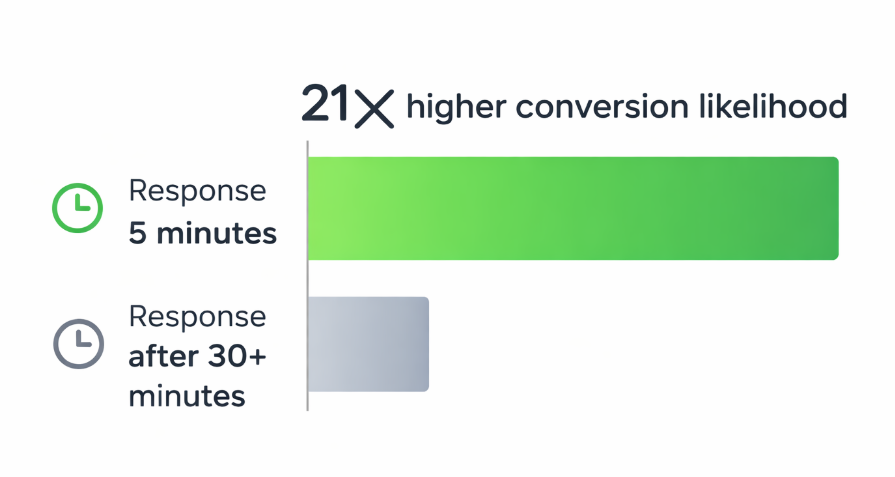
Speed of response is one of the most critical factors influencing lead conversion
Define standardized fields and naming conventions across all systems. Consistency ensures that data can be matched and analyzed effectively.
2. Implement Robust Tracking Infrastructure
Use tracking parameters, event-based analytics, and CRM integration to capture every meaningful interaction.
3. Align Marketing and Sales Systems
Ensure that marketing automation platforms and CRM systems share data seamlessly. This alignment enables accurate pipeline tracking and reporting.
4. Use Multi-Touch Attribution Models
Move beyond last-click attribution to understand the full impact of each interaction along the customer journey.
5. Continuously Validate Data Quality
Regular audits help identify missing, duplicated, or incorrect data before it impacts decision-making.
Measuring Success Across the Lifecycle
Tracking is only valuable if it leads to measurable outcomes. Key performance indicators should include:
-
Conversion rate by lifecycle stage
-
Cost per lead and cost per acquisition
-
Lead-to-opportunity and opportunity-to-close ratios
-
Revenue per channel and campaign
-
Time to conversion
By analyzing these metrics, organizations can identify bottlenecks and optimize performance.
Turning Insights into Action
The ultimate goal of lifecycle tracking is optimization. Once visibility is established, teams can:
-
Reallocate budget toward high-performing channels
-
Improve targeting and personalization
-
Shorten sales cycles through better lead qualification
-
Enhance customer experience at every stage
Organizations that act on lifecycle insights consistently outperform competitors who rely on fragmented data.
Conclusion
Tracking the lead lifecycle from click to revenue is a foundational capability for modern growth. It transforms disconnected data points into a cohesive narrative, enabling better decisions, stronger alignment between teams, and higher returns on marketing investment.
By implementing structured tracking, maintaining data quality, and focusing on full-funnel metrics, businesses can unlock the true value of their customer data.
Recommended Reading
