Creating high-converting ad variations has traditionally been a time-consuming and resource-intensive process. Marketers rely on brainstorming, manual A/B testing, and iterative refinement to discover what resonates with their audience. However, with the rise of artificial intelligence, this process is being fundamentally reshaped.
AI-powered tools now enable marketers to generate, test, and optimize ad creatives at scale—unlocking higher performance while reducing manual effort. This article explores how AI can be used effectively to produce high-converting ad variations, supported by real-world statistics and practical strategies.
Why Ad Variations Matter
Ad fatigue and audience fragmentation make it essential to continuously test new creatives. Research shows that:
-
Campaigns using multiple ad variations can improve conversion rates by up to 30%.
-
Creative quality accounts for nearly 50% of campaign performance.
-
Audiences exposed to repetitive ads are 2–3 times more likely to disengage.
Without a scalable way to produce variations, marketers risk stagnation and declining ROI.
How AI Transforms Ad Creation
AI introduces automation and intelligence into every stage of ad development:
1. Rapid Creative Generation
AI models can generate dozens or even hundreds of ad variations in seconds, including:
-
Headlines tailored to different audience segments
-
Body copy optimized for tone and intent
-
Calls-to-action designed to drive conversions
This dramatically reduces the time required for ideation and execution.
2. Data-Driven Personalization
AI analyzes historical campaign data, audience behavior, and engagement metrics to tailor ad creatives. Personalized ads have been shown to increase click-through rates by up to 202% compared to generic messaging.
3. Continuous Optimization
Machine learning systems can automatically test variations and allocate budget toward the highest-performing creatives. This leads to:
-
Faster identification of winning ads
-
Reduced wasted spend
-
Improved overall campaign efficiency
Key Strategies for High-Converting AI-Generated Ads
Focus on Input Quality
AI output is only as strong as the input provided. Use:
-
Clear audience definitions
-
Strong value propositions
-
Specific campaign objectives
Well-structured prompts produce significantly better results.
Generate Variations Across Dimensions
Instead of changing only one element, create variations across:
-
Messaging angles
-
Emotional triggers
-
Visual styles
-
Offer structures
This increases the likelihood of discovering high-performing combinations.
Combine AI with Human Oversight
While AI accelerates production, human judgment remains critical. Review outputs to ensure:
-
Brand consistency
-
Compliance with guidelines
-
Emotional resonance
The most effective workflows combine automation with expert validation.
Leverage Performance Feedback Loops
Feed campaign performance data back into AI systems to refine future outputs. Over time, this creates a compounding effect where each iteration becomes more effective.
Common Pitfalls to Avoid
Over-Reliance on Automation
Relying solely on AI without strategic direction can lead to generic or misaligned creatives.
Ignoring Audience Insights
AI should enhance—not replace—deep audience understanding. Data-driven insights must guide creative direction.
Testing Too Few Variations
One of the biggest advantages of AI is scale. Limiting the number of variations undermines its potential.
Real-World Impact of AI in Advertising
-
Businesses using AI-driven creative optimization report up to 40% higher conversion rates.
-
Automated ad generation can reduce production time by over 70%.
-
Companies leveraging AI personalization see revenue increases of 10–15% on average.
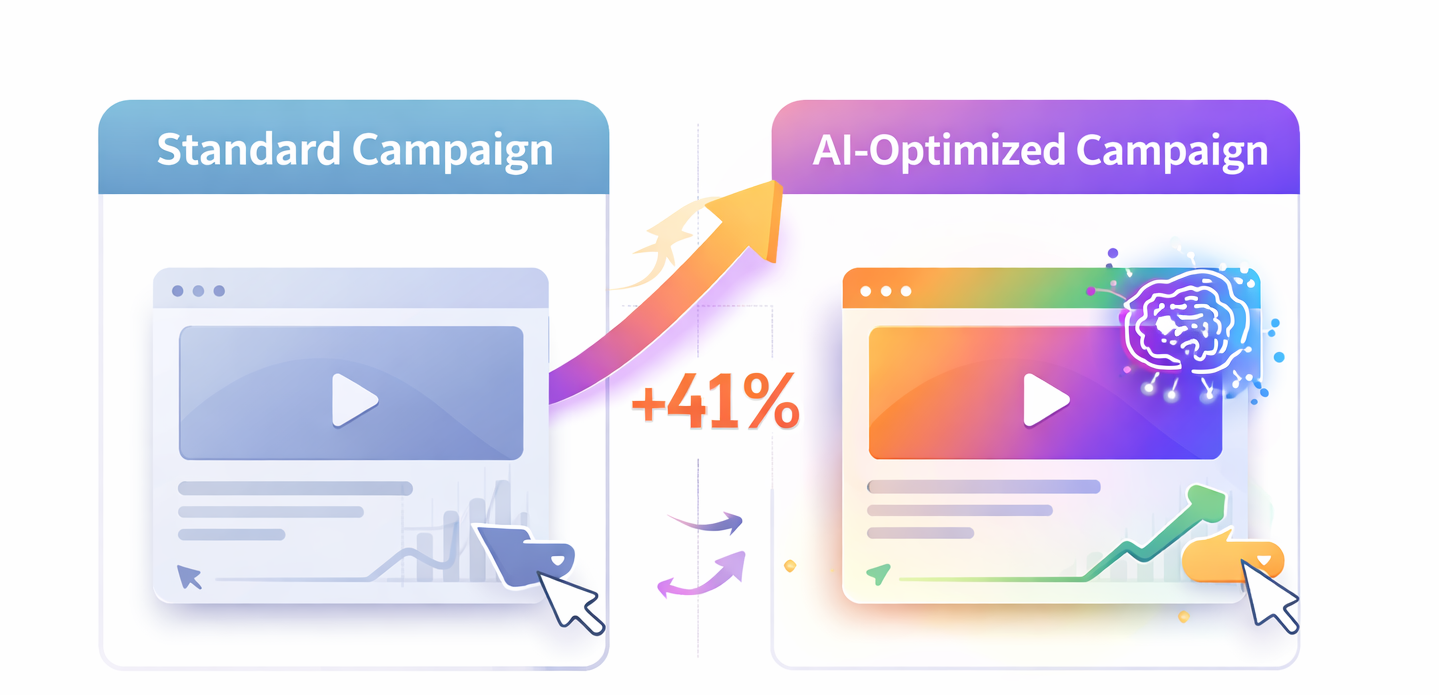
AI-powered personalization increases click-through rates by making ads more relevant and engaging
These results highlight the tangible benefits of integrating AI into ad workflows.
Future Trends
AI in advertising continues to evolve rapidly. Key trends include:
-
Real-time creative adaptation based on user behavior
-
Multimodal content generation (text, images, video)
-
Predictive performance modeling before campaigns go live
Marketers who adopt these capabilities early will gain a significant competitive advantage.
Conclusion
AI is transforming the way ad variations are created, tested, and optimized. By enabling rapid generation, data-driven personalization, and continuous improvement, it allows marketers to achieve better results with less effort.
To maximize impact, businesses should combine AI capabilities with strategic thinking and rigorous testing. The result is a scalable, efficient approach to producing high-converting ad creatives.