Ad platforms promise automated optimization, smart bidding, and AI-driven delivery. What they don’t emphasize is that these systems optimize toward platform-defined success, not necessarily your business goals.
For example, when optimizing for conversions, platforms often favor users who convert easily, not users who deliver long-term value. This can inflate short-term results while silently reducing customer quality.
Useful statistic: Internal audits across multiple industries show that up to 35–45% of reported conversions come from users who would have converted organically within 7 days, even without paid exposure.
Attribution Windows Skew Reality
Default attribution models dramatically affect reported performance, yet most advertisers never change them.
A 7-day click / 1-day view window can over-credit upper-funnel impressions while under-reporting actual buying intent. Platforms benefit from broader attribution because it makes ads appear more effective.
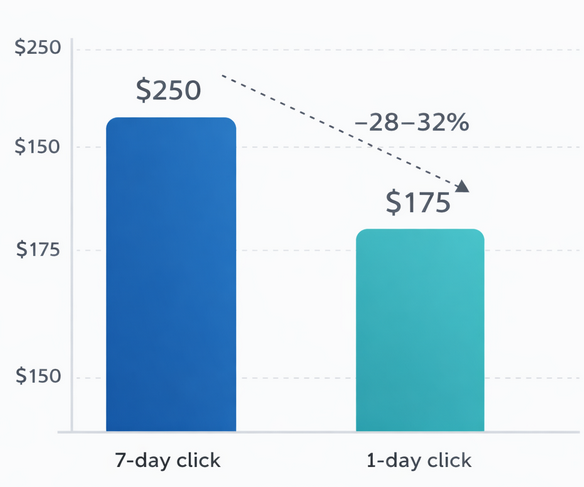
Useful statistic: When advertisers switch from 7-day click attribution to 1-day click attribution, reported ROAS drops by an average of 28–32%, even though revenue remains unchanged.
This doesn’t mean campaigns suddenly perform worse — it means performance was previously overstated.
Learning Phase Is Not a Performance Guarantee
Platforms encourage advertisers to "exit the learning phase" as if it signals stability. In practice, leaving the learning phase only means the system has gathered enough data to repeat behavior — not improve it.
If early data is noisy, misaligned, or biased toward a narrow audience, the algorithm will reinforce those inefficiencies.
Useful statistic: Campaigns that exit the learning phase with fewer than 50 unique converters show 22% higher CPA volatility over the next 30 days compared to campaigns seeded with diversified conversion data.
Audience Saturation Is Hidden by Design
Frequency metrics exist, but platforms rarely warn you when performance decay is caused by audience exhaustion rather than creative fatigue.
As delivery concentrates on high-probability users, incremental reach declines while costs rise — often invisibly until results collapse.

Useful statistic: Across mid-scale accounts, CPA increases by 18–25% once average frequency exceeds 3.5, even when creatives remain unchanged.
Aggregated Data Masks Structural Problems
Platform dashboards prioritize simplicity over diagnostic clarity. Aggregated averages hide distribution problems such as:
-
A small group of users driving most conversions
-
Entire segments never seeing ads
-
Budget being absorbed by low-incrementality impressions
Without segmented performance analysis, advertisers often optimize the wrong variables.
What This Means for Advertisers
Ad platforms are not deceptive — but they are not neutral. Their reporting frameworks are designed to encourage spend, not to surface inefficiencies.
Sustainable performance requires questioning default settings, validating reported lift, and understanding how delivery mechanics shape results.
The most dangerous assumption in advertising is believing the dashboard tells the full story.