Modern sales organizations increasingly rely on machine learning models to prioritize leads, predict conversion likelihood, and optimize outreach strategies. These systems process vast datasets—behavioral signals, firmographics, engagement history—to uncover patterns that humans simply cannot detect at scale.
According to industry research, companies using predictive lead scoring see up to a 20–30% increase in sales productivity and a 10–15% boost in conversion rates. Additionally, organizations leveraging AI in sales report a 50% reduction in time spent on prospecting activities.
However, as algorithmic decision-making becomes more embedded in workflows, a new challenge emerges: alignment with the sales team’s lived experience.
Why Conflicts Happen
1. Data vs. Context
Algorithms rely strictly on historical data. Sales representatives, on the other hand, operate in dynamic environments where context matters—market shifts, competitor moves, or nuanced buyer behavior.
For example, a model may rank a lead highly based on past engagement patterns, while a sales rep may recognize that the company recently changed leadership, making the deal unlikely to close.
2. Feedback Loops Are Incomplete
Many systems are trained on incomplete or delayed feedback. If sales outcomes are not consistently fed back into the model, it continues optimizing based on outdated assumptions.
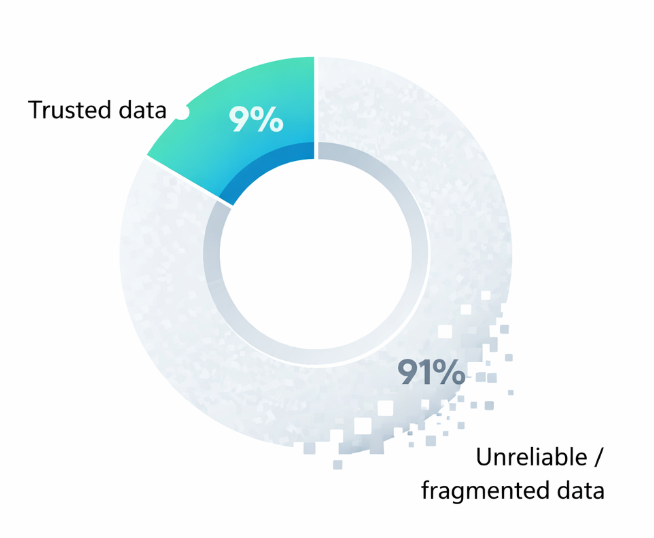
A lack of reliable, unified data undermines both algorithm performance and sales team confidence
Studies show that up to 40% of CRM data is incomplete or inaccurate, which directly impacts model performance and trust.
3. Trust Gap Between Teams and Technology
Sales teams often develop skepticism toward algorithmic recommendations, especially when suggestions contradict their intuition. This lack of trust can lead to underutilization of valuable insights.
A recent survey found that only 35% of sales professionals fully trust AI-driven recommendations, despite measurable performance gains.
The Cost of Misalignment
When algorithm learning and sales feedback diverge, organizations experience several negative outcomes:
-
Lower lead conversion rates due to poor prioritization
-
Increased friction between sales and operations teams
-
Wasted marketing spend on low-quality prospects
-
Slower deal cycles caused by misdirected efforts
In high-growth environments, even a small misalignment can translate into significant revenue loss.
Bridging the Gap Between Algorithms and Sales Teams
1. Establish Continuous Feedback Mechanisms
Sales input should not be occasional—it must be systematic. Integrating structured feedback (e.g., reason codes for disqualified leads, qualitative notes) allows models to adapt more quickly.
Organizations that implement closed-loop feedback systems improve model accuracy by up to 25% over time.
2. Combine Quantitative and Qualitative Signals
Algorithms excel at pattern recognition, but human insight captures nuance. The most effective systems blend both.
For instance, weighting sales-reported objections or market signals alongside behavioral data can significantly enhance prediction quality.
3. Increase Transparency of Model Decisions
Black-box models create resistance. Providing visibility into why a lead is scored highly—key attributes, engagement signals, or firmographic matches—helps sales teams understand and trust recommendations.
Explainable AI approaches have been shown to increase adoption rates by over 40% within sales teams.
4. Align Incentives Across Teams
Misalignment often stems from differing goals. Sales teams focus on closing deals, while algorithms optimize for patterns in data. Ensuring both are measured against shared KPIs—such as revenue contribution or pipeline quality—creates alignment.
5. Regularly Recalibrate Models
Markets evolve, and so should algorithms. Quarterly or even monthly recalibration ensures that models reflect current realities rather than outdated trends.
Turning Conflict Into Competitive Advantage
Rather than viewing disagreements between algorithms and sales teams as a problem, organizations should treat them as a signal.
Conflicts often highlight blind spots:
-
The algorithm may be missing emerging trends
-
Sales teams may rely too heavily on anecdotal experience
When both perspectives are analyzed together, they create a more complete picture of the buyer journey.
Companies that successfully integrate human feedback into machine learning systems achieve significantly better outcomes. In fact, hybrid decision-making models outperform purely automated or purely manual approaches by up to 30% in revenue generation efficiency.
Conclusion
The tension between algorithm learning and sales team feedback is not a flaw—it is an opportunity. By building systems that incorporate continuous feedback, enhance transparency, and align team incentives, organizations can unlock the full potential of both data and human expertise.
The future of sales is not algorithm versus human—it is algorithm with human.
Recommended Reading