
Digital marketers typically associate performance declines with two variables: targeting or creative. When click-through rates fall or conversions decline, the first reaction is often to refresh ad creatives or adjust audience parameters.
Yet industry data shows that a large share of performance drops are caused by external or operational factors rather than marketing strategy itself. According to multiple advertising platform reports, up to 30–40% of campaign disruptions are linked to technical issues, platform changes, or data tracking errors rather than audience or creative problems.
Understanding these hidden drivers allows teams to diagnose performance changes faster and avoid costly optimization mistakes.
Measurement and Tracking Issues
One of the most common reasons for apparent performance decline is inaccurate measurement.
Modern marketing stacks rely on multiple layers of analytics tools, tracking pixels, conversion APIs, and attribution platforms. When any element of this infrastructure breaks, reported performance may suddenly deteriorate even though real user behavior remains unchanged.
Research from analytics vendors shows that up to 15–25% of websites experience some form of tracking discrepancy during major platform updates or tag management changes.
Common causes include:
• Pixel firing failures after website updates
• Broken event mapping in analytics tools
• Incorrect attribution window configuration
• Consent management tools blocking measurement scripts
When tracking fails, conversions can appear to drop dramatically while traffic remains stable. This often leads marketing teams to change campaigns unnecessarily.
Platform Algorithm Adjustments
Advertising platforms continuously update their delivery algorithms. These changes can temporarily affect campaign performance even if targeting and creative remain identical.
Large platforms deploy algorithm updates multiple times per year, adjusting how bidding models interpret signals such as user engagement, predicted conversion likelihood, and advertiser competition.
According to industry reports, algorithm updates can cause short‑term volatility of 10–20% in key performance metrics during adjustment periods.
This volatility is especially visible in campaigns that rely heavily on automated bidding strategies or machine‑learning optimization.
In many cases, performance stabilizes after several days once the platform recalibrates its delivery models.
Auction Competition Shifts
Another factor frequently overlooked is sudden change in auction competition.
Digital advertising operates through real‑time auctions. When new advertisers enter the same audience segment or competitors increase budgets, cost metrics may rise quickly.
Industry benchmarks indicate that cost‑per‑click can increase by 15–30% during peak seasonal competition periods even when campaign setup remains unchanged.
This means the campaign itself may be functioning normally, but increased competition reduces efficiency.
Marketers sometimes misinterpret this as a targeting or creative issue when the underlying cause is simply higher auction pressure.
Website Performance Problems
Campaign performance can also decline because of issues on the destination website.
Studies show that page load delays have a strong impact on user behavior. According to Google research, when page load time increases from 1 second to 5 seconds, the probability of bounce increases by 90%.
Even minor website changes can affect conversion rates.
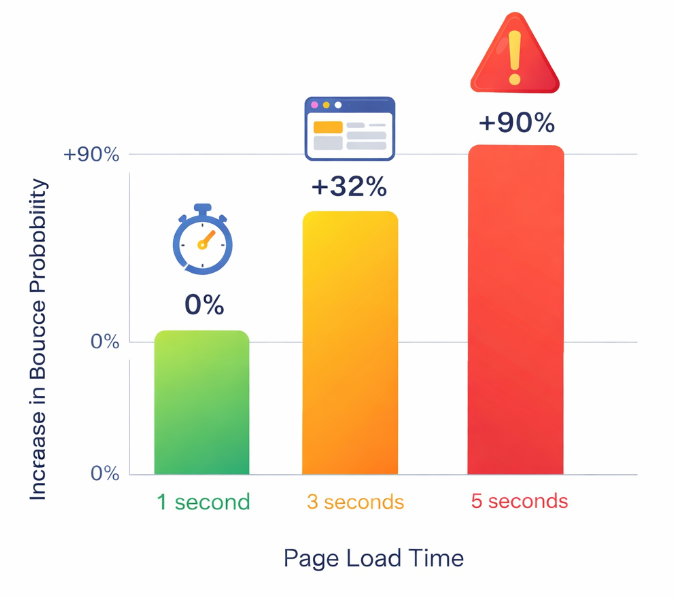
Page speed directly affects campaign results: even small delays significantly increase the likelihood that visitors abandon a page
Examples include:
• Slower mobile performance after new scripts are added
• Checkout errors introduced during product updates
• Form submission failures
• Changes in landing page layout that disrupt usability
When these issues occur, marketing metrics deteriorate even though campaign traffic quality remains unchanged.
Audience Saturation
Over time, even well‑optimized campaigns may experience declining results due to audience saturation.
Repeated exposure to the same ads gradually reduces engagement levels. Marketing studies show that click‑through rates can decrease by 20–40% after prolonged exposure within the same audience segment.
This phenomenon does not necessarily mean the creative is ineffective. Instead, the audience may simply have reached its natural engagement limit.
Expanding reach or refreshing delivery frequency often resolves this type of decline.
External Market Factors
Performance changes are also influenced by broader market dynamics.
Economic trends, consumer sentiment, and seasonal demand fluctuations can significantly affect conversion behavior.
For example, retail conversion rates often drop during major holiday shipping cut‑off periods, while B2B lead generation frequently slows during summer months or end‑of‑year planning cycles.
Industry research suggests seasonal demand variation alone can shift conversion rates by 20–35% across many sectors.
These external influences are beyond campaign optimization but still heavily impact results.
How to Diagnose Performance Drops Correctly
When performance declines, marketers should follow a structured diagnostic process before making campaign changes.
First, verify measurement accuracy. Confirm that tracking pixels, analytics events, and attribution tools are functioning correctly.
Second, review recent platform updates or algorithm adjustments that may temporarily affect delivery.
Third, analyze auction dynamics to determine whether increased competition has raised costs.
Fourth, audit website performance and conversion pathways to identify technical or usability problems.
Finally, examine broader market trends that may be influencing demand.
By isolating these variables, teams can determine whether the campaign itself actually requires optimization.
Conclusion
Not every performance decline is caused by targeting mistakes or creative fatigue. Many drops originate from measurement errors, algorithm updates, auction competition, technical website issues, or broader market conditions.
Marketers who investigate these factors systematically can prevent unnecessary campaign changes and focus optimization efforts where they truly matter.
Understanding the broader ecosystem surrounding digital advertising is often the key to diagnosing performance fluctuations accurately.
Suggested Articles for Further Reading