Running multiple ad sets feels like control. In reality, fragmentation often weakens performance. Consolidation is not about simplicity. It is about restoring signal strength inside the auction.
This article explains when consolidation improves results and when it destroys insight.
Why Ad Set Fragmentation Hurts Performance
Meta’s delivery system optimizes at the ad set level. Each ad set competes in the same auction, even inside one campaign. When you split budgets across similar audiences, you reduce data density.
Small ad sets struggle to exit the learning phase. They reset easily after edits. Performance swings become normal.
Fragmentation creates three structural problems:
-
Budget dilution. Each ad set receives limited spend; the algorithm lacks conversion volume to stabilize delivery.
-
Auction overlap. Similar audiences compete against each other; costs increase without expanding reach. If you suspect this issue, review why audience overlap is killing your Facebook ad performance.
-
Delayed learning. Conversion events spread across too many segments; optimization signals weaken.
When these issues appear together, consolidation becomes a strategic move, not a cosmetic one.
Signs You Should Consolidate Ad Sets
Consolidation works best when structural inefficiency is visible. Look for patterns in data, not short-term fluctuations.
Learning Phase That Never Stabilizes
If multiple ad sets stay in learning for days, volume is insufficient. The algorithm needs consistent conversions within a short window. Splitting traffic prevents this.
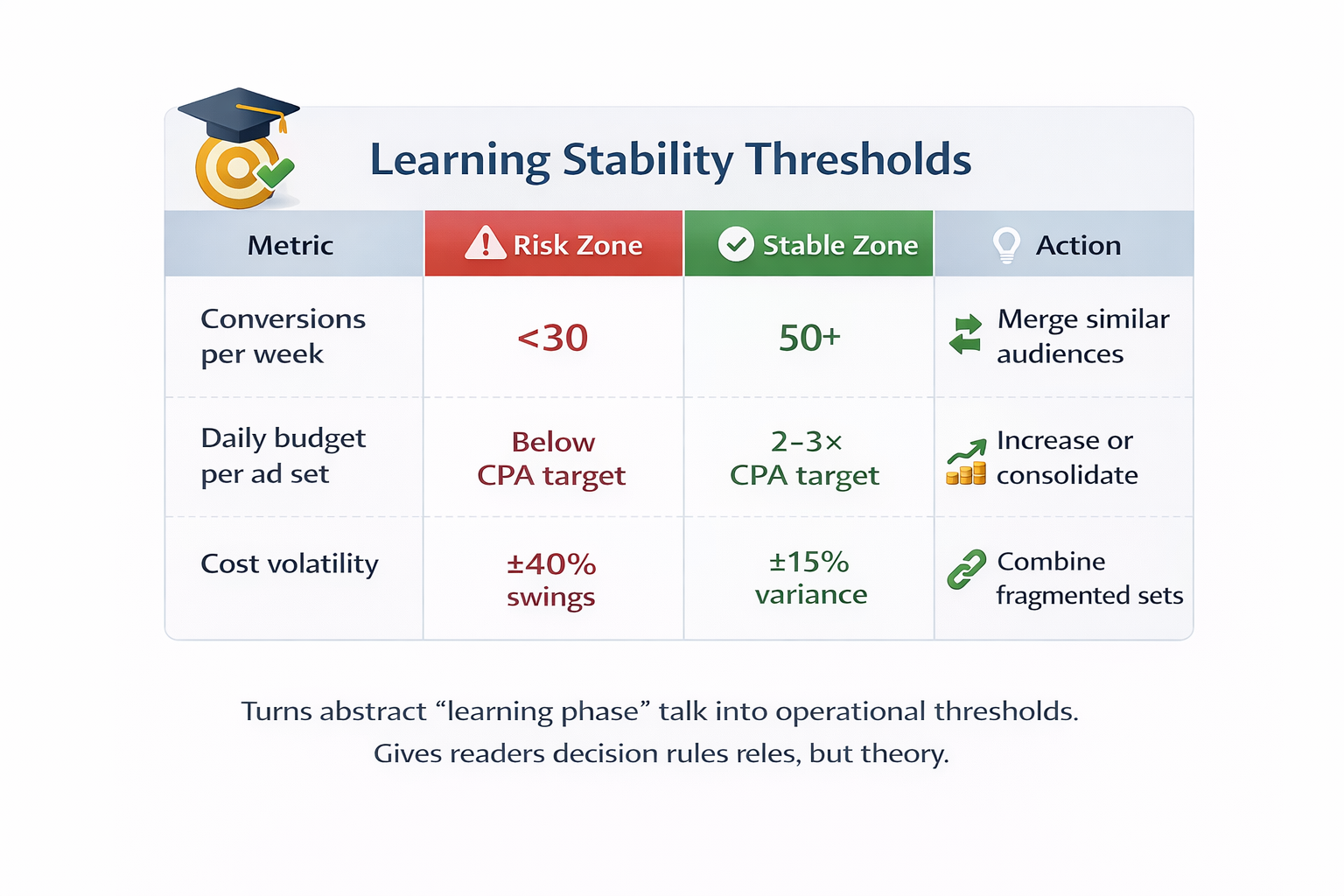
Watch for:
-
Fewer than 30–50 optimization events per week per ad set; stability rarely occurs below this threshold.
-
Frequent edits; small ad sets react sharply to budget or creative changes.
-
Large cost variance between days; volatility signals weak signal density.
If this sounds familiar, revisit how to use the Facebook Ads learning phase to your advantage. When conversion volume is low across segments, merging audiences improves statistical confidence.
Audience Overlap Between Ad Sets
Overlap inflates CPM and creates internal bidding pressure. Meta does not prioritize your structure. It prioritizes the auction.
Common overlap situations include:
-
Separate ad sets for interests that heavily intersect; for example, digital marketing tools and online entrepreneurship.
-
Lookalike audiences built from similar seed sources; 1% and 2% lookalikes often share substantial users.
-
Geographic splits that do not reflect true performance differences.
If you run many similar campaigns, study how to run multiple Facebook campaigns without overlapping audiences. If overlap exceeds 30–40 percent, consolidation usually reduces waste.
Budget Spread Too Thin Across Variations
Advertisers often test too many segments simultaneously. Each variation receives minimal spend. Data arrives slowly and lacks reliability.
Consolidation helps when:
-
Daily budget per ad set cannot generate at least a few conversions.
-
Cost per result fluctuates dramatically across small segments.
-
Winning ads appear in several ad sets but never scale.
This pattern often connects with over-segmentation. Review over-segmentation in Facebook ads and why too many campaigns kill efficiency to understand the structural risk.
Combining similar audiences increases impression flow and accelerates optimization.
When Consolidation Improves Algorithmic Efficiency
Consolidation does more than reduce complexity. It strengthens the delivery system’s learning capacity.
Broader Targeting Performs Better Than Micro-Segmentation
Meta’s algorithm now relies heavily on machine learning and behavioral modeling. Detailed targeting often restricts performance rather than improving it.
Broad targeting with strong creative often delivers:
-
Lower CPM; fewer constraints mean wider auction participation.
-
Faster learning; conversion signals accumulate in one place.
-
Better scalability; performance does not depend on narrow audience pockets.
If narrow ad sets produce similar performance metrics, merge them. Let the algorithm find internal subsegments.
Creative, Not Targeting, Drives Results
In many accounts, targeting differences explain little variance. Creative drives conversion rate and click-through rate.
Consolidate when:
-
CTR remains similar across interest groups.
-
Conversion rate differences are minimal.
-
Cost per acquisition does not justify separate budget allocation.
At that point, segmentation adds complexity without strategic gain.
When You Should Avoid Consolidation
Consolidation is not always correct. Some segmentation protects profitability.
Distinct Customer Segments With Different Economics
If average order value differs significantly between segments, separation is logical. High-value customers deserve dedicated budget control.
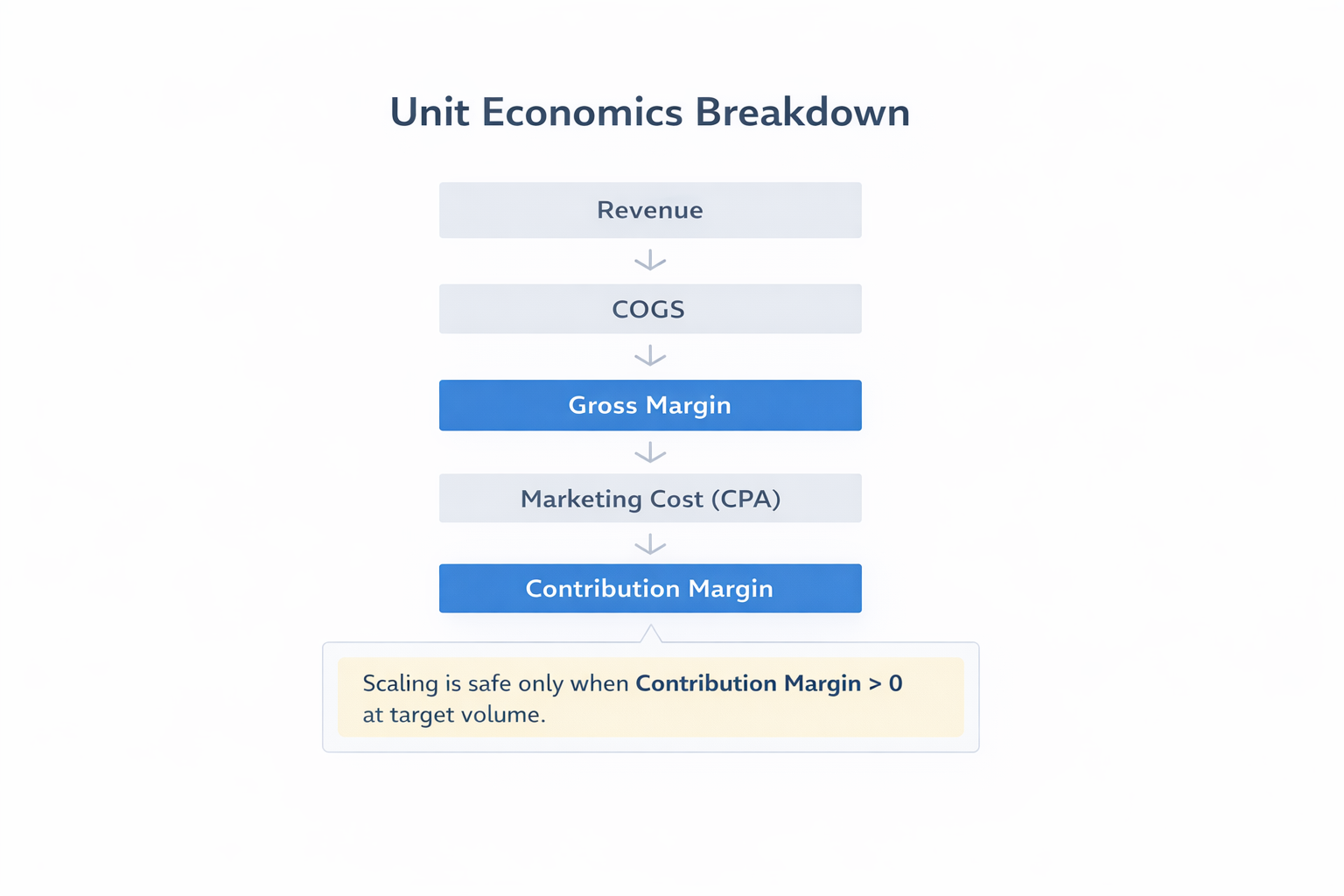
Examples include:
-
Separate ad sets for small businesses and enterprise clients; deal size and sales cycles differ.
-
Different product lines with distinct margins; aggressive scaling may work only for one.
-
Markets with currency differences; exchange rate shifts influence profitability.
When economics diverge, merging can blur profitability signals.
Clear Performance Divergence Backed by Volume
Consolidation should not hide meaningful differences. If two ad sets produce stable, statistically significant performance gaps, separation remains valid.
Check for:
-
Consistent cost differences over several weeks; not isolated spikes.
-
Adequate conversion volume in each segment.
-
Stable return on ad spend patterns across time.
If divergence holds under scrutiny, maintain segmentation.
How to Consolidate Without Resetting Performance
Poor consolidation resets learning and harms short-term results. Controlled restructuring protects momentum.
Step 1: Identify Truly Similar Ad Sets
Group ad sets by similarity, not naming convention. Examine audience definition, creative mix, and optimization event.
Merge only those that share:
-
The same objective; for example, lead generation.
-
Comparable audience size and behavior.
-
Similar cost per result trends.
Avoid merging fundamentally different strategies.
Step 2: Create a New Consolidated Ad Set
Instead of editing an existing ad set, create a new combined one. This approach isolates changes and reduces risk.
Allocate budget that reflects total prior spend. Do not increase budget drastically at launch. Stability matters more than speed.
Step 3: Gradually Pause Old Ad Sets
Run the new consolidated ad set alongside the old ones briefly. Compare cost per result and volume. Pause legacy ad sets once the new structure stabilizes.
If you are unsure whether to merge, pause, or keep segments separate, review when to pause, kill, or scale an ad set for a structured decision framework.
This phased method protects revenue during transition.
Advanced Insight: Consolidation as a Signal Strategy
Consolidation is not only structural. It shapes data feedback loops.
When conversion data aggregates in one ad set:
-
The algorithm identifies high-probability users faster.
-
Lookalike expansion improves; seed quality rises.
-
Bid adjustments react to stronger predictive signals.
Fragmented structures produce fragmented data. Consolidated structures produce compounding learning.
Think of consolidation as signal amplification, not simplification.
Final Thoughts
Many accounts suffer from excessive segmentation. Advertisers split audiences for control, then lose efficiency. Consolidation restores statistical power and reduces internal competition.
Before adding another ad set, ask a simple question. Does this segment generate unique economic value or just create noise?