Most advertisers treat January as a continuation of December. That’s a mistake.
Consumer behavior changes sharply after the holidays. Purchase motivation drops, timelines expand, and emotional drivers shift. Even the ad platforms behave differently.
If you’re planning to restart campaigns in January, don’t just “turn them back on.” Treat January as a distinct strategic phase. The right move now can set the tone for the rest of Q1.
For more context on why January requires its own playbook, see Q1 Campaign Planning: What Most Brands Get Wrong.
Rethink the Landscape Before You Reactivate Ads
What Changes on the User Side
In December, people are often in a buying mindset, driven by urgency, gifting, and promotional overload. January is the opposite.
People slow down. Their attention shifts. They may still want solutions but they’re not in a rush.
Here’s what that shift typically looks like:
-
Intent shifts — In January, people browse more and buy less. They’re researching, comparing, or exploring.
-
Motivations change — Instead of gifting others, users are now thinking about personal goals, budgets, and routines.
-
Trust matters more — After weeks of hype and discounts, audiences are more selective. Flashy promises often backfire.
You can still convert, but your message and offer need to reflect this new mindset.
What Changes Inside the Ad Platforms
January brings lower competition on platforms like Facebook and Instagram. Many advertisers pause or reduce spend.
This usually leads to reduced CPMs — especially in the first two weeks. On paper, this looks like a great chance to scale. But it’s important to pause and ask a deeper question:
What’s the quality of that cheaper traffic?
If your audience is less motivated to act, you’ll see weaker conversion rates unless your message is dialed in. Lower costs don’t automatically mean better performance.
To learn how to take advantage of these trends without rushing into scale, check out How to Capitalize on Lower CPMs in Early Q1.
Audit Your Previous Campaigns — Not Just the Numbers
Before launching anything new, take a hard look at what worked in December and what didn’t. But don’t stop at surface metrics like clicks or ROAS.
Look at the campaign dynamics beneath the numbers. This helps you make informed adjustments, not just educated guesses.
Use these questions to guide your audit:
-
Which creatives held attention longest?
Look beyond CTR. Video watch time, scroll depth, and carousel swipes reveal true engagement. -
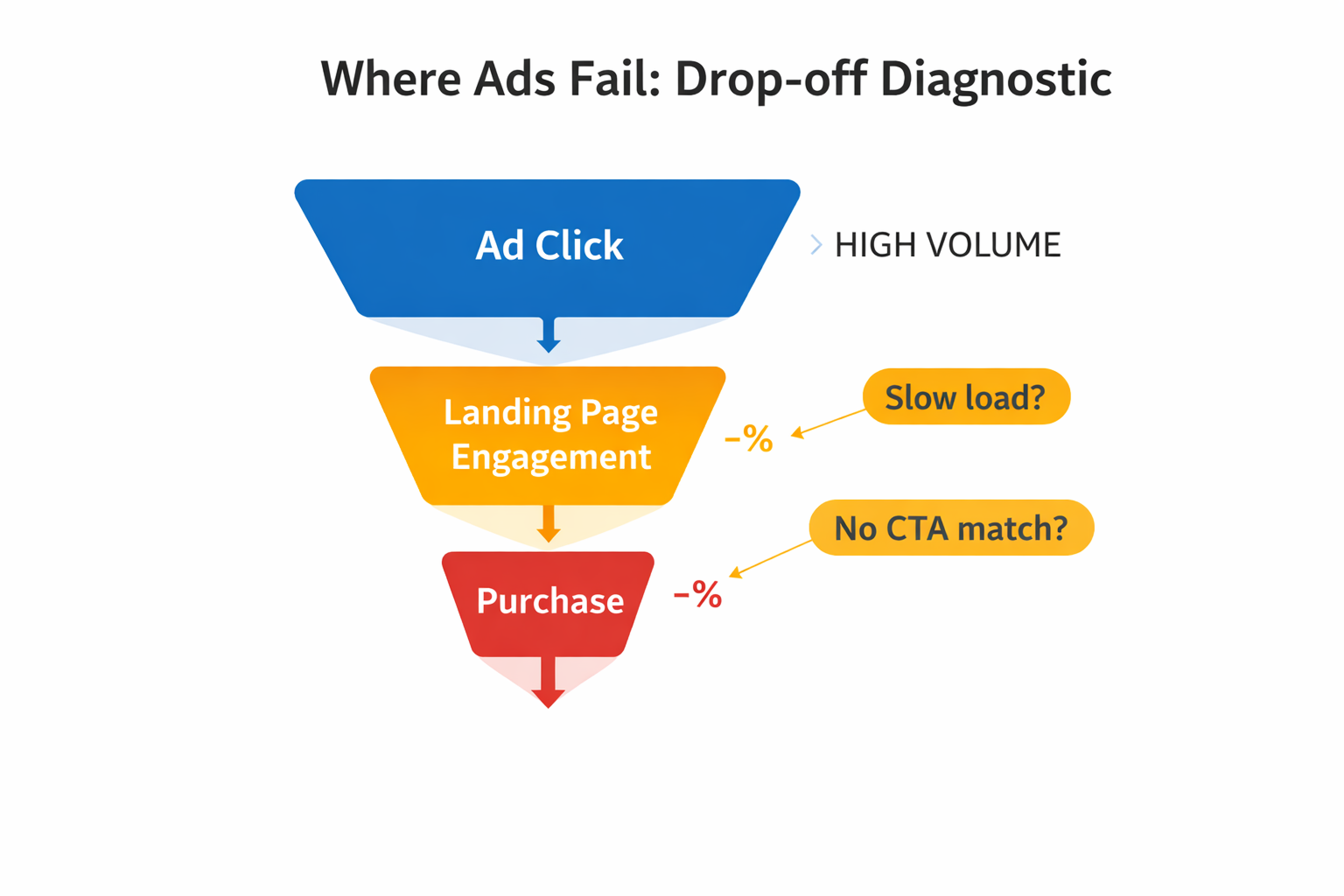
Where did users fall off?
If ads drove clicks but no conversions, the issue may be with your landing page, checkout flow, or even product-market fit. -
What positioning actually connected?
Was it a discount? A testimonial? A use case? Understand why users clicked, not just what they clicked on.
If you're unsure what to test next, January Ad Campaigns: What to Test First is a solid guide.
Align Your Offers with How People Think in January
An offer that worked in December won’t necessarily perform in January. The context has changed.
Instead of discounts or urgency, January buyers are looking for relevance and value. They’re solving problems and planning ahead. Your offer should match that intent.
These types of offers tend to perform well in January:
-
Low-friction starts — Free trials, starter plans, or sample kits lower the perceived risk of trying something new.
-
Goal-based framing — Position your product as a solution to a specific outcome, like improving workflow, organizing finances, or boosting well-being.
-
Trust-driven support — Add case studies, proof points, or a money-back guarantee to reduce hesitation and build confidence.
Avoid lazy messaging like “New Year, New You.” Instead, speak directly to what your product actually helps users accomplish.
For examples of how other advertisers adjust January positioning, see New Year Ads for High-Ticket Products: What Changes.
Refresh Creative to Match the Season, Not the Calendar
Your creative assets are the first signal users see. If they still look like December, they’ll feel out of sync in January.
Use the new season as an opportunity to realign your visuals and messaging with current user expectations.
Here’s what to revise:
-
Visual tone — Clean, neutral designs work better now. January tends to favor simplicity over stimulation. Remove any holiday-specific colors or design cues.
-
Language — Ditch high-pressure phrases like “Ends tonight” or “Don’t miss out.” Replace them with helpful, direct copy that emphasizes clarity and outcome.
-
Structure and format — If you ran long-form videos during the holidays, try concise versions now. People are back to work and scanning faster.
Treat this as a chance to reset your visual identity for Q1. A subtle change in layout or language can have a measurable effect on results.
Retarget Strategically, Not Broadly
It’s tempting to retarget everyone who interacted with your ads during the holiday season. But not all traffic is equal.
Instead of lumping everyone into one retargeting pool, segment based on actual behavior. Focus your efforts where there’s real intent.
Here’s a useful breakdown:
-
High-signal users — These are people who added to cart, started checkout, or spent significant time on site. Retarget them with updated offers, not the same December message.
-
Holiday-only visitors — Users who came in for gift guides, seasonal offers, or giveaways. Many of them may not be relevant now. Filter them out or put them into a long-term nurture flow.
-
Repeat buyers or subscribers — If you had strong customer acquisition in Q4, January is a good time to introduce cross-sells or upgrades.
To sharpen your segmentation further, read Retargeting That Works: How Smart Data Segmentation Boosts ROI.
Reset Metrics and Adjust Budget Strategy
One of the easiest ways to waste January ad spend is to judge it by December’s results.
Your holiday campaigns were driven by urgency, discounts, and gifting behavior. January campaigns are typically slower and steadier. The key is to shift what you measure and how you budget.
Here’s how to recalibrate:
-
Track earlier signals — Focus on engagement metrics like scroll depth, video completions, or email sign-ups. These are leading indicators of future conversions.
-
Budget for learning — Spend more on testing than scaling in early January. Run multiple variants of ad copy, audience segments, and creative styles.
-
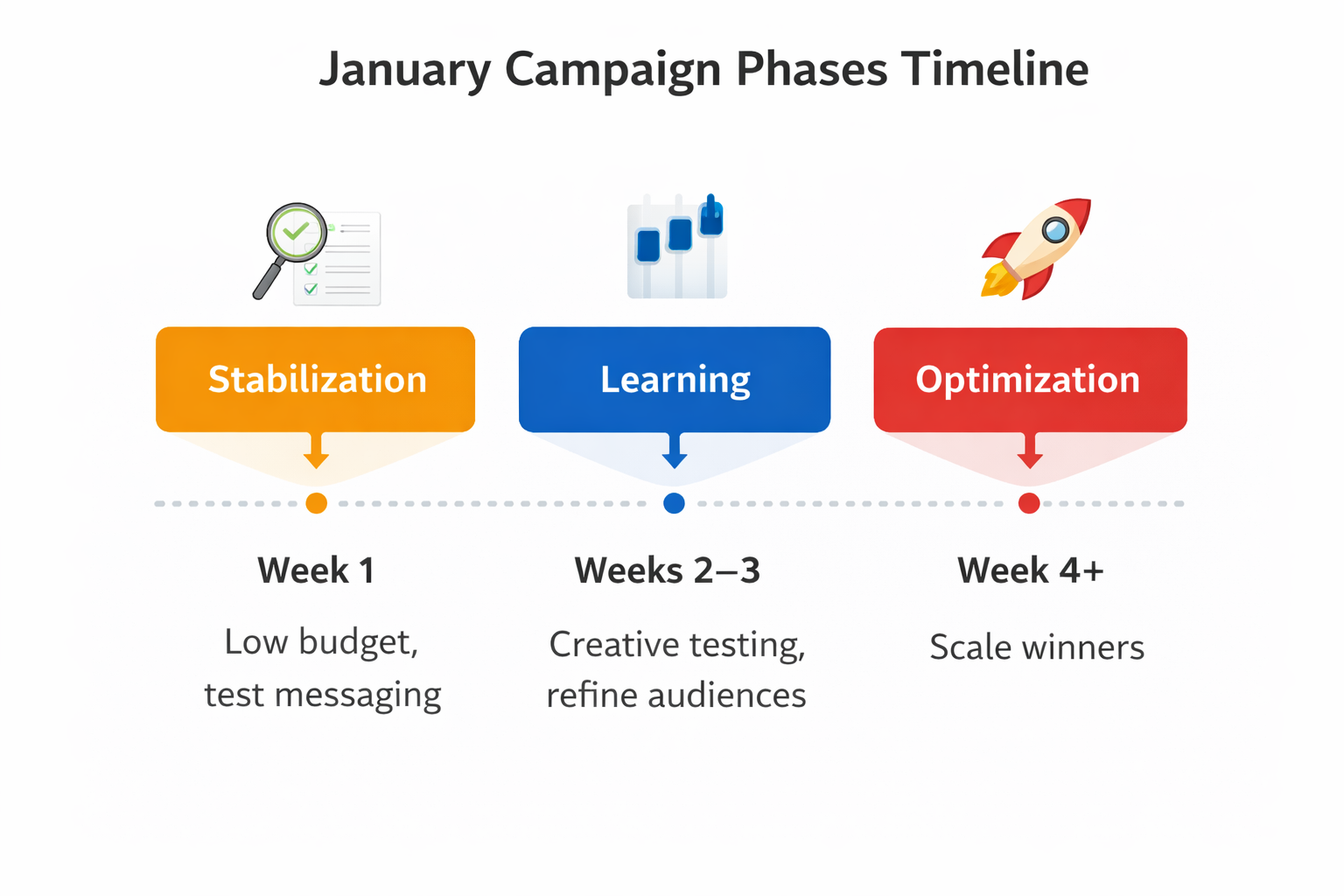
Set phase-based goals — Break January into three parts: stabilization (Week 1), testing (Weeks 2–3), and optimization (Week 4 onward). Adjust your KPIs for each stage.
For more advice on diagnosing underperformance early, see Why Q1 Is the Best Time to Fix Broken Ad Accounts.
Summary: Plan for the Season You’re In
January isn’t slower. It’s different. And smart advertisers adjust their strategy to match that reality.
To recap:
-
Study how your audience’s behavior and mindset have changed.
-
Audit your past campaigns with a focus on insights, not just outcomes.
-
Rebuild your offers and creative around real January intent — not recycled messaging.
-
Retarget with intention and segmentation, not just frequency.
-
Update your budget and metrics to reflect a longer purchase cycle.
This isn’t about starting over. It’s about starting smarter.