Audience structure directly affects algorithmic learning, delivery stability, and campaign efficiency. Modern advertising platforms rely on machine learning models that require sufficient data to optimize effectively. When audiences are structured incorrectly, campaigns may suffer from unstable performance, high acquisition costs, or limited reach.
According to industry benchmarks from advertising platforms and performance marketing studies:
-
Campaigns with very small audience pools often experience up to 30–40% higher cost per acquisition due to limited optimization data.
-
Advertisers using over-segmented audience structures report 20–25% longer learning phases before campaigns stabilize.
-
Campaigns with consolidated audiences typically generate 15–30% more impressions and faster delivery optimization because algorithms have more data to analyze.
Balancing segmentation and consolidation allows advertisers to maintain both precision and stability.
When Splitting Audiences Is the Right Strategy
Audience segmentation is most effective when meaningful differences exist between user groups. Splitting audiences allows advertisers to tailor messaging, budgets, and bidding strategies based on clear behavioral or demographic signals.
1. When Intent Levels Differ
Users at different stages of the buying journey respond differently to advertising. Separating audiences by intent helps deliver the right message at the right moment.
For example:
-
Cold audiences may need educational messaging.
-
Warm audiences respond better to product benefits.
-
Retargeting audiences often convert with urgency-driven offers.
Segmenting these groups prevents messaging conflicts and improves conversion efficiency.
2. When Performance Data Justifies Segmentation
Audience splits should be data-driven. If analytics show clear performance differences between segments—such as device types, geographic regions, or behavioral groups—separate campaigns can help allocate budget more efficiently.
A marketing analytics report found that campaigns optimized by high-performing segments improved conversion rates by up to 28% compared to generalized targeting.
3. When Creative Personalization Matters
Personalized messaging performs significantly better when aligned with a specific audience. In fact, marketing research indicates that personalized ad creatives can increase engagement rates by more than 50% compared to generic creatives.
In such cases, splitting audiences ensures that messaging stays relevant.
When Consolidating Audiences Improves Stability
While segmentation improves precision, excessive fragmentation can weaken campaign performance. Consolidation becomes essential when data volume is insufficient or optimization signals are too scattered.
1. When Audience Size Is Too Small
Algorithms require a consistent flow of events to optimize effectively. If an audience segment is too small, campaigns may struggle to exit the learning phase.
Many advertising platforms recommend at least 50 conversion events per week per optimization set to achieve reliable performance. When segments fall below this threshold, consolidating them often stabilizes delivery.
2. When Performance Across Segments Is Similar
If multiple audience segments generate comparable results, maintaining separate campaigns creates unnecessary complexity without meaningful gains.
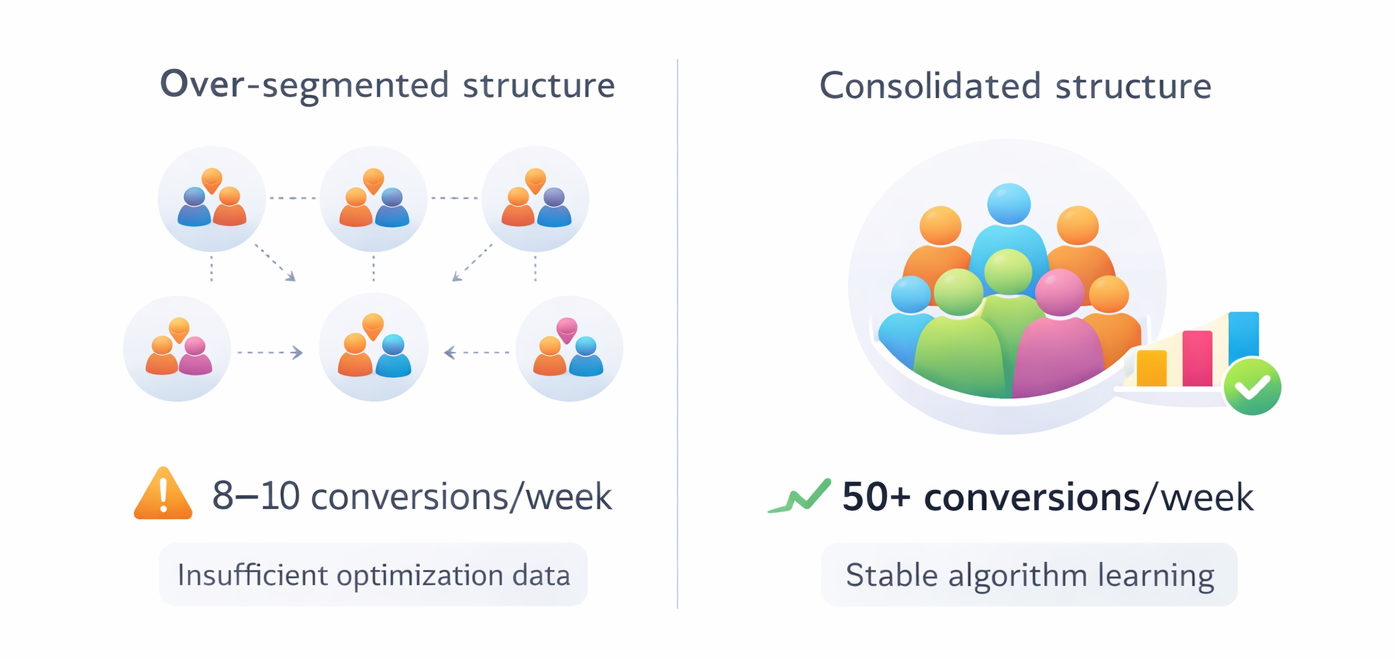
Algorithm learning requires sufficient conversion volume. Consolidating fragmented audiences helps campaigns reach the ~50 weekly conversions often needed for stable optimization
Combining such audiences can:
-
Improve algorithmic learning
-
Reduce management overhead
-
Provide more consistent delivery
3. When Campaigns Experience Delivery Instability
Frequent performance fluctuations often indicate fragmented optimization signals. Consolidating audiences pools data together, allowing algorithms to detect patterns more quickly and optimize bidding strategies more effectively.
Advertisers who consolidate underperforming segments frequently report 10–20% improvements in delivery stability and reduced cost volatility.
Signs Your Audiences Are Over-Segmented
Many campaigns suffer from excessive segmentation. Common indicators include:
-
Small audience sizes generating limited impressions
-
Long learning phases for multiple ad groups
-
High cost per conversion despite strong creatives
-
Budget dilution across too many segments
When these signs appear, merging audiences may restore stability.
A Practical Framework for Audience Decisions
Marketers can simplify the split vs. consolidate decision by applying three practical questions:
1. Is there a clear behavioral difference between segments?
If yes, splitting may improve relevance.
2. Does each segment produce enough data for optimization?
If not, consolidation will likely improve performance.
3. Do segments respond differently to creative messaging?
If creative strategies differ, segmentation is justified.
If the answer to most questions is no, consolidating audiences is typically the better strategy.
Building a Balanced Audience Structure
A stable campaign structure usually combines both segmentation and consolidation. Instead of dividing audiences excessively, focus on strategic segmentation while maintaining sufficient data volume.
A balanced structure often includes:
-
Broad prospecting audiences for algorithmic learning
-
Mid-level segments for intent-based targeting
-
High-intent retargeting groups for conversion optimization
This layered approach allows campaigns to remain both precise and scalable.
Conclusion
Audience structure plays a critical role in advertising performance. Splitting audiences improves relevance and personalization when meaningful differences exist, while consolidation strengthens algorithmic learning and delivery stability.
Successful advertisers avoid extremes. Instead of fragmenting campaigns into dozens of narrow segments or relying solely on broad audiences, they build balanced structures that provide both data volume and targeting precision.
When marketers evaluate audience decisions through the lens of data availability, behavioral differences, and creative strategy, they can maintain stable campaigns that scale efficiently.
Recommended Reading
For deeper insights into campaign optimization and audience strategy, consider exploring these related articles: