For years, performance marketing has been dominated by conversion-focused campaigns. The formula was simple: capture demand, drive clicks, optimize landing pages, and increase form submissions. While this model still has its place, it is no longer sufficient in complex B2B environments.
Modern buying committees are larger, decision cycles are longer, and digital noise is louder than ever. In this landscape, campaigns that lead with value—education, insight, and relevance—consistently outperform purely conversion-optimized initiatives.
This shift is not philosophical. It is data-driven.
The Limits of Standard Conversion Campaigns
Standard conversion campaigns typically focus on:
-
Immediate lead capture
-
High-frequency retargeting
-
Short-term performance metrics (CTR, CPL, CVR)
However, multiple industry studies highlight structural limitations:
-
Only 5% of B2B buyers are in-market at any given time (Ehrenberg-Bass Institute).
-
95% of potential customers are not ready to buy when they first encounter a brand.
-
77% of B2B buyers describe their purchase process as “very complex” or “difficult” (Gartner).
When campaigns target only in-market audiences and prioritize immediate form fills, they ignore the overwhelming majority of future revenue.
Moreover, aggressive conversion tactics often:
-
Increase cost per acquisition over time
-
Saturate small retargeting pools
-
Decrease brand trust through repetitive gating
In highly competitive B2B sectors, this approach becomes increasingly inefficient.
What Are Value-Driven Campaigns?
Value-driven campaigns prioritize long-term influence over immediate form submissions. Instead of asking for conversion upfront, they aim to:
-
Deliver actionable insights
-
Educate buying committees
-
Build credibility early in the research phase
-
Expand brand exposure across entire accounts
These campaigns are typically characterized by:
-
High-quality ungated or lightly gated content
-
Account-level targeting
-
Broader awareness-to-consideration sequencing
-
Consistent messaging across multiple stakeholders
The focus shifts from “How many leads did we capture?” to “How many qualified accounts moved forward?”
Why Value Campaigns Outperform: The Data
1. They Capture Future Demand
Research from LinkedIn’s B2B Institute shows that long-term brand building contributes 40–60% of overall B2B revenue impact. Campaigns that build memory structures today increase conversion efficiency tomorrow.
When buyers eventually enter the market, brands that delivered value earlier:
-
See higher click-through rates
-
Experience lower cost per acquisition
-
Shorten sales cycles
2. They Influence Entire Buying Committees
The average B2B buying group involves 6–10 decision-makers (Gartner). Conversion-focused campaigns often target individuals. Value-based campaigns target accounts.
Account-level engagement has been shown to:
-
Increase deal velocity by up to 25%
-
Improve win rates by 15–20%
-
Increase average contract value
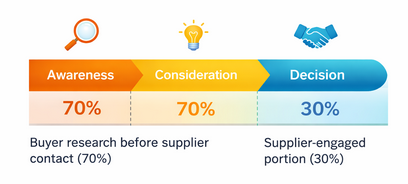
B2B buyers typically complete approximately 70% of their purchase journey through independent research before engaging sellers
Because influence spreads across stakeholders before a formal sales conversation begins.
3. They Reduce Long-Term Acquisition Costs
According to Nielsen research, companies with strong brand equity see up to 50% higher marketing ROI compared to performance-only approaches.
As familiarity increases:
-
Paid media efficiency improves
-
Organic engagement grows
-
Sales cycles shorten
In other words, value compounds.
Psychological Drivers Behind Performance
Beyond metrics, value-driven campaigns align with how B2B buyers actually behave.
Trust Before Transaction
Enterprise purchases involve risk. Buyers seek reassurance, peer validation, and expertise. Educational content reduces perceived risk long before sales outreach.
Cognitive Availability
Brands that consistently provide insight become cognitively available. When a buying trigger occurs, those brands are recalled first.
Reduced Friction
Heavy gating and immediate sales pressure increase friction. Removing early barriers increases engagement volume and depth.
When Conversion Campaigns Still Matter
This is not an argument to eliminate conversion-focused efforts.
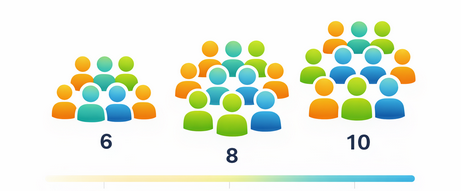
Complex B2B buying decisions now involve an average of six to ten stakeholders, highlighting the need for value-driven engagement across teams
Standard conversion campaigns remain effective when:
-
Targeting high-intent audiences
-
Activating remarketing pools
-
Launching time-sensitive offers
-
Promoting bottom-of-funnel assets
However, they perform best when supported by a strong value foundation.
Without prior brand exposure, conversion rates decline and acquisition costs rise.
Practical Framework: Shifting to Value-Led Growth
Organizations transitioning from pure performance marketing can adopt a phased approach:
Phase 1: Expand Reach at the Account Level
Move from individual lead targeting to account-level visibility. Ensure that multiple stakeholders within target accounts encounter your messaging.
Phase 2: Prioritize Educational Assets
Develop content that addresses industry pain points, strategic insights, and operational benchmarks. Focus on depth and differentiation.
Phase 3: Align Metrics with Revenue
Shift reporting from:
-
Leads
-
Cost per lead
Toward:
-
Account engagement
-
Pipeline influence
-
Revenue contribution
This alignment prevents short-term optimization from undermining long-term growth.
Three Strategic Recommendations
-
Reallocate 30–40% of paid budget to value-stage campaigns.
Maintain conversion capture, but fund future demand creation. -
Reduce unnecessary gating.
Test ungated distribution for high-value content and measure influence at the account level rather than individual lead capture. -
Measure marketing impact across 6–12 month windows.
Value-driven influence compounds over time; short attribution windows underreport performance.
Conclusion: Value Is a Competitive Advantage
In saturated B2B markets, the brands that win are not those that chase every form fill. They are the ones that educate, guide, and influence long before purchase intent becomes visible.
Standard conversion campaigns capture existing demand.
Value-driven campaigns create future demand.
When integrated correctly, value rules—not by replacing conversion tactics, but by making them dramatically more efficient and sustainable.
Suggested Reading
To further explore advanced demand generation strategies, consider reading:
These articles provide complementary insights into building scalable, data-driven B2B growth systems.