
In outbound campaigns, audience size is one of the most underestimated variables affecting delivery stability. Teams often focus on messaging, timing, and channel optimization while overlooking how changes in audience volume directly impact deliverability and campaign performance.
Audience size fluctuations can create sudden spikes or drops in sending activity. These variations affect sender reputation, filtering behavior, and infrastructure load. When these changes occur frequently, delivery systems interpret them as irregular sending patterns.
Understanding why audience size matters is essential for maintaining predictable campaign performance.
The Relationship Between Audience Volume and Delivery Systems
Delivery systems evaluate sending behavior using patterns. Internet service providers and filtering mechanisms expect consistency in how messages are sent.
When audience size changes dramatically between campaigns, sending volume changes as well. These shifts trigger behavioral signals that delivery systems analyze.
For example, a sender who normally sends 10,000 messages per day but suddenly sends 60,000 messages may appear suspicious to filtering algorithms. Research across email infrastructure providers shows that sudden sending spikes increase the likelihood of filtering events by up to 45%.
Consistent sending behavior builds trust with receiving systems. Irregular volume patterns can interrupt this trust and lead to unstable delivery outcomes.
How Large Audience Swings Affect Infrastructure Performance
Audience growth or shrinkage also affects internal sending infrastructure.
Large increases in audience size can overload queues, sending nodes, and delivery pipelines. This often leads to slower delivery speeds, message throttling, or temporary delivery failures.
Data from messaging infrastructure benchmarks indicates that delivery latency can increase by 30–50% when sending queues suddenly process more than double their normal load.
At the same time, sharp decreases in audience size create another problem: idle infrastructure. When systems oscillate between high and low utilization, it becomes harder to maintain optimal throughput and scheduling efficiency.
Balanced workloads are critical for stable delivery performance.
Reputation Signals and Audience Stability
Sender reputation plays a major role in delivery outcomes. Reputation models evaluate consistency across several dimensions:
-
sending volume
n- engagement rates -
complaint rates
-
bounce rates
Audience fluctuations influence all of these signals.
When audience size grows quickly, newly added contacts often engage at lower rates than established recipients. This causes engagement averages to decline.
Industry studies show that engagement rates can drop by 20–35% when a large number of new contacts are introduced into campaigns simultaneously.
Lower engagement can trigger reputation recalculations, which then impact delivery placement.
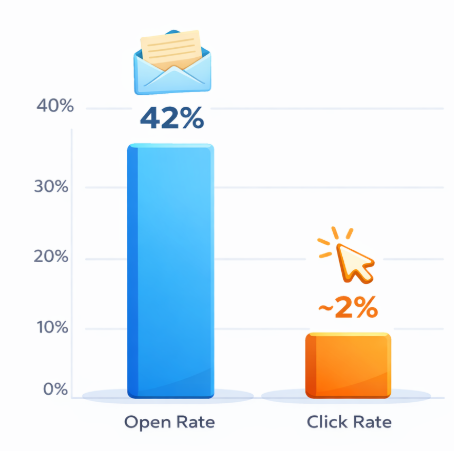
Average Email Engagement Benchmarks Across Industries
Similarly, when audiences shrink significantly, engagement metrics may temporarily spike, but delivery systems may still flag the irregular sending behavior.
Maintaining a stable audience size helps keep reputation signals predictable.
The Operational Challenges of Rapid Audience Changes
Beyond delivery systems, rapid audience changes create operational difficulties for campaign teams.
Teams must frequently adjust:
-
campaign pacing
-
infrastructure allocation
-
targeting segmentation
-
sending schedules
Frequent adjustments increase the risk of configuration errors and inconsistent campaign execution.
Operational studies show that marketing teams managing volatile audience sizes spend up to 40% more time adjusting campaign parameters compared to teams with stable audience segments.
Reducing audience volatility simplifies campaign management and improves consistency.
Strategies to Maintain Delivery Stability
To minimize delivery disruptions caused by audience fluctuations, organizations should adopt structured audience management practices.
Gradual Audience Expansion
Instead of adding large volumes of new contacts at once, introduce them in controlled increments. Gradual expansion helps delivery systems adapt to new sending patterns without triggering filtering mechanisms.
Consistent Campaign Cadence
Maintain regular sending schedules even when audience sizes change. Consistent cadence signals reliability to receiving systems and reduces behavioral anomalies.
Segmented Sending
Dividing large audiences into smaller segments allows sending volume to remain predictable. Segmented campaigns help maintain steady infrastructure load and engagement performance.
Conclusion
Audience size fluctuations may seem like a minor operational detail, but they can significantly impact delivery stability. Large swings in sending volume affect infrastructure performance, sender reputation, and filtering behavior.
Maintaining consistent audience growth, predictable sending patterns, and structured segmentation helps reduce delivery volatility and improves overall campaign reliability.
Understanding the relationship between audience stability and delivery systems enables teams to build more resilient outbound strategies.
Suggested Articles to Read