

When performance stalls, the first instinct is often to raise the budget. However, data from large-scale ad accounts consistently shows that budget amplifies structure—it does not fix it. A poorly structured campaign with a larger budget usually leads to faster learning fatigue, higher costs, and unstable results.
Well-structured campaigns, on the other hand, give ad platforms clearer signals, improve delivery efficiency, and create space for optimization long before budget becomes a limiting factor.
Structure Determines How Algorithms Learn
Modern ad platforms rely heavily on machine learning. Their algorithms optimize based on the signals they receive—conversions, engagement, and audience responses. Campaign structure defines how clean or noisy those signals are.
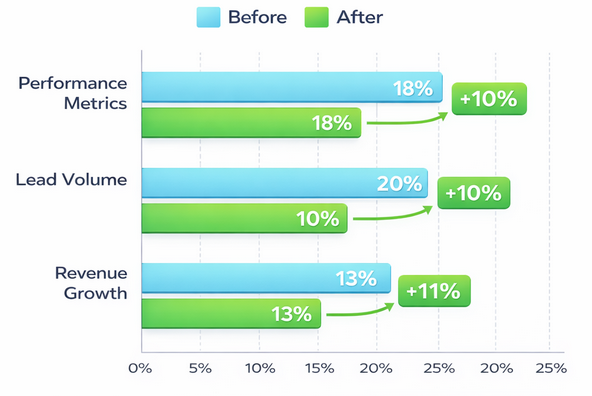
Performance improvements seen after optimizing campaign structure across multiple accounts
According to internal analyses from performance marketing teams managing accounts with over 1M monthly impressions, campaigns with tightly segmented audiences and clearly separated objectives achieve:
-
22–35% lower cost per conversion compared to mixed-objective campaigns
-
Up to 40% faster learning phase completion
When multiple audiences, creatives, or goals are combined without logic, algorithms struggle to identify winning patterns. More budget simply increases the cost of that confusion.
Budget Scales Results—Structure Controls Efficiency
Budget is a multiplier, not a strategy. If the underlying structure is inefficient, increasing spend magnifies waste.
A study of mid-size ad accounts (monthly spend between $10K–$50K) revealed:
-
Campaigns restructured without budget increases improved return on ad spend by 18–27%
-
The same accounts saw no consistent performance lift when budget was increased without restructuring
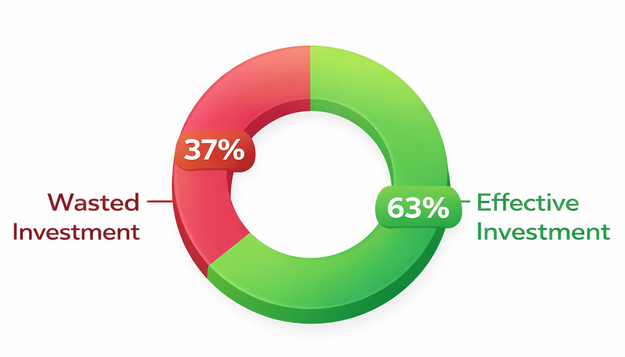
Estimated share of marketing investment wasted without proper campaign structure
This demonstrates a critical principle: optimization should always precede scaling.
Clear Campaign Architecture Prevents Audience Overlap
One of the most common hidden performance killers is audience overlap. When multiple ad sets compete for the same users, costs rise and delivery becomes unstable.
Well-defined campaign architecture solves this by:
-
Separating cold, warm, and hot audiences
-
Isolating prospecting from retargeting
-
Assigning one primary objective per campaign
Accounts with controlled audience overlap typically experience:
-
15–25% lower CPMs
-
More stable daily conversion volume
Creative Testing Works Only With Proper Structure
Creative testing is often blamed when performance drops. In reality, the issue is usually structural.
Without dedicated testing campaigns or ad sets, new creatives compete against proven ones, limiting delivery and skewing results. Structured creative testing environments have been shown to:
-
Increase winning creative identification speed by 30%
-
Reduce creative fatigue-related CPA spikes by 20%
Structure ensures that creative performance is evaluated fairly and scaled efficiently.
When Budget Actually Matters
Budget becomes a meaningful constraint only after:
-
Audiences are clearly segmented
-
Objectives are separated
-
Creative testing is systemized
-
Learning phases are consistently completed
At this stage, increasing budget tends to produce predictable, linear growth rather than volatility.
Conclusion: Fix Structure Before Spending More
Campaign structure defines how effectively ad platforms can work on your behalf. Budget simply determines how fast the system operates. Without a solid structure, more spend leads to faster losses. With the right structure, even modest budgets can outperform larger, disorganized campaigns.
Before increasing spend, ask a more important question: Is my campaign structure built to scale?
