
Dynamic Product Ads (DPAs) are designed to automatically show relevant products to users based on their behavior, interests, and data signals. While they excel in retargeting, their performance in prospecting campaigns is not always as strong as expected.
Understanding the structural and strategic limitations of DPAs in prospecting can help marketers make more informed decisions and optimize their advertising outcomes.
1. Limited Intent Signals in Cold Audiences
DPAs rely heavily on user behavior data such as website visits, product views, and cart activity. In prospecting campaigns, this data is often missing or weak.
According to industry benchmarks, retargeting audiences can deliver conversion rates up to 3–5 times higher than cold audiences. Without prior interaction, DPAs lack the behavioral signals needed to accurately match products to user intent.
As a result, product recommendations may feel less relevant, reducing engagement and conversion rates.
2. Over-Reliance on Product Feed Quality
The effectiveness of DPAs depends directly on the quality of the product feed. In prospecting, where targeting precision is already lower, poor feed quality further amplifies performance issues.
Common feed-related problems include:
-
Missing or inconsistent product attributes
-
Low-quality or generic images
-
Incomplete descriptions
Studies show that optimized product feeds can improve click-through rates by up to 35% and conversion rates by up to 20%. Without these optimizations, DPAs struggle to compete with more controlled creative formats.
3. Lack of Creative Storytelling
Traditional prospecting campaigns often use designed creatives that communicate value propositions, brand identity, and emotional appeal.
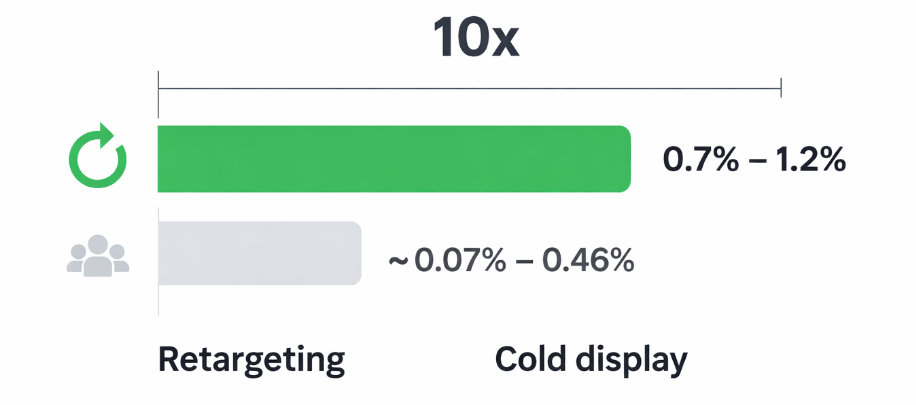
Retargeting ads achieve significantly higher engagement rates than ads shown to cold audiences, highlighting the importance of prior user interaction
DPAs, on the other hand, are template-based and focus primarily on product presentation. This limits their ability to:
-
Introduce a brand to new audiences
-
Highlight unique selling points
-
Build trust with first-time viewers
Research indicates that ads with strong creative storytelling can increase purchase intent by over 70% compared to standard product-focused ads.
4. Algorithm Learning Constraints
Advertising platforms optimize DPAs based on historical data and user interactions. In prospecting campaigns, the lack of sufficient data slows down the learning phase.
This can lead to:
-
Higher cost per acquisition (CPA) during initial stages
-
Inconsistent delivery and scaling issues
-
Reduced optimization efficiency
Campaigns targeting cold audiences often require more time and budget to stabilize compared to retargeting setups.
5. Audience Saturation and Competition
DPAs are widely used by advertisers, especially in eCommerce. In prospecting environments, this creates a competitive landscape where multiple brands may target similar audiences with similar product-based creatives.
This results in:
-
Increased ad fatigue
-
Higher CPMs
-
Lower differentiation
In contrast, prospecting campaigns with custom creatives can stand out more effectively and capture attention earlier in the funnel.
6. Misalignment with Funnel Stage
DPAs are inherently designed for lower-funnel activities, such as converting users who have already shown interest.
Using them for top-of-funnel prospecting can create a mismatch between message and audience readiness. Cold users are often not prepared to make immediate purchase decisions and may require:
-
Educational content
-
Brand awareness messaging
-
Social proof
Without these elements, DPAs may fail to move users through the funnel efficiently.
How to Improve DPA Performance in Prospecting
To address these challenges, advertisers can adopt several strategies:
1. Enhance Product Feed Quality
Ensure that product data is complete, accurate, and visually appealing. High-resolution images and detailed descriptions improve relevance and engagement.
2. Use Broader but Structured Targeting
Combine DPAs with broader audience segments while maintaining structure through categories or collections.
3. Layer Creative Elements
Incorporate overlays, frames, or dynamic elements that add branding and messaging to otherwise static product formats.
4. Combine with Prospecting Campaigns
Run DPAs alongside traditional prospecting campaigns rather than relying on them exclusively. This creates a balanced funnel approach.
5. Allow Sufficient Learning Time
Allocate enough budget and time for the algorithm to gather data and optimize delivery effectively.
Conclusion
Dynamic Product Ads are powerful tools, but their strength lies primarily in retargeting rather than prospecting. When used in cold audience campaigns, limitations in data, creativity, and audience intent can lead to underperformance.
By understanding these constraints and applying strategic optimizations, advertisers can better integrate DPAs into a full-funnel strategy and improve overall campaign performance.
Recommended Reading