At launch, Meta campaigns are typically calibrated with tightly defined targeting, optimized creatives, and clear conversion objectives. However, as campaigns mature, performance frequently diverges from initial expectations. This phenomenon—known as performance drift—is not random. It is driven by a combination of algorithmic behavior, audience dynamics, market conditions, and data feedback loops.
Understanding these drivers is essential for maintaining consistent results and avoiding wasted budget.
1. Algorithmic Learning and Re-Optimization
Meta’s delivery system continuously optimizes toward outcomes it predicts will deliver the highest value based on available signals. During the learning phase, campaigns explore different audience segments and placements. Over time, the algorithm may shift delivery toward subsegments that are easier or cheaper to convert—even if they are less aligned with the original strategic goal.
According to Meta benchmarks, campaigns exiting the learning phase can experience up to a 20–30% fluctuation in cost per result as the system stabilizes.
This means that even without manual changes, campaign performance can drift as the algorithm prioritizes efficiency over intent quality.
2. Audience Saturation and Fatigue
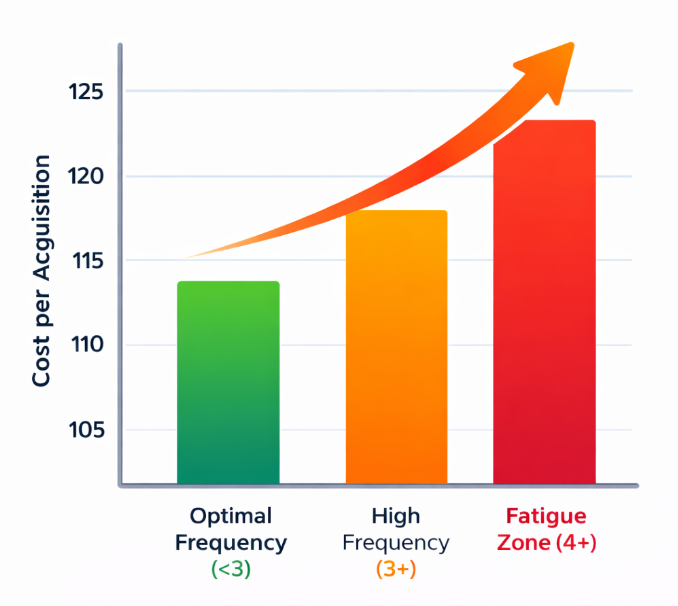
As campaigns run, the same users are exposed repeatedly to the same creatives. This leads to declining engagement rates and increasing costs.
Industry data shows that click-through rates can drop by 15–25% after repeated exposure, while cost per mille (CPM) can increase as competition for fresh impressions intensifies.
Audience saturation forces the algorithm to expand delivery into less relevant segments, which can further reduce performance quality.
3. Creative Wear-Out
Creative performance degrades over time. Even high-performing ads lose effectiveness as users become familiar with messaging and visuals.
Studies indicate that ad fatigue can reduce conversion rates by up to 30% within the first two weeks of continuous exposure.
When creatives weaken, the algorithm compensates by seeking new audiences or placements, often leading to a mismatch between original targeting intent and current delivery.
4. Signal Loss and Data Degradation
Meta’s optimization relies heavily on conversion signals. Changes in tracking environments—such as cookie restrictions, privacy updates, or incomplete event tracking—reduce signal quality.
Following major privacy changes, advertisers reported a 15–20% decline in measurable conversion data accuracy.
With weaker signals, the algorithm makes broader assumptions, which can shift campaigns away from their intended audience profile.
5. Market Competition and Auction Pressure
The Meta ad auction is dynamic. As more advertisers compete for the same audiences, costs fluctuate and delivery patterns shift.
Seasonal spikes—such as Black Friday or year-end campaigns—can increase CPMs by 20–50%, forcing campaigns to either spend more or compromise on targeting precision.
These external pressures often cause campaigns to deviate from their original efficiency benchmarks.
6. Objective Misalignment Over Time
Campaign objectives set at launch may not remain optimal as business conditions evolve. For example, a campaign optimized for traffic may later need to prioritize conversions or lead quality.
Without periodic recalibration, the algorithm continues optimizing toward outdated goals, resulting in apparent performance drift.
How to Prevent Campaign Drift
1. Refresh Creatives Regularly
Introduce new ad variations every 10–14 days to combat fatigue. Rotating formats, messaging angles, and visuals helps maintain engagement and stabilizes performance.
2. Re-Evaluate Audience Strategy
Continuously test new audience segments and exclude overexposed users. Expanding into lookalike or interest-based audiences can reduce saturation and improve efficiency.
3. Strengthen Data Signals
Ensure accurate tracking through well-configured events and consistent data flow. Higher-quality signals allow the algorithm to make better optimization decisions and stay aligned with campaign goals.
Conclusion
Performance drift in Meta campaigns is an expected outcome of dynamic optimization systems interacting with changing audiences and market conditions. Rather than treating it as a failure, marketers should view drift as a signal that optimization inputs—creatives, audiences, and data—need to be refreshed.
By proactively managing these elements, teams can maintain alignment with original performance goals and sustain long-term campaign effectiveness.
Recommended Reading