Many advertisers still treat campaign launch like the final step.
The ads go live, traffic starts moving, and the account stays untouched for several days while the advertiser waits for results. That approach usually creates unstable performance because Meta’s delivery system keeps recalculating audience and bidding behavior after launch.
The campaign visible inside Ads Manager during hour one is not the same campaign running on day five.
Meta continuously changes delivery based on engagement quality, conversion patterns, placement behavior, and auction response. Without structured optimization, campaigns often drift toward weaker traffic segments while still spending budget efficiently from the platform’s perspective.
This is why experienced advertisers treat launch as the start of optimization, not the end of setup.
Why Facebook Ads Need Post-Launch Management
Meta’s system learns from behavioral feedback.
The first conversions influence who sees the ad next. The first engagement patterns affect how aggressively Meta bids inside similar audience clusters. If the campaign collects weak signals early, optimization quality usually declines later.
This creates a major difference between setup quality and operational quality.
A campaign can have strong creatives, accurate targeting, and a good offer while still becoming inefficient because nobody manages post-launch delivery properly.
Several problems usually appear when advertisers stop monitoring after launch:
- Meta prioritizes cheap engagement over valuable conversions. The campaign may produce low CPC while lead quality declines underneath the surface.
- Spend shifts toward weak placements. Some placements generate cheap traffic but damage overall conversion efficiency.
- Frequency increases without creative rotation. Audience responsiveness declines while CPA rises gradually.
- Budget scaling happens too early. Meta expands delivery before stable conversion patterns fully develop.
These shifts rarely happen all at once. Most accounts deteriorate gradually because small inefficiencies compound over time.
Why Stable Campaigns Usually Come From Structured Optimization
Strong advertisers rarely optimize randomly.
They follow review systems similar to the Facebook ad optimization framework every marketer should use, where decisions are tied to specific delivery signals instead of emotional reactions.
That distinction matters because Facebook campaigns naturally fluctuate.
One weak day does not automatically require intervention. At the same time, ignoring repeated deterioration signals usually allows inefficient delivery to spread deeper into the account.
Structured optimization often focuses on questions like:
- Which placement produces cheap traffic but weak downstream conversion?
- Which audience segment stabilizes conversion rate fastest?
- Which creative generates clicks without purchase intent?
- Which campaign structure produces the cleanest learning conditions?
This process turns optimization into operational analysis instead of guesswork.
Why Most Advertisers Either Under-Optimize or Over-Optimize
The biggest optimization mistake is usually not technical. It is behavioral.
Some advertisers ignore campaigns completely after launch and allow inefficient delivery to continue unchecked. Others edit campaigns constantly and reset learning conditions before Meta stabilizes performance.
Both extremes create volatility.
Accounts left untouched often develop rising frequency, declining CTR, and unstable spend allocation before anyone notices the problem. On the opposite side, accounts managed through constant edits rarely collect enough stable behavioral data for Meta to optimize properly.
The balance explained in why over-optimization hurts performance becomes especially important during scaling phases.
Good optimization usually looks controlled, deliberate, and slower than most advertisers expect.
Why Optimization Should Become a Repeatable System
Many advertisers optimize reactively. A metric drops, so they change creatives. CPA rises, so they duplicate campaigns. ROAS fluctuates, so they rebuild targeting.
That creates inconsistent learning conditions.
Experienced media buyers usually build processes similar to how to build a learning loop that keeps ads improving. The goal is not constant editing. The goal is collecting reliable signals, making measured adjustments, and improving campaign quality gradually.
For example, a healthy optimization workflow may include:
- reviewing placement efficiency daily,
- evaluating creative fatigue twice weekly,
- monitoring spend concentration by ad set,
- checking lead quality against CRM feedback.
These systems help advertisers identify structural problems before costs become unmanageable.
Final Takeaway
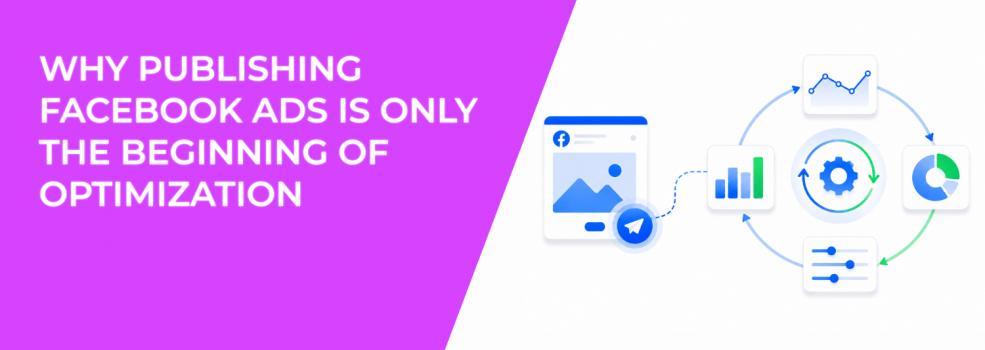
Publishing Facebook ads only activates the learning process.
The real performance gains usually happen afterward through controlled optimization, stable monitoring, and disciplined adjustments based on delivery behavior.
Strong campaigns rarely come from perfect setup alone.
They come from advertisers who continuously improve audience quality, creative responsiveness, and delivery efficiency after the campaign goes live.