
Return on Ad Spend (ROAS) is one of the most widely used performance metrics in digital marketing. It is simple to calculate and easy to communicate to stakeholders: divide revenue generated from ads by the amount spent on those ads. A campaign that generates $5 for every $1 spent produces a ROAS of 5:1.
However, relying solely on ROAS to evaluate performance can lead to misleading conclusions. A campaign can produce a high ROAS while contributing very little new revenue to the business. Understanding incremental lift — the additional value generated specifically because of marketing activity — is essential for accurate measurement.
What ROAS Actually Measures
ROAS measures the efficiency of advertising spend relative to attributed revenue. It answers the question: how much revenue was associated with this advertising investment?
What ROAS does not answer is an equally important question: how much of that revenue would have occurred anyway without the advertising?
Many attribution models credit conversions to the last touchpoint before purchase. If an ad appears shortly before a customer buys, the revenue is often attributed to that ad, even if the customer had already decided to purchase.
According to industry research, up to 60% of conversions credited to paid advertising may come from users who were already intending to buy. In these cases, advertising captures existing demand rather than creating new demand.
The Difference Between Attributed Revenue and Incremental Revenue
Attributed revenue is revenue that analytics platforms assign to a particular channel or campaign.
Incremental revenue represents the additional sales that would not have happened without marketing influence.
For example:
-
A customer searches for a brand they already know
-
They click on a paid search ad
-
The sale is attributed to paid advertising
But if the customer was already planning to purchase, the advertising did not create the sale. It simply intercepted it.
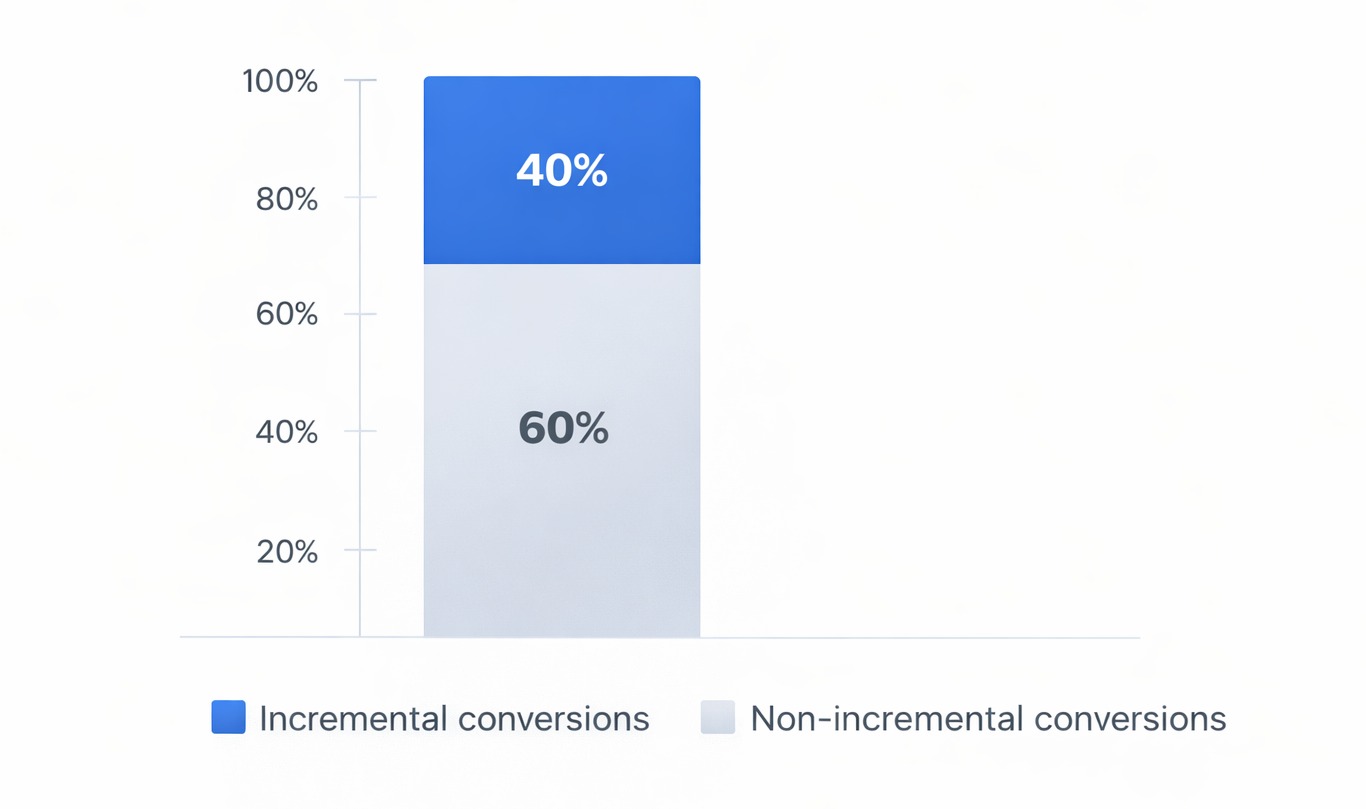
Example of attributed vs incremental conversions. Studies show that up to 60% of conversions credited to advertising may have happened even without the ads
This distinction is critical because optimizing for attributed revenue alone can encourage marketers to invest in channels that capture existing demand instead of generating new growth.
Why High ROAS Can Be Misleading
There are several scenarios where ROAS appears strong but incremental lift is minimal.
Brand Search Ads
Brand keywords often produce extremely high ROAS because users searching for the brand already have high purchase intent. Studies have shown that brand search campaigns can report ROAS values exceeding 10:1. However, controlled experiments frequently reveal that a significant portion of these purchases would have occurred organically.
Retargeting Campaigns
Retargeting campaigns typically target users who have already visited a website or viewed products. These audiences already show strong purchase intent, which leads to high conversion rates.
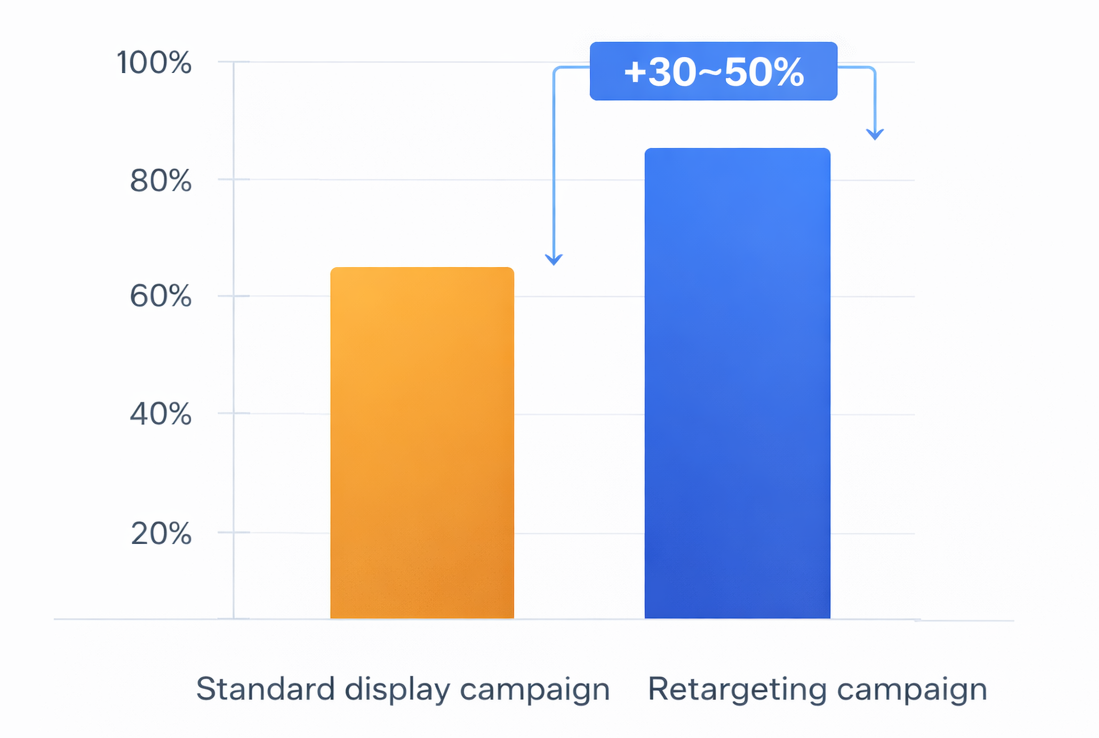
Retargeting campaigns often deliver 30–50% more conversions because they focus on users who have already interacted with a brand
Research from multiple marketing analytics studies indicates that retargeting campaigns can overstate incremental impact by as much as 30–50% when evaluated using standard attribution models.
Platform Attribution Bias
Advertising platforms naturally attribute conversions to their own ad impressions or clicks. Because of this, platforms tend to report higher performance than independent measurement methods.
In fact, cross-platform measurement studies often find discrepancies of 15–35% between platform-reported conversions and independently verified incremental results.
The Importance of Incrementality Testing
To understand the true impact of marketing activity, organizations must evaluate incremental lift rather than relying solely on attributed performance metrics.
Incrementality testing measures the difference in outcomes between two groups:
-
A test group that sees the advertising
-
A control group that does not
By comparing these groups, marketers can estimate how many additional conversions were actually caused by the campaign.
Large-scale marketing experiments conducted by major technology companies have repeatedly shown that some campaigns with strong ROAS generate little or no incremental revenue.
Metrics That Provide Better Insight
While ROAS remains a useful operational metric, it should be complemented with additional measurements that reveal true business impact.
Important metrics include:
Incremental revenue – the additional sales generated by advertising.
Customer acquisition cost for new customers – measuring how efficiently campaigns bring in customers who would not have purchased otherwise.
Conversion lift – the difference in conversion rate between exposed and unexposed audiences.
Lifetime value of acquired customers – long-term revenue generated by customers acquired through marketing campaigns.
Evaluating performance through these lenses helps organizations understand whether advertising is creating growth or simply capturing existing demand.
Moving Beyond Surface-Level Metrics
Marketing measurement is evolving as privacy changes and attribution models become less reliable. Forward-thinking organizations increasingly rely on controlled experiments, data science models, and audience-level analysis to understand incremental impact.
ROAS remains useful for optimizing campaigns at a tactical level, but strategic decision-making requires deeper insight into whether marketing actually drives new revenue.
By focusing on incremental lift, businesses can allocate budgets more effectively, identify channels that truly create demand, and avoid over-investing in tactics that merely capture existing customers.
Recommended Reading
Understanding measurement requires looking beyond individual metrics. These related topics provide additional context: