
In modern advertising platforms, budget distribution is rarely equal across ad sets. Algorithms continuously evaluate signals such as engagement, conversion probability, historical performance, and auction competitiveness. As a result, some ad sets consistently receive the majority of the campaign budget, while others barely spend at all.
For marketers running multi‑ad‑set campaigns, this can be confusing. Even well‑designed ad sets may fail to gain traction if they do not meet the algorithm's expectations early in the learning phase. Understanding the reasons behind this behavior is essential for improving campaign efficiency and avoiding wasted time on underperforming configurations.
How Budget Allocation Works in Algorithmic Advertising
Most major advertising platforms use automated optimization systems that distribute budget dynamically. Rather than splitting spend evenly, the system shifts investment toward ad sets predicted to deliver the best results.
According to industry data, algorithmic bidding and optimization systems now control more than 80% of digital advertising spend, allowing platforms to automatically prioritize higher‑performing segments. Additionally, internal advertising platform studies indicate that over 60% of campaign budget often flows to the top 20% of ad sets within a campaign.
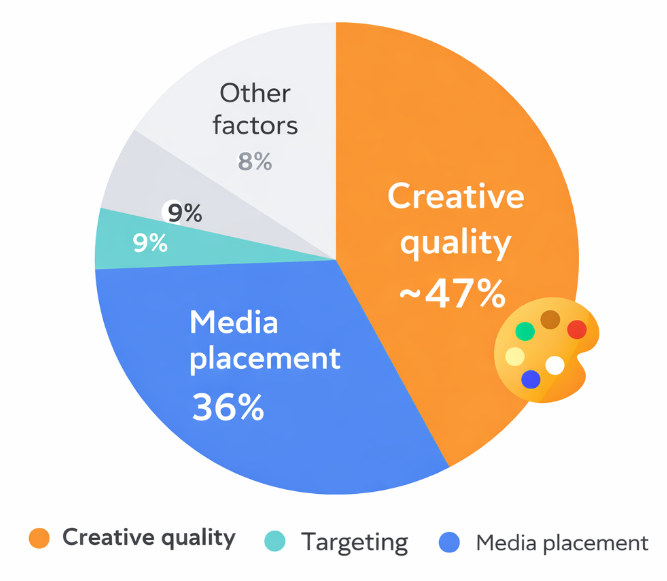
Digital advertising now accounts for the majority of marketing budgets, increasing reliance on algorithmic budget allocation
This concentration of spend means that early performance signals heavily influence which ad sets receive continued funding.
Key Reasons Some Ad Sets Never Receive Budget
1. Weak Early Performance Signals
Advertising algorithms rely heavily on early engagement and conversion signals. If an ad set fails to generate meaningful activity during the first phase of delivery, the system may deprioritize it.
Research from multiple performance marketing studies shows that campaign learning phases often rely on the first 50–100 conversion signals to determine long‑term optimization patterns. Ad sets that do not contribute to these signals may be sidelined quickly.
2. Audience Overlap Between Ad Sets
When multiple ad sets target similar audiences, platforms frequently favor the ad set that initially performs better. The competing ad sets may then struggle to enter auctions or receive impressions.
Audience overlap can dramatically reduce spend distribution. In some campaigns, advertisers observe that one overlapping ad set captures more than 70% of impressions, leaving others effectively inactive.
3. Budget Fragmentation
Campaigns with too many ad sets often dilute available budget. When the budget is spread thinly across numerous segments, the algorithm may struggle to gather enough data to optimize each one.
Industry benchmarks suggest that campaigns with more than 8–10 ad sets per campaign frequently experience unstable delivery unless the daily budget is sufficiently large.
4. Low Auction Competitiveness
Some ad sets simply fail to compete effectively in the ad auction. This can happen when:
-
Bid strategy is too conservative
-
Audience size is extremely narrow
-
Ad relevance score is low
Advertising platform reports show that ads with higher relevance or engagement rates can receive up to 30% lower effective CPM, giving them a significant advantage during auctions.
5. Creative Fatigue or Weak Messaging
Even if targeting is strong, poor creative performance can suppress an ad set. Ads that fail to generate clicks or engagement signal to the algorithm that the ad set is less valuable than alternatives.
Studies across social advertising campaigns suggest that creative quality accounts for roughly 45–60% of overall ad performance variance.
How to Prevent Ad Sets From Being Ignored
Simplify Campaign Structure
Reducing the number of ad sets allows each one to accumulate data faster. A lean campaign structure often improves delivery stability and helps the algorithm optimize more efficiently.
Ensure Adequate Budget Per Ad Set
Each ad set should have enough potential spend to generate meaningful signals. If budgets are too small, the algorithm cannot properly evaluate performance.
Avoid Overlapping Audiences
Clear audience segmentation prevents ad sets from competing against each other and increases the likelihood that each one receives impressions.
Refresh Creative Regularly
Introducing new creatives can revive struggling ad sets and improve engagement signals.
Monitor Learning Phase Performance
The first few days of campaign delivery often determine long‑term budget allocation. Monitoring early signals allows advertisers to pause weak ad sets and scale promising ones faster.
Strategic Takeaways
Budget allocation in modern advertising platforms is highly performance‑driven. Algorithms rapidly identify winning segments and shift spending accordingly. As a result, some ad sets never receive meaningful delivery—not because they are inherently ineffective, but because early signals fail to convince the optimization system.
Advertisers who understand these dynamics can design campaigns that provide clearer signals, reduce internal competition, and improve the probability that each ad set receives fair evaluation.
Further Reading:
