
Many advertisers assume that if they leave their campaigns unchanged, results should remain stable. In reality, ad performance often shifts from week to week even when budgets, targeting, and creatives stay exactly the same.
These fluctuations are not random. They are usually the result of changes happening within the advertising ecosystem—competition, audience behavior, platform algorithms, and seasonal demand. Recognizing these factors helps marketers interpret performance data correctly and avoid reacting too quickly to short-term changes.
Auction Dynamics Constantly Change
Most digital advertising platforms operate on auction-based systems. Every impression is effectively a new auction where advertisers compete for visibility.
Even if your campaign settings remain identical, the competitive environment around you changes constantly.
Several factors influence these shifts:
-
New advertisers entering the auction
-
Competitors increasing or decreasing budgets
-
Changes in bid strategies
-
Campaign pauses or launches from other brands
According to industry benchmarks, cost-per-click (CPC) fluctuations of 10–25% week-to-week are common in competitive industries. These shifts alone can dramatically affect metrics such as cost per acquisition and return on ad spend.
Audience Behavior Is Not Static
User behavior changes throughout the week and across different periods of the year.
For example:
-
B2B audiences often convert better on weekdays
-
Consumer e-commerce conversions frequently spike during weekends
-
Seasonal demand can significantly shift engagement levels
Research from multiple advertising platforms shows that conversion rates can vary by as much as 30% depending on the day of the week.
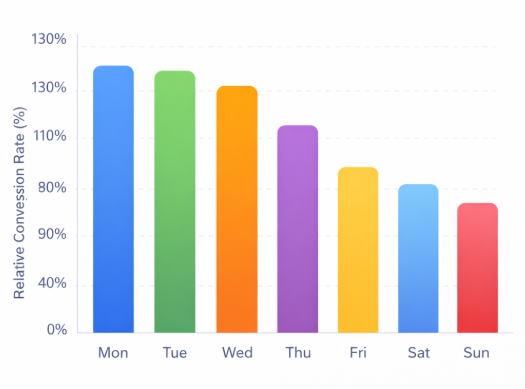
Day-of-week patterns can significantly affect ad performance, with some weekday periods delivering conversion rates up to 30% higher than the average
Even without campaign changes, these behavioral patterns can create the impression that something in the campaign itself has shifted.
Algorithm Learning and Optimization
Advertising platforms continuously optimize delivery using machine learning systems. These systems evaluate millions of signals to determine which ads should appear to which users.
Even when you do not edit your campaign, algorithms still experiment with delivery patterns, placements, and audience segments.
This optimization process can cause short-term variability as the system adjusts to new performance signals. In some cases, the platform may temporarily test different audience subsets or placements to improve long-term efficiency.
Ad Fatigue and Creative Saturation
Over time, audiences may begin to see the same creative multiple times. When this happens, engagement tends to decline.
Studies suggest that click-through rates can decrease by 15–25% after audiences see the same ad several times. This gradual decline often happens week by week, making performance appear unstable even though nothing in the campaign has changed.
Refreshing creatives periodically helps maintain engagement and reduces fatigue-related performance drops.
Data Volume and Statistical Variance
Another important factor is simple statistical variation.
Campaigns with lower conversion volumes are particularly vulnerable to week-to-week fluctuations. For example, if a campaign generates only 20 conversions per week, even small changes in user behavior can dramatically affect conversion rate or cost per acquisition.
Statistical variance is especially noticeable when analyzing short timeframes. A single strong or weak day can significantly influence weekly averages.
Platform-Level Changes
Advertising platforms constantly update their systems. These updates may affect:
-
Ad ranking models
-
Delivery optimization
-
Audience modeling
-
Attribution logic
While these changes are rarely visible to advertisers directly, they can influence campaign performance patterns.
Industry reports indicate that major advertising platforms deploy algorithm adjustments multiple times per year, sometimes creating noticeable shifts in results even when advertisers make no campaign edits.
How to Interpret Weekly Performance Changes
Instead of reacting immediately to short-term fluctuations, advertisers should analyze performance trends over longer periods.
Helpful practices include:
-
Evaluating data over 30–90 day windows
-
Comparing performance year-over-year when possible
-
Monitoring auction insights and competitor activity
-
Tracking creative frequency and engagement trends
These approaches help distinguish between temporary variance and genuine performance issues.
Conclusion
Weekly performance fluctuations are a normal part of digital advertising. Auction dynamics, audience behavior, algorithm optimization, creative fatigue, and statistical variance all contribute to changes in campaign results.
Understanding these forces allows advertisers to interpret data more accurately and avoid unnecessary adjustments that may disrupt long-term performance.
Recommended Reading