Even the most successful ad campaigns eventually lose momentum. If your once top‑performing ads suddenly stall, the reason is rarely random.
1. Audience Fatigue Is Inevitable
When ads are shown repeatedly to the same people, performance declines. Industry benchmarks show that click‑through rates can drop by 40–60% once frequency exceeds 3–4 impressions per user. What initially feels familiar quickly turns into background noise.
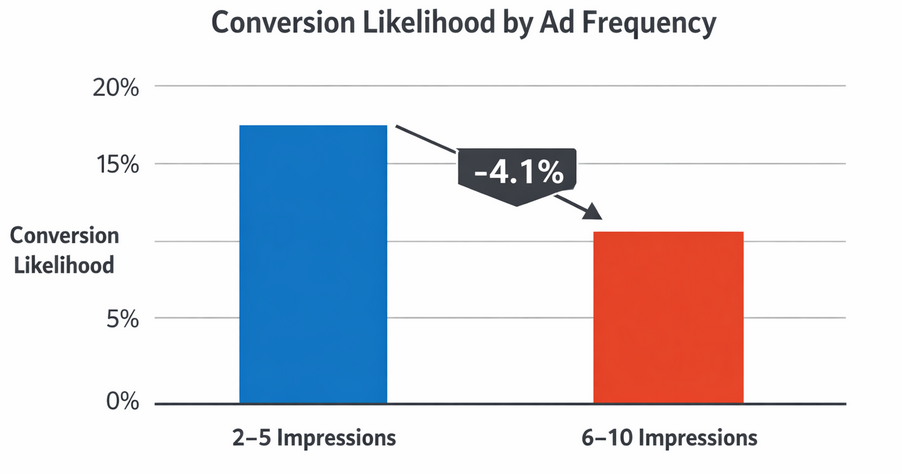
Conversion likelihood decreases as ad frequency increases — viewers exposed 6–10 times are 4.1% less likely to purchase than those exposed 2–5 times
This effect is especially strong in niche markets where audiences are limited. Once saturation hits, even high‑quality creatives struggle to generate engagement.
2. Creative Blindness Sets In
Ad fatigue is not just about frequency — it’s also about predictability. Users subconsciously learn to ignore visuals, headlines, and formats they’ve already seen.
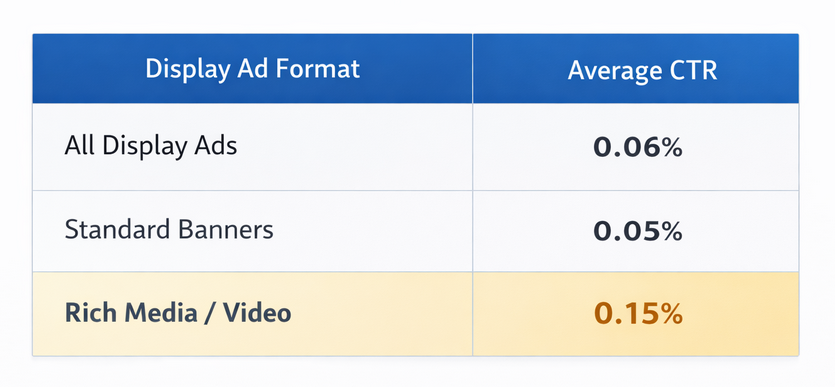
Global average click-through rate for display ads remains low (~0.06%), highlighting the challenge of maintaining engagement without refreshed creatives
Studies indicate that rotating creative elements every 2–4 weeks can improve engagement by 20–30%, even when targeting remains unchanged. Without creative variation, performance erosion is almost guaranteed.
3. Platform Algorithms Change Constantly
Ad platforms regularly adjust delivery algorithms, auction dynamics, and prioritization signals. A campaign optimized under last month’s rules may underperform today.
According to multiple ad performance reports, algorithm updates can cause cost‑per‑click fluctuations of 15–25% without any changes on the advertiser’s side. Ads that once benefited from favorable delivery conditions may quietly lose reach or efficiency.
4. Audience Quality Degrades Over Time
As campaigns scale, platforms often expand delivery beyond the highest‑intent users to maintain volume. While this increases impressions, it frequently lowers overall conversion rates.
Data from large‑scale campaigns shows that after the first high‑intent segment is exhausted, conversion rates can decline by 30–50% as ads reach colder audiences.
5. Market Competition Increases
Successful ads attract competitors. As more advertisers enter the same auctions, costs rise and attention fragments.
In competitive verticals, cost per acquisition can increase by 20–40% within a few months purely due to increased bidding pressure. Your ads may still be strong — they’re just competing in a louder environment.
6. User Intent Shifts
Audience intent is not static. Seasonal changes, economic conditions, and trends influence how people respond to ads.
For example, marketing data shows that conversion rates can swing by 25% or more between peak and off‑season periods, even with identical creatives and targeting. Ads that once aligned perfectly with user intent may suddenly feel irrelevant.
How to Recover Ad Performance
To reverse declining results, focus on early signals rather than waiting for full performance collapse:
-
Refresh creatives before metrics drop sharply
-
Rotate audiences and exclude over‑exposed users
-
Re‑evaluate targeting depth instead of simply increasing budget
-
Monitor frequency, not just CTR and CPA
Consistent performance comes from adaptation, not from repeating what once worked.
Recommended Articles from Our Blog
To explore related strategies, read these articles next:
Final Thoughts
Ad success is temporary by nature. The campaigns that win long‑term are those built with the expectation of change. When you understand why your best ads stop performing, you gain the ability to fix issues early — and turn short‑term wins into sustainable growth.