
Many teams launch outbound prospecting campaigns that show promising early results. However, after the initial momentum, growth plateaus. Email reply rates drop, connection acceptance rates decline, and meeting bookings slow down. According to HubSpot research, nearly 40% of sales teams report that their outbound campaigns lose effectiveness after the first scaling phase.
Understanding why this happens requires analyzing several operational and behavioral factors that influence campaign performance over time.
Market Saturation
One of the most common reasons prospecting campaigns stop scaling is audience saturation. When the same target audience is repeatedly contacted, response rates decline.
Salesloft data shows that reply rates can drop by more than 30% after a prospect database has been cycled through multiple campaigns. This occurs because:
-
Prospects have already seen similar messaging
-
Contacts may have been reached through other channels
-
Market segments become over-targeted
Expanding the addressable market and refreshing segmentation criteria can restore scalability.
Messaging Fatigue
Even well-performing outreach sequences eventually suffer from message fatigue. Prospects who see similar formats repeatedly become less responsive.
Research from Gartner indicates that B2B buyers receive an average of 18 unsolicited outreach attempts per week. When messaging resembles common outreach templates, prospects quickly filter it out.
Signs of messaging fatigue include:
-
Stable open rates but declining replies
-
Higher unsubscribe rates
-
Lower conversion from reply to meeting
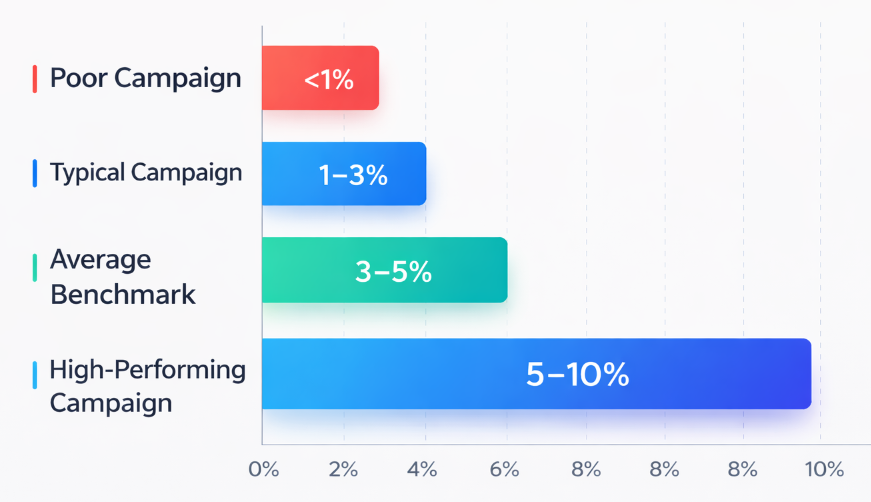
Typical Cold Email Response Rate Benchmarks in B2B Prospecting
Updating value propositions and introducing new angles can significantly improve engagement.
Deliverability Constraints
As outreach volume increases, deliverability challenges often emerge. Large sending volumes can trigger spam filters or reduce inbox placement.
According to Validity’s email deliverability benchmark report, approximately 16% of commercial emails fail to reach the inbox and are filtered into spam folders. When scaling prospecting campaigns, this percentage can rise if:
-
Domain reputation declines
-
Sending patterns change abruptly
-
Email infrastructure is not properly warmed
Monitoring sender reputation and gradually increasing sending volumes helps maintain deliverability performance.
Data Quality Decline
Campaign scaling requires continuously expanding prospect databases. However, data quality often declines as new contacts are added.
ZoomInfo estimates that B2B data decays at a rate of nearly 30% per year due to job changes, company restructuring, and outdated contact details.
Poor data quality leads to:
-
Higher bounce rates
-
Irrelevant messaging
-
Lower response rates
Maintaining accurate and enriched prospect data is essential for sustained campaign performance.
Operational Bottlenecks
Scaling prospecting is not only about generating more outreach. Internal processes must also scale.
Common operational bottlenecks include:
-
Slow lead routing
-
Delayed follow-ups
-
Limited SDR capacity
Harvard Business Review found that companies responding to leads within one hour are seven times more likely to qualify opportunities than those responding later. When teams cannot handle increased prospect engagement, pipeline growth slows.
How to Restore Campaign Scalability
Expand Target Segments
Introduce new industries, company sizes, or buyer personas to increase the total addressable audience.
Refresh Messaging Frameworks
Rebuild outreach sequences around updated customer pain points, industry trends, or case-driven insights.
Improve Infrastructure
Ensure email infrastructure, domains, and sending patterns are optimized to support higher volumes without harming deliverability.
Maintain Data Hygiene
Regularly validate and enrich prospect databases to prevent decay from impacting campaign performance.
Optimize Sales Operations
Automate routing, prioritization, and follow-up processes so teams can handle larger volumes of engaged prospects.
Conclusion
Prospecting campaigns rarely stop scaling for a single reason. More often, the plateau results from a combination of market saturation, messaging fatigue, deliverability issues, declining data quality, and operational bottlenecks.
Teams that continuously analyze these factors and adapt their strategy can maintain consistent outbound growth while avoiding performance plateaus.