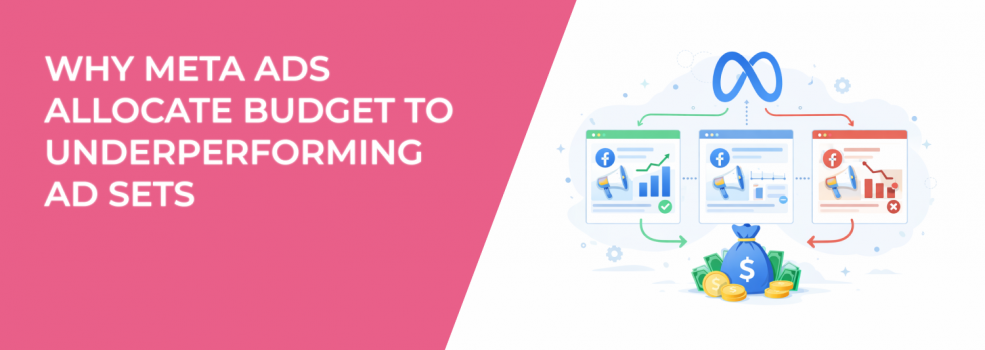
Meta’s budget allocation often looks irrational. You see one ad set with strong cost per result, yet another receives more spend despite weaker metrics. The system is not ignoring performance. It is optimizing for signals that differ from what you see in Ads Manager.
Understanding those signals changes how you structure campaigns and evaluate results.
Meta Optimizes for Predicted Outcomes, Not Historical Metrics
Advertisers focus on past data. Meta focuses on predicted probability of future conversions. The difference explains most budget shifts.
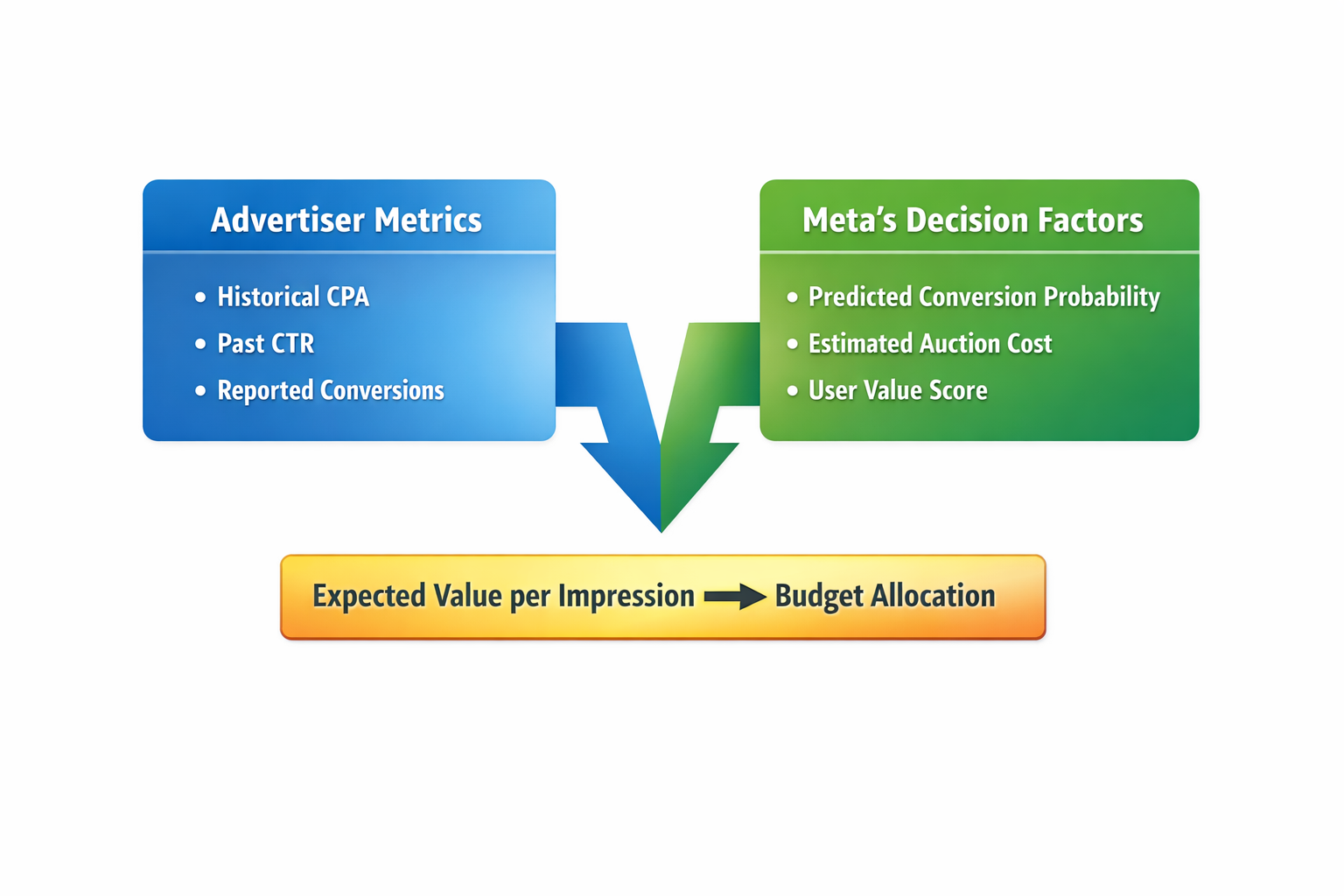
Meta’s delivery system calculates expected value for every auction. It weighs the likelihood of conversion against cost and user experience. If an ad set shows higher predicted value, it wins more auctions.
Historical CPA does not guarantee future efficiency. The algorithm reacts to real-time auction pressure, user behavior, and signal freshness. Budget follows expected marginal return, not yesterday’s report. If you want a deeper breakdown of the mechanism, review how Meta ads decide where to spend budget .
Why a Weak Ad Set May Still Win More Auctions
An ad set can look weaker in reporting yet still receive budget. That happens when underlying signals favor it.
Common reasons include:
-
Higher conversion probability for specific users; even if overall CPA is higher, certain segments convert reliably.
-
Lower auction competition in a micro-segment; cheaper impressions increase projected efficiency.
-
Stronger learning signal; more recent conversions increase confidence in performance forecasts.
-
Better alignment with campaign objective; Meta prioritizes consistency of optimization events.
Meta allocates budget dynamically at the impression level. It does not evaluate ad sets as static buckets.
Learning Phase Dynamics Distort Budget Distribution
The learning phase affects how spend flows across ad sets. This behavior often appears as favoritism.
During learning, Meta distributes impressions broadly. It tests user segments to estimate conversion probability. Early volatility does not reflect long-term potential.
An ad set that exits learning quickly may attract more budget. Stability signals reliability to the system. If you want to go deeper into this mechanism, see what it means when campaigns never exit learning.
How Learning Influences Allocation
Several mechanics operate behind the scenes:
-
Conversion density matters; ad sets with clustered conversions gain stronger predictive signals.
-
Signal delay weakens confidence; slow reporting from CRM integrations reduces optimization accuracy.
-
Budget fragmentation slows learning; too many ad sets dilute data volume.
-
Optimization event depth changes outcomes; optimizing for leads versus qualified leads alters allocation patterns.
If your campaign splits audiences too narrowly, learning becomes inefficient. Budget then consolidates around ad sets with clearer data.
Auction Overlap Creates Hidden Competition
Audience overlap between ad sets causes internal competition. Meta’s system avoids bidding against itself inefficiently.
When two ad sets target similar users, the algorithm selects the one with higher predicted value. The other receives reduced delivery.
This reduction can make a solid ad set appear weak. The issue is structural, not creative. In many cases, the root cause is audience overlap killing Facebook ad performance.
Signs of Internal Competition
Watch for these indicators:
-
High audience overlap percentage in delivery diagnostics; signals duplicated targeting.
-
Fluctuating CPM between similar ad sets; indicates auction pressure within the account.
-
Uneven impression distribution despite similar bids and budgets; shows system-level prioritization.
-
Sudden performance shifts after launching new ad sets; new entrants disrupt previous equilibrium.
Consolidation often improves allocation efficiency. Fewer, broader ad sets generate stronger learning signals.
Budget Reallocation Favors Stability Over Short-Term Efficiency
Meta prefers predictable performance. An ad set with slightly higher CPA but consistent conversion flow may receive more spend.
Volatile ad sets create risk. The system lowers exposure when performance fluctuates sharply.
Consistency reduces uncertainty in predicted outcomes. Budget gravitates toward reliability. You can often see this pattern when ad performance drops after initial success.
Why Consistency Wins
Meta’s allocation logic rewards patterns such as:
-
Stable conversion rates across days; supports stronger probability modeling.
-
Even pacing of results; avoids sudden drops in event volume.
-
Balanced frequency growth; prevents user fatigue.
-
Lower variance in cost per result; reduces forecasting risk.
An ad set that spikes and crashes will struggle to maintain budget dominance.
Attribution Windows Influence Perceived Performance
Reporting differences distort judgment. Meta allocates budget based on its attribution model, not your CRM.
If one ad set drives more view-through conversions, it may receive more spend. Those conversions might not appear in last-click analysis.
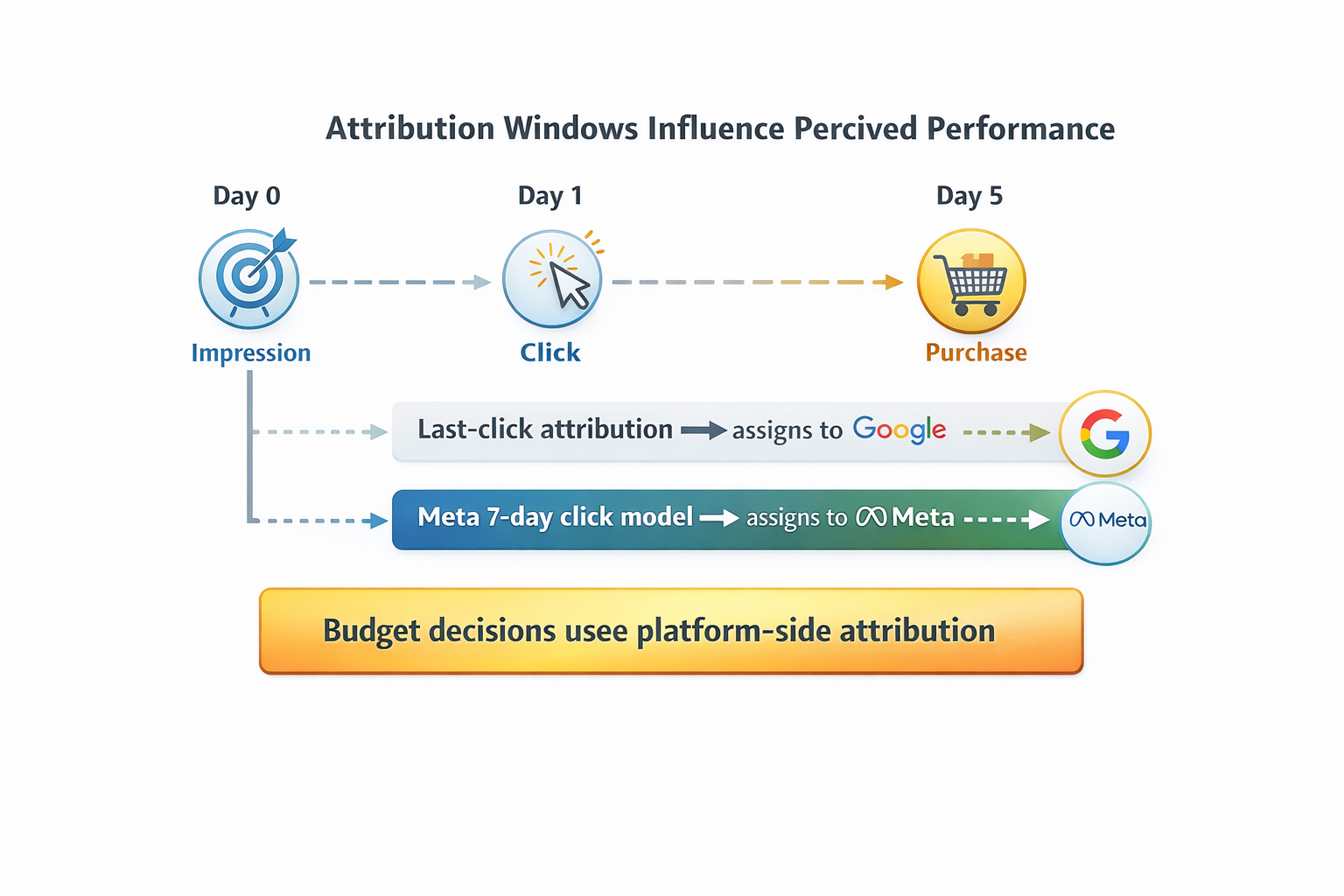
Misaligned attribution creates confusion. The system optimizes using its own event data. For a deeper look, review how Facebook ads attribution rarely matches reality.
How Attribution Affects Allocation
Consider these mechanics:
-
Shorter attribution windows reduce visible performance for awareness-heavy audiences.
-
Delayed offline conversions weaken feedback loops.
-
Pixel event prioritization changes optimization signals.
-
Conversion API accuracy improves allocation precision.
If attribution settings shift mid-campaign, allocation patterns also change.
Campaign Budget Optimization Changes Control Dynamics
When using Campaign Budget Optimization, Meta distributes budget across ad sets automatically. Allocation responds to predicted marginal return.
Underperforming ad sets may still receive budget. The system tests whether performance improves under increased exposure.
CBO emphasizes exploration before exploitation.
When Exploration Looks Like Waste
Exploration includes:
-
Testing incremental scale; some audiences require higher spend to unlock volume.
-
Validating new creative signals within existing ad sets.
-
Measuring response curves across spend tiers.
-
Refreshing stale learning data.
Short-term inefficiency supports long-term optimization. Cutting exploration too early restricts algorithmic discovery.
Structural Fixes to Reduce Misallocation
You cannot control every auction. You can control structure.
Practical adjustments include:
-
Consolidate overlapping audiences; reduce internal competition.
-
Increase budget per ad set; accelerate learning.
-
Align optimization event with real revenue metrics; avoid shallow signals.
-
Maintain stable budgets; avoid frequent edits that reset learning.
-
Audit attribution settings; ensure feedback reflects business reality.
Structural clarity improves algorithmic confidence. Better signals lead to cleaner allocation.
Final Perspective on Budget Flow
Meta does not reward underperformance randomly. It allocates based on predicted value, stability, and signal strength.
If budget appears misplaced, investigate structure before creative. Look at learning density, overlap, and attribution alignment.
When the system behaves unexpectedly, it usually reflects data asymmetry. Improve signal quality, and allocation patterns begin to make sense.